1-Minute Summary
Interest in lifestyle medicine continues to expand, with the American College of Lifestyle Medicine reporting membership of more than 17,000 in 2026, up from approximately 3,700 members in 2019.
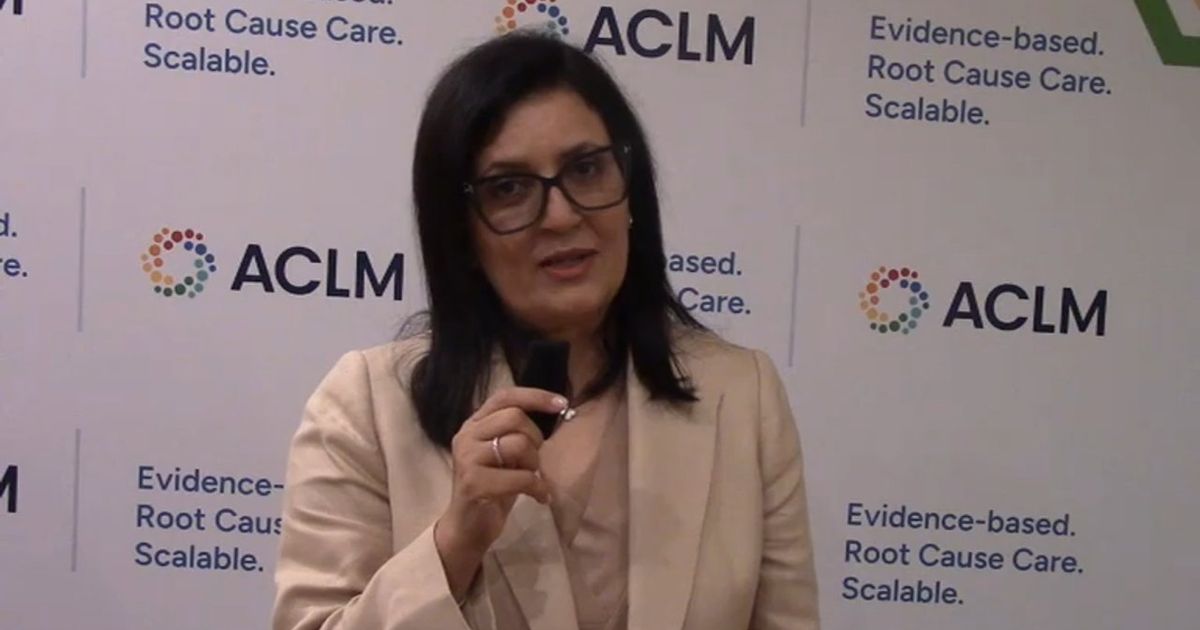
According to Padmaja Patel, MD, DipABLM, FACLM, CPE, the organization added nearly 4,400 members during 2026 alone and maintained a 90% membership retention rate.
At the same time, changes in the 2027 CMS Physician Fee Schedule may create new reimbursement opportunities for shared medical appointments, health and well-being coaching, longitudinal care, and value-based care models.
Patel argued that these changes could make lifestyle medicine easier to integrate into routine clinical practice, particularly by supporting multidisciplinary care teams.
However, important reimbursement gaps remain. Medical nutrition therapy remains restricted to selected conditions, one-on-one lifestyle medicine visits may still be inadequately reimbursed, and conventional evaluation and management payment structures may not compensate clinicians for the additional time spent addressing behavioral and upstream drivers of chronic disease.
Patel also emphasized the need for quality measures that assess lifestyle behaviors, prevention, disease remission, deprescribing, and other outcomes that are not routinely captured in current payment systems.
Why This Matters
Lifestyle-related behaviors influence the development and progression of many chronic diseases, yet the health care system has traditionally reimbursed clinicians primarily for encounters, procedures, and treatment of established disease rather than for sustained prevention-focused care.
Lifestyle medicine attempts to address this gap by focusing on modifiable factors such as:
- nutrition,
- physical activity,
- sleep,
- stress management,
- avoidance of harmful substances,
- and social connection.
The growing membership of the American College of Lifestyle Medicine may reflect increasing clinician interest in integrating these approaches into everyday practice.
However, clinical enthusiasm alone is unlikely to produce widespread implementation unless payment systems support the time, team members, infrastructure, and longitudinal follow-up required.
Patel highlighted this challenge when discussing reimbursement:
“Instead of just paying for services and encounters, we should direct payment toward outcomes.”
This shift from volume-based payment toward outcomes-based reimbursement could be particularly relevant to prevention-focused models of care.
Study at a Glance
The source is not a randomized controlled trial, cohort study, or meta-analysis. It is an expert interview focused on professional membership trends, reimbursement policy, and the implementation of lifestyle medicine.
| Feature | Details |
|---|---|
| Source type | Expert interview / health policy discussion |
| Organization discussed | American College of Lifestyle Medicine |
| Interviewee | Padmaja Patel, MD, DipABLM, FACLM, CPE |
| Study type | Not applicable |
| Participants | Not applicable |
| Intervention | Not applicable |
| Comparator | Not applicable |
| Primary outcome | Not applicable |
| Main issues discussed | Membership growth, reimbursement, shared medical appointments, coaching, quality measures, value-based care |
| Membership in 2019 | Approximately 3,700 |
| Membership in 2026 | More than 17,000 |
| New members in 2026 | Nearly 4,400 |
| Retention rate | 90% |
| Follow-up | Not applicable |
| Original research DOI | None; interview-based source |
Membership Growth Signals Expanding Interest
The American College of Lifestyle Medicine reported continued growth in 2026.
Patel noted that membership increased from approximately 3,700 in 2019 to more than 17,000 in 2026.
She stated:
“In 2019, we had 3,700 members. This year, we have more than 17,000.”
The organization also added nearly 4,400 members in 2026, with an estimated 90% retention rate.
| Membership metric | Reported figure |
|---|---|
| Membership in 2019 | 3,700 |
| Membership in 2026 | >17,000 |
| Members added during 2026 | ≈4,400 |
| Retention rate | 90% |
Patel attributed the growth in part to continuing education, personalized member engagement, professional development, and pathways toward certification in lifestyle medicine.
She summarized the trend by saying:
“We’re doing something right.”
Although membership growth does not directly establish improved clinical outcomes, it may indicate increasing physician and clinician interest in the field.
New Reimbursement Opportunities
One of the most important themes in the interview was reimbursement.
Patel said the final 2027 Physician Fee Schedule created new opportunities for clinicians to receive payment for certain team-based and lifestyle-focused services.
These include:
- shared medical appointments,
- health and well-being coaching,
- longitudinal care,
- and value-based care models.
According to Patel, the new structure may help clinicians incorporate interprofessional team members into care delivery.
She described the change as particularly important for shared medical appointments because reimbursement may now better support both physician participation and involvement of other members of the care team.
Shared Medical Appointments
Shared medical appointments bring groups of patients together with clinicians and other health professionals for structured education, counseling, goal-setting, and follow-up.
Patel described the model as one that can be incorporated into routine primary care.
She stated:
“It is an evidence-based model that has been around for more than 30 years and can be integrated into everyday primary care workflows.”
These visits may involve patients with similar diagnoses or multiple chronic conditions.
Potential components include:
- education,
- behavior-change counseling,
- medication review,
- goal-setting,
- peer support,
- and longitudinal monitoring.
Shared appointments can also make it easier to include dietitians, health coaches, pharmacists, behavioral health professionals, and other team members.
Patel characterized the model as mutually beneficial:
“It’s a win-win situation.”
Health and Well-Being Coaching
Another important development is reimbursement for health and well-being coaching.
Patel noted that these services previously lacked a routine reimbursement pathway in many settings.
She said that clinicians may now be able to incorporate health coaches into care teams under general supervision and bill for those services.
This could make behavior-change support more practical because many lifestyle interventions require repeated counseling, accountability, and follow-up rather than a single office visit.
Longitudinal and Value-Based Care
The interview also highlighted opportunities related to longitudinal and value-based care.
Patel noted that clinicians participating in value-based care models may have greater flexibility to generate revenue when improving long-term health outcomes rather than simply increasing visit volume.
This is particularly relevant to lifestyle medicine because benefits may emerge over months or years rather than during a single encounter.
Examples of potentially relevant outcomes include:
- improved glycemic control,
- blood pressure reduction,
- weight reduction,
- improved functional status,
- reduced medication burden,
- disease remission,
- and lower utilization of acute care services.
Remaining Reimbursement Gaps
Despite recent policy changes, several gaps remain.
Medical Nutrition Therapy
Medical nutrition therapy continues to have restricted eligibility in many reimbursement frameworks.
Patel argued that this limits clinicians’ ability to deliver nutritional counseling broadly across chronic disease populations.
One-on-One Care
Group-based care may have gained new reimbursement opportunities, but payment for individualized lifestyle medicine remains more limited.
Many clinicians still rely on standard evaluation and management codes even when appointments involve extensive counseling and assessment of behavioral or social drivers of disease.
Team-Based Care
Flat visit-based reimbursement may not provide enough funding to support:
- health coaches,
- dietitians,
- behavioral health professionals,
- digital tools,
- remote monitoring,
- or other team-based resources.
Patel argued that hybrid or prospective payment models could better support these services.
Why Outcomes-Based Payment Matters
Patel identified outcomes-based reimbursement as one of the most important policy changes needed to support wider adoption.
She stated:
“Instead of just paying for services and encounters, we should direct payment toward outcomes.”
Traditional payment models frequently reward the number or complexity of encounters.
Lifestyle medicine may fit better with models that reward measurable improvements in health.
Potential outcomes that could be incorporated into value-based payment include:
| Potential outcome measure | Clinical relevance |
|---|---|
| Glycemic improvement | Diabetes prevention and management |
| Blood pressure control | Cardiovascular risk reduction |
| Weight reduction | Obesity management |
| Medication deprescribing | Reduced treatment burden |
| Disease remission | Long-term disease modification |
| Improved functional status | Patient-centered outcome |
| Reduced hospitalization | Lower health care utilization |
Quality Measures Remain a Major Gap
Patel also emphasized the absence of dedicated quality measures addressing lifestyle behaviors.
She said:
“We don’t have a single quality measure in the current CMS or National Committee for Quality Assurance portfolio that assesses and addresses lifestyle behaviors.”
She argued that this limits the visibility of improvements achieved through prevention-focused care.
Quality measurement influences reimbursement, clinical priorities, and health system investment.
If lifestyle behaviors are not included in performance metrics, organizations may have less financial incentive to invest in programs targeting those behaviors.
Patel also emphasized interest in measures related to:
- prevention,
- deprescribing,
- disease remission,
- and long-term lifestyle-related outcomes.
Chronic Disease and Prevention
Patel argued that chronic disease prevention should receive greater emphasis in health care policy.
She stated that a large proportion of chronic disease may be prevented or improved through changes in lifestyle-related behaviors.
Her broader argument was that current reimbursement structures devote substantial resources to managing established chronic illness while providing fewer incentives to address underlying behavioral risk factors.
This perspective supports a transition toward prevention-focused primary care, although the precise magnitude of preventable chronic disease varies according to condition, population, and methodology.
What the Experts Found
Although this was not an original clinical study, several important themes emerged from the interview:
- Lifestyle medicine membership continues to expand rapidly.
- Member retention remains high.
- CMS reimbursement pathways may make shared medical appointments more financially viable.
- Health and well-being coaching may become easier to integrate into clinical teams.
- Value-based reimbursement may align more closely with lifestyle medicine than encounter-based payment.
- One-on-one lifestyle care and medical nutrition therapy remain inadequately supported in some circumstances.
- Lifestyle-focused quality measures remain limited.
- Shared medical appointments may provide a practical model for delivering longitudinal lifestyle interventions.
Clinical Significance
The most clinically important implication is that lifestyle medicine may become easier to integrate into routine primary care if reimbursement supports the required care models.
Historically, clinicians have often faced a mismatch between what improves long-term health and what is reimbursed.
Behavior change typically requires repeated interaction, education, coaching, and multidisciplinary support.
If payment systems increasingly reimburse these activities, health systems may be more willing to build structured programs around them.
Shared medical appointments are particularly relevant because they may allow clinicians to deliver education and longitudinal support to multiple patients while incorporating interprofessional team members.
Limitations
Several limitations should be recognized.
1. This Was an Interview, Not an Original Clinical Trial
The source reflects expert commentary and organizational data rather than controlled clinical research.
2. Membership Growth Does Not Equal Clinical Effectiveness
An increase in professional membership demonstrates interest in the field but does not by itself prove improved patient outcomes.
3. Policy Implementation May Differ From Expectations
Changes in reimbursement rules do not guarantee widespread adoption.
Actual implementation depends on coding requirements, payer policies, local health system infrastructure, clinician participation, and administrative processes.
4. Reimbursement Details May Be Complex
Eligibility, supervision requirements, documentation, coding, and payment amounts may vary by service and setting.
Clinicians should review official CMS guidance before billing.
5. Some Claims Are Advocacy-Oriented
Statements regarding the proportion of chronic diseases that may be prevented or reversed through lifestyle interventions represent the interviewee’s broader policy perspective and may vary according to disease definition and available evidence.
6. Outcomes Data Were Not Presented
The interview did not provide comparative clinical outcome data demonstrating that the newly reimbursed models outperform standard care.
What Doctors Should Know
Several practical points are relevant for clinicians:
- Lifestyle medicine is attracting increasing professional interest.
- Shared medical appointments may become easier to implement because of new reimbursement pathways.
- Health and well-being coaches may be incorporated more readily into multidisciplinary care teams.
- Value-based care models may offer better financial alignment with prevention-focused care.
- Medical nutrition therapy remains restricted in some circumstances.
- Standard evaluation and management codes may still inadequately compensate clinicians for intensive behavioral counseling.
- Clinicians should verify official CMS coding and billing requirements before implementing new reimbursement pathways.
- Shared medical appointments may be particularly useful for chronic diseases requiring repeated education and behavior-change support.
- Quality measures focused on lifestyle, prevention, deprescribing, and remission could influence future payment policy.
- Reimbursement reform alone does not establish clinical effectiveness; implementation should remain evidence based.
Bottom Line
Lifestyle medicine is gaining organizational and policy momentum.
American College of Lifestyle Medicine membership increased from approximately 3,700 in 2019 to more than 17,000 in 2026, with nearly 4,400 new members added during 2026 and a reported 90% retention rate.
At the same time, changes associated with the 2027 CMS Physician Fee Schedule may create new reimbursement opportunities for shared medical appointments, health and well-being coaching, longitudinal care, and value-based practice models.
These changes could make team-based lifestyle interventions more feasible in routine practice.
However, important gaps remain in reimbursement for individualized care, medical nutrition therapy, and the additional time and infrastructure required for comprehensive behavior-change interventions.
The broader policy challenge is shifting payment from a system that predominantly rewards encounters toward one that increasingly rewards measurable improvements in health outcomes.
Original Research / DOI
Source type: Expert interview
Event: American College of Lifestyle Medicine Annual Meeting
Publication date: November 19, 2026
Original research article: Not applicable
DOI: Not applicable / no DOI provided
Because the source is an interview addressing organizational growth and health policy rather than a peer-reviewed clinical study, no single original research DOI applies.