Organizational Barriers May Limit Adoption of National Survivorship Care Standards
Headline
Organizational Readiness, Rather Than Clinical Consensus, May Be the Primary Barrier to Implementing National Cancer Survivorship Care Standards
1-Minute Summary
The National Cancer Institute (NCI) has established 10 National Standards for Cancer Survivorship Care to promote comprehensive management of the physical, psychological, social, and financial challenges experienced by cancer survivors. Although multidisciplinary experts strongly agreed that these standards are important and have substantial potential to improve survivorship care, implementation readiness varied considerably across healthcare organizations.
A Delphi consensus study involving 25 experts from oncology, primary care, and nursing disciplines found that many institutions lack the organizational infrastructure necessary to consistently operationalize survivorship care standards. Key barriers included inadequate policies, unclear accountability, limited staffing, poor interdisciplinary coordination, insufficient referral systems, and a lack of mechanisms to monitor implementation effectiveness.
Standards that align with existing oncology workflows, such as surveillance for cancer recurrence and lifestyle counseling, were perceived as relatively easier to implement. In contrast, psychosocial care coordination and management of financial toxicity were viewed as significantly more difficult because they require systematic screening programs, referral pathways, dedicated personnel, and electronic health record (EHR) integration.
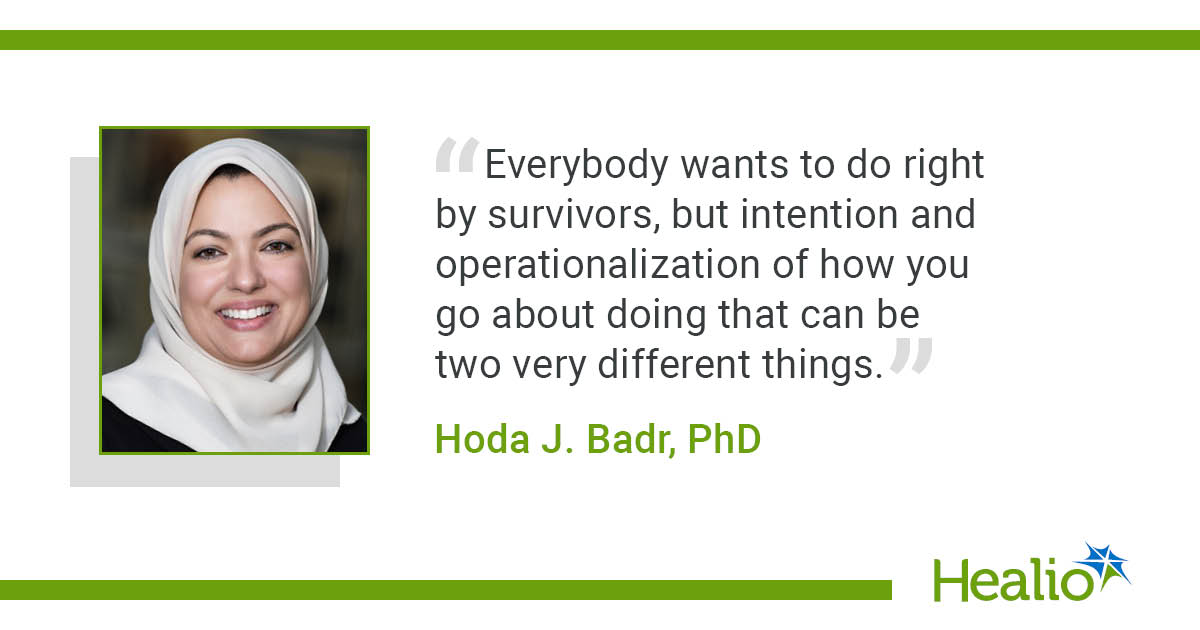
As Hoda J. Badr, PhD, noted, “There was really strong consensus that the standards are important, and that they have the potential to improve survivorship care.” However, she emphasized that “readiness for implementation was much more variable.”
Why This Matters
Advances in cancer screening, diagnosis, and treatment have led to a growing population of cancer survivors, making survivorship care an increasingly important component of oncology practice. Survivors frequently experience long-term or late effects of treatment, including:
- Chronic physical symptoms
- Psychological distress
- Social and relationship challenges
- Employment-related difficulties
- Financial hardship
- Reduced quality of life
The NCI’s National Standards for Cancer Survivorship Care were developed to establish a systematic framework for addressing these needs across the cancer continuum. However, publication of standards does not automatically translate into their successful implementation.
Effective survivorship care often requires coordinated involvement from:
- Medical oncologists
- Radiation oncologists
- Surgical oncologists
- Primary care physicians
- Rehabilitation specialists
- Psychologists and social workers
- Financial navigators
- Nursing teams
Consequently, the central challenge extends beyond determining what care should be delivered. Healthcare organizations must also develop reliable systems to:
- Identify eligible survivors
- Screen for unmet needs
- Coordinate referrals
- Deliver appropriate interventions
- Monitor outcomes
- Evaluate program effectiveness
Closing these implementation gaps could improve consistency of survivorship services across institutions and reduce disparities related to local resource availability.
Study at a Glance
| Feature | Details |
|---|---|
| Study type | Delphi study assessing multidisciplinary expert consensus |
| Participants | 25 multidisciplinary experts, including oncologists, primary care providers, and nurse practitioners |
| Intervention/Exposure | Evaluation of the 10 NCI National Standards for Cancer Survivorship Care across implementation domains |
| Comparator | Not applicable; no control group reported |
| Primary Outcome | Expert assessment of importance, anticipated impact, and organizational readiness for implementation |
| Main Finding | Strong consensus regarding the value of survivorship standards but substantial variability in institutional readiness and implementation capacity |
| Follow-up | Not applicable/not reported |
| Research Setting | Baylor College of Medicine (as reported) |
| Evidence Type | Expert consensus regarding implementation readiness rather than clinical effectiveness |
What the Researchers Found
Broad Agreement on Importance, but Variable Readiness for Implementation
A major finding of the Delphi study was the distinction between agreement on survivorship care priorities and organizational capacity to deliver those services consistently.
Experts uniformly recognized the importance of the NCI survivorship standards and believed that widespread adoption could improve quality of care for cancer survivors. However, readiness assessments demonstrated substantial variability among institutions.
According to Hoda J. Badr, PhD:
“There was really strong consensus that the standards are important, and that they have the potential to improve survivorship care.”
She further explained:
“Readiness for implementation was much more variable.”
These findings suggest that healthcare organizations may accept the principles underlying survivorship care while lacking the operational systems necessary to implement them effectively.
Organizational Barriers May Be More Significant Than Clinical Barriers
The principal obstacles identified were largely structural rather than clinical.
Reported challenges included:
- Lack of formal institutional policies
- Poorly defined workflow ownership
- Insufficient personnel support
- Inadequate evaluation mechanisms
- Limited infrastructure for care coordination
Particularly problematic were standards requiring collaboration among multiple departments.
Examples include coordination between:
- Oncology and primary care
- Oncology and rehabilitation services
- Oncology and psychosocial support teams
- Oncology and financial assistance programs
Dr. Badr emphasized that institutions need reliable methods to:
- Identify patients who require survivorship services
- Determine how services will be delivered
- Ensure access to qualified personnel
- Monitor implementation outcomes
Without such systems, a patient’s unmet psychosocial or financial needs may be recognized but never adequately addressed.
Feasibility Differs Across Survivorship Domains
Table 1. Perceived Feasibility of Implementing Selected Cancer Survivorship Standards
| Survivorship Domain | Implementation Feasibility | Key Considerations |
|---|---|---|
| Surveillance for recurrence and secondary cancers | Relatively high | Already integrated into many oncology practices; primarily requires standardization |
| Lifestyle counseling and health promotion | Relatively high | Existing services such as nutrition, dietetics, and rehabilitation can support implementation |
| Psychosocial care and support | Moderate | Services may exist, but referral inefficiencies and access barriers remain common |
| Financial hardship assessment and support | Low / substantial barriers | Requires new screening systems, financial navigation services, referral pathways, documentation, and tracking |
These assessments reflect expert perceptions described in the report and should not be interpreted as validated quantitative rankings.
Surveillance and Lifestyle Interventions Represent Early Opportunities
Surveillance activities related to recurrence detection and monitoring for new cancer risks were viewed as comparatively easier to implement because they are already standard components of oncology practice.
Implementation efforts in these areas may focus on:
- Standardizing protocols
- Improving documentation
- Ensuring consistency across cancer types
Similarly, lifestyle counseling may leverage existing institutional resources, including:
- Dietitians
- Nutritionists
- Exercise specialists
- Rehabilitation professionals
These domains may therefore represent practical starting points for organizations beginning survivorship program implementation.
Psychosocial Services Require Better Coordination
The study highlighted important gaps in psychosocial care delivery.
Although counseling and supportive services may exist, survivors frequently encounter:
- Long waiting periods
- Fragmented referral pathways
- Navigation difficulties
- Communication breakdowns between providers
Experts suggested that implementation could be strengthened through:
- Patient navigation programs
- Standardized referral criteria
- Enhanced interdisciplinary communication
- Tracking systems to verify referral completion
Importantly, availability of a service does not necessarily guarantee timely patient access.
Financial Hardship Remains a Major Implementation Challenge
Financial toxicity emerged as one of the most difficult standards to operationalize.
Comprehensive implementation may require:
- Routine financial distress screening
- Structured documentation processes
- Financial navigation services
- Referral pathways
- Follow-up and outcome tracking
Table 2. Components of an Effective Financial Toxicity Management Framework
| Component | Purpose |
|---|---|
| Financial distress screening | Identify survivors experiencing economic hardship |
| Structured documentation | Record financial concerns consistently |
| Financial navigation | Assist patients in accessing support resources |
| Referral mechanisms | Connect patients with financial services |
| Follow-up tracking | Monitor completion and effectiveness of interventions |
| EHR integration | Facilitate documentation, referrals, and reporting |
Experts noted that EHR-based tools could facilitate implementation, although their effectiveness would depend on adequate staffing and institutional resources.
Clinical Significance
Translating Standards Into Routine Practice
The study underscores a fundamental implementation principle: standards cannot improve outcomes if healthcare systems are unable to deliver them consistently.
Successfully embedding survivorship care into practice requires organizations to transform broad recommendations into operational workflows that specify:
- Who delivers care
- When care is delivered
- How interventions are documented
- How outcomes are measured
Dr. Badr summarized this objective:
“The goal is to make high-quality survivorship care routine, not exceptional.”
Achieving this goal requires coordinated efforts among:
- Clinical leadership
- Nursing teams
- Information technology departments
- Rehabilitation services
- Psychosocial support services
- Primary care clinicians
- Financial navigation programs
Importance of EHR Integration and Accountability
EHR systems can facilitate implementation through:
- Screening reminders
- Automated referrals
- Documentation templates
- Follow-up alerts
- Quality reporting dashboards
However, technology alone cannot overcome implementation barriers.
Dr. Badr emphasized the need for:
“More workflows, clear ownership of who owns different parts of the workflow.”
Clearly assigned responsibilities may improve:
- Accountability
- Communication
- Referral completion
- Measurement of quality indicators
Avoiding Additional Burdens on Clinicians
The study also suggests that survivorship care implementation should not rely solely on increasing physicians’ workloads.
Oncology professionals often operate within:
- Time-constrained clinical environments
- Staffing shortages
- Administrative burdens
- Increasing patient volumes
Dr. Badr cautioned:
“If it’s just one more chore for somebody in an already strained healthcare system, then it’s not going to happen.”
Accordingly, institutions may benefit from:
- Team-based care models
- Dedicated survivorship coordinators
- Patient navigators
- Automation and EHR support tools
- Shared accountability across disciplines
Measuring Quality and Implementation Success
Implementation should be evaluated through measurable quality indicators.
Table 3. Potential Survivorship Care Quality Metrics
| Domain | Potential Indicator |
|---|---|
| Psychosocial care | Percentage of eligible survivors screened |
| Financial toxicity | Rate of financial hardship screening |
| Referral systems | Referral completion rate |
| Access to services | Time from referral to service utilization |
| Surveillance | Adherence to recommended monitoring protocols |
| Documentation | Completion of survivorship care records |
These metrics represent proposed implementation measures rather than outcomes directly evaluated in the Delphi study.
Limitations
Several limitations should be considered.
Expert Consensus Rather Than Outcome Data
The Delphi process measures expert agreement and does not establish that implementation of the standards improves patient outcomes, quality of life, or survival.
Small Sample Size
The study included only 25 experts, which may not fully represent the diversity of healthcare systems and practice settings.
Limited Generalizability
The findings may not be universally applicable to all oncology practices, health systems, or geographic regions.
Readiness Does Not Equal Effectiveness
Organizational readiness assessments do not provide evidence that a healthcare organization can successfully sustain implementation over time.
Incomplete Methodological Information
The available report did not provide:
- Full journal citation
- DOI
- Publication date
- Delphi response rates
- Number of rounds
- Consensus thresholds
- Validation methodology
As a result, independent appraisal of methodological rigor is limited.
What Doctors Should Know
Standardize Existing Activities
- Align surveillance protocols with survivorship recommendations.
- Reduce variability across providers and cancer types.
Map Survivorship Workflows
- Define how patients are identified.
- Clarify referral pathways.
- Identify points where survivors may be lost to follow-up.
Assign Clear Accountability
- Designate responsibility for screening, referrals, documentation, and follow-up.
- Establish escalation procedures for unresolved issues.
Improve Psychosocial Access
- Monitor wait times.
- Strengthen referral pathways.
- Consider patient-navigation programs.
Address Financial Toxicity Systematically
- Implement standardized screening.
- Develop financial navigation services.
- Track referral completion.
Use EHRs Strategically
- Embed prompts, referrals, templates, and reporting tools.
- Avoid excessive alert fatigue.
Advocate for Organizational Resources
- Secure institutional leadership support.
- Expand staffing where necessary.
- Promote interdisciplinary collaboration.
Measure Delivery Rather Than Policy Adoption
- Evaluate whether services reach patients.
- Focus on actual implementation performance instead of written policy alone.
Interpret Findings Appropriately
- The study informs implementation planning.
- It does not provide evidence that the standards themselves improve clinical outcomes.
Bottom Line
The NCI National Standards for Cancer Survivorship Care provide a comprehensive framework for supporting the long-term physical, psychological, social, and financial well-being of cancer survivors. However, successful implementation depends less on clinician agreement with the standards and more on organizational readiness.
This Delphi study demonstrated strong expert consensus regarding the importance of survivorship care while revealing substantial institutional variation in policy infrastructure, staffing, interdisciplinary coordination, EHR integration, and quality-monitoring systems.
Surveillance and lifestyle interventions may offer practical initial targets for implementation because they are often already embedded within oncology practice. Conversely, psychosocial care coordination and financial toxicity management require more extensive infrastructure, dedicated personnel, and systematic workflows.
Ultimately, healthcare organizations must move beyond endorsement of survivorship standards and establish operational systems with clear accountability, integrated workflows, measurable outcomes, and adequate resources. The overarching goal, as articulated by Dr. Badr, is to make high-quality survivorship care “routine, not exceptional.”
Original Research / DOI
| Item | Details |
|---|---|
| Research Design | Delphi study evaluating expert perspectives regarding implementation readiness of the NCI National Standards for Cancer Survivorship Care |
| Participants | 25 multidisciplinary experts |
| Research Setting | Baylor College of Medicine (reported) |
| Expert Interviewed | Hoda J. Badr, PhD, J. Ewing Mears Endowed Professor and Director, Division of Population Science, Thomas Jefferson University |
| Source of Report | Healio interview/report |
| Journal Citation | Not available in supplied source material |
| DOI | Not reported |
| Publication Date | Not provided |
| Clinical Outcome Data | Not evaluated |
| Primary Focus | Organizational readiness and implementation feasibility of survivorship care standards |