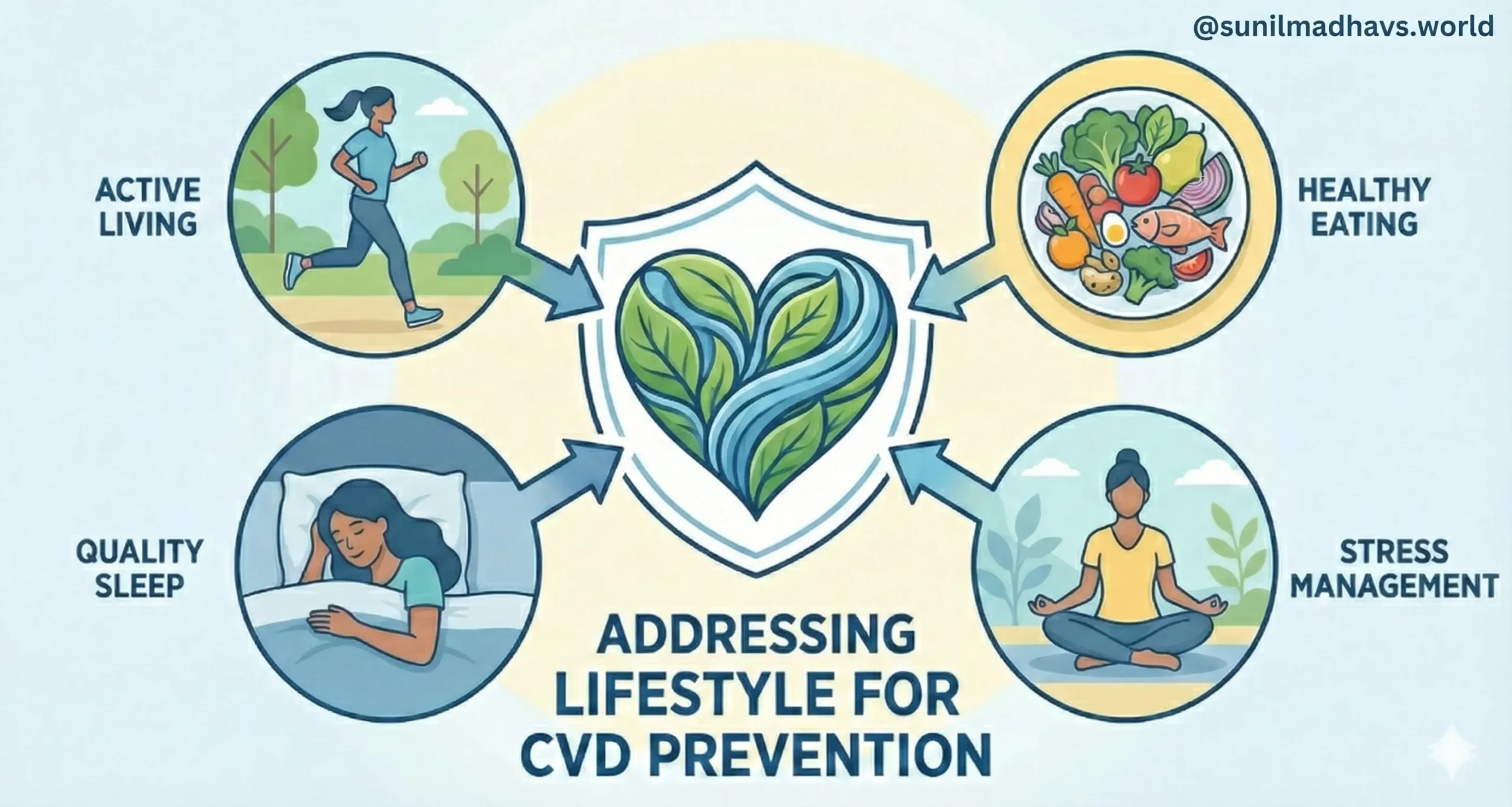
Lifestyle Medicine Conference in Dallas.
The Core Problem: Stagnation Despite Innovation
Dr. Koushik Reddy, an interventional cardiologist and director at the James A. Haley VA Medical Center, highlighted a critical paradox in modern medicine: despite significant technological advancements in cardiology, death rates are not dropping.
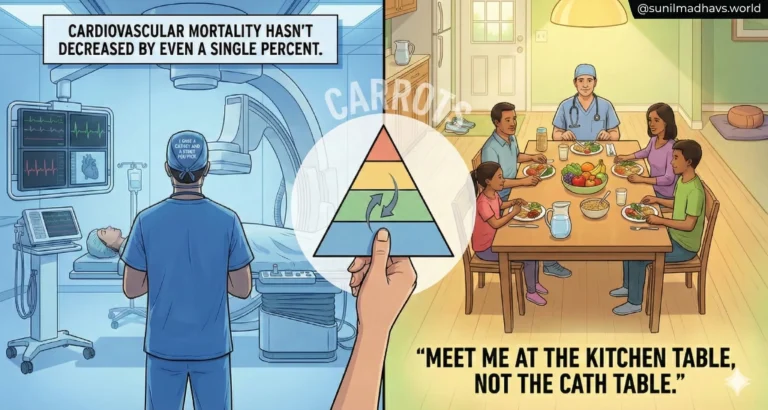
Citing a recent review in Circulation, Dr. Reddy pointed out that age-adjusted cardiovascular death rates have remained flat since 2010, while risk factors continue to skyrocket. He expressed frustration with the traditional “symptom management” approach, stating:
“Cardiovascular mortality across the population has not gone down even by a single percent… Meanwhile, almost every cardiovascular risk factor is skyrocketing, and here I am in the confines of a cath lab, wondering if the letters next to my name, MD, have merely become ‘manager of disease,’ because that’s what I’m doing.”
He further critiqued the pharmaceutical-first model, noting:
> “I’m wondering if I’m living a paradigm where for every ill, I have a pill, and you get the bill.”
The Solution: “Flipping the Script”
Dr. Reddy proposes that the healthcare system must shift its foundation from tertiary care (treating the sick) to lifestyle promotion (preventing illness). He advocates for a “flipped pyramid” where population health and primary care form the base, rather than relying on interventionalists to save lives only when “everything fails.”
He summarized this shift with a poignant message to the President of the American College of Lifestyle Medicine (ACLM):
> “Meet me at the kitchen table, not the cath table.”
The “CARROTS” Methodology
Dr. Reddy is the first interventional cardiologist to be recognized as a lifestyle medicine intensivist. To bridge the gap between invasive surgery and preventative living, he adopted the slogan, “I have a carrot and a stent. You pick.”
He utilizes the acronym CARROTS to define the pillars of his lifestyle medicine approach:
Caring relationship
Avoid toxins
Restful sleep
Regular exercise
Omitting stress
Thoughtful eating
Social driver
Integration into Clinical Workflow
Dr. Reddy acknowledges the difficulty of implementing soft skills in a high-acuity environment like a catheterization lab or ICU. However, he insists that transformation must begin with the individual physician.
> “The change has to start with me. … My space is a cath lab and a [critical care unit]. That’s where I have to change because that’s my sphere of influence.”
To make this practical, Dr. Reddy altered his clinical documentation. In his medical notes, he lists the six pillars of lifestyle medicine at the very top, placing them above the active cardiovascular disease. This forces the entire medical team to view social connection, nutrition, and stress as primary factors rather than afterthoughts.
Conclusion
Dr. Reddy emphasized that while there will always be a need for interventionalists to treat acute heart attacks, that role should not be the cornerstone of the healthcare system. He argues for a system where the “very presence” of a lifestyle medicine intensivist in a cath lab becomes unnecessary because the system successfully prioritizes prevention.
Source link