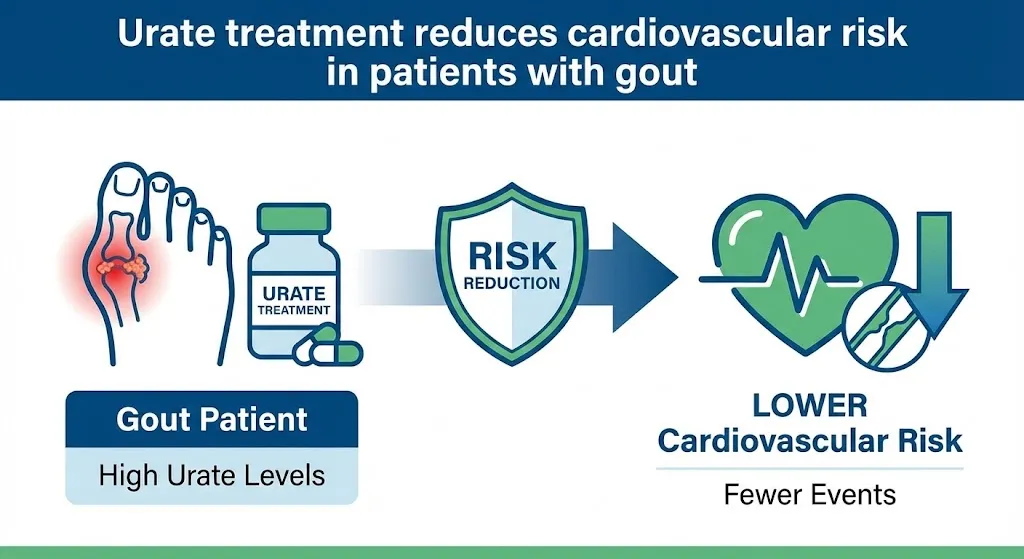
Association Between Target Urate Levels and Cardiovascular Outcomes in Gout
Data published in JAMA Internal Medicine indicates that patients with gout who successfully achieve a serum urate level of less than 6 mg/dL through urate-lowering treatment (ULT) experience a significantly lower 5-year risk for major adverse cardiovascular events (MACE).¹
Rationale and Methodology
Abhishek, PhD, professor of rheumatology at the University of Nottingham, highlighted the inflammatory mechanisms driving this research. “Each gout flare — including the first gout flare — is associated with a short-term increase in the risk for heart attack and stroke,” Abhishek stated. The study aimed to determine if a “treat-to-target” approach achieving lower urate levels “can also prevent heart attack and stroke in people with gout.”¹
The investigators analyzed a cohort of 109,504 adults (mean age, 62.9 years) with a mean disease duration of 2.5 years. All participants had pretreatment serum urate levels exceeding 6 mg/dL and had recently initiated ULT. The study stratified patients into two groups based on their response to therapy within the first 12 months: those who achieved the target serum urate level (<6 mg/dL) and those who did not. Only 27.3% of the cohort successfully reached the target level within the one-year timeframe.¹
Key Findings
At the 5-year follow-up, the study observed a protective association in the group that achieved the target urate level:
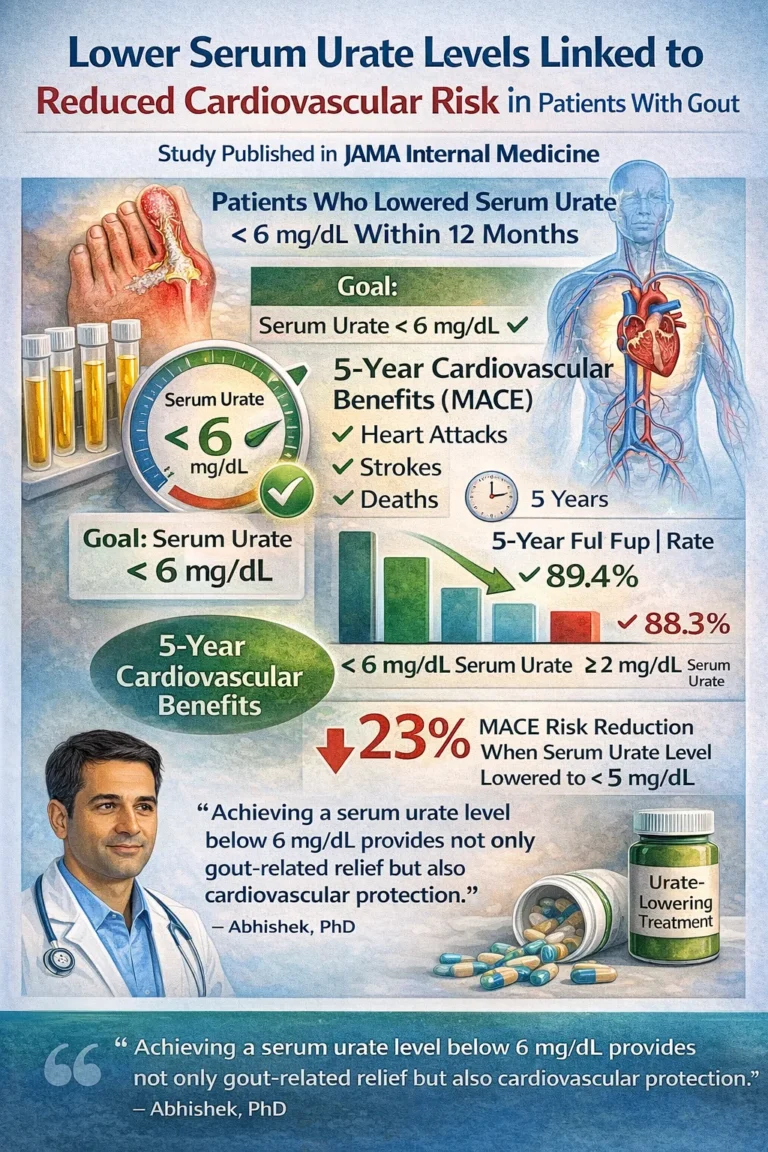
MACE Reduction: Patients achieving <6 mg/dL demonstrated a 9% relative risk reduction for MACE compared to those who did not reach the target (weighted hazard ratio, 0.91; 95% CI, 0.89 to 0.92).¹
Survival Rates: The 5-year weighted event-free survival rate was higher in the target group (89.4%) compared with the non-target group (88.3%).¹
Risk Stratification and Dose-Response
The investigators reported that the correlation between achieving target urate levels and reduced MACE risk was more pronounced in patients with high or very high cardiovascular risk profiles. Furthermore, a treat-to-target approach with more aggressive goals yielded superior outcomes; patients who achieved serum urate levels of less than 5 mg/dL demonstrated the greatest benefit, showing a 23% relative risk reduction for MACE.¹
Clinical Implications
“The findings of this study provide another potential benefit of treat-to-target ULT for people with gout,”
Abhishek noted. Given the “high cardiometabolic burden” inherent to this patient population, the authors suggest these data provide a compelling additional rationale for managing urate levels aggressively. Abhishek concluded that “these findings should be considered by specialist societies when they update their