Key Points:
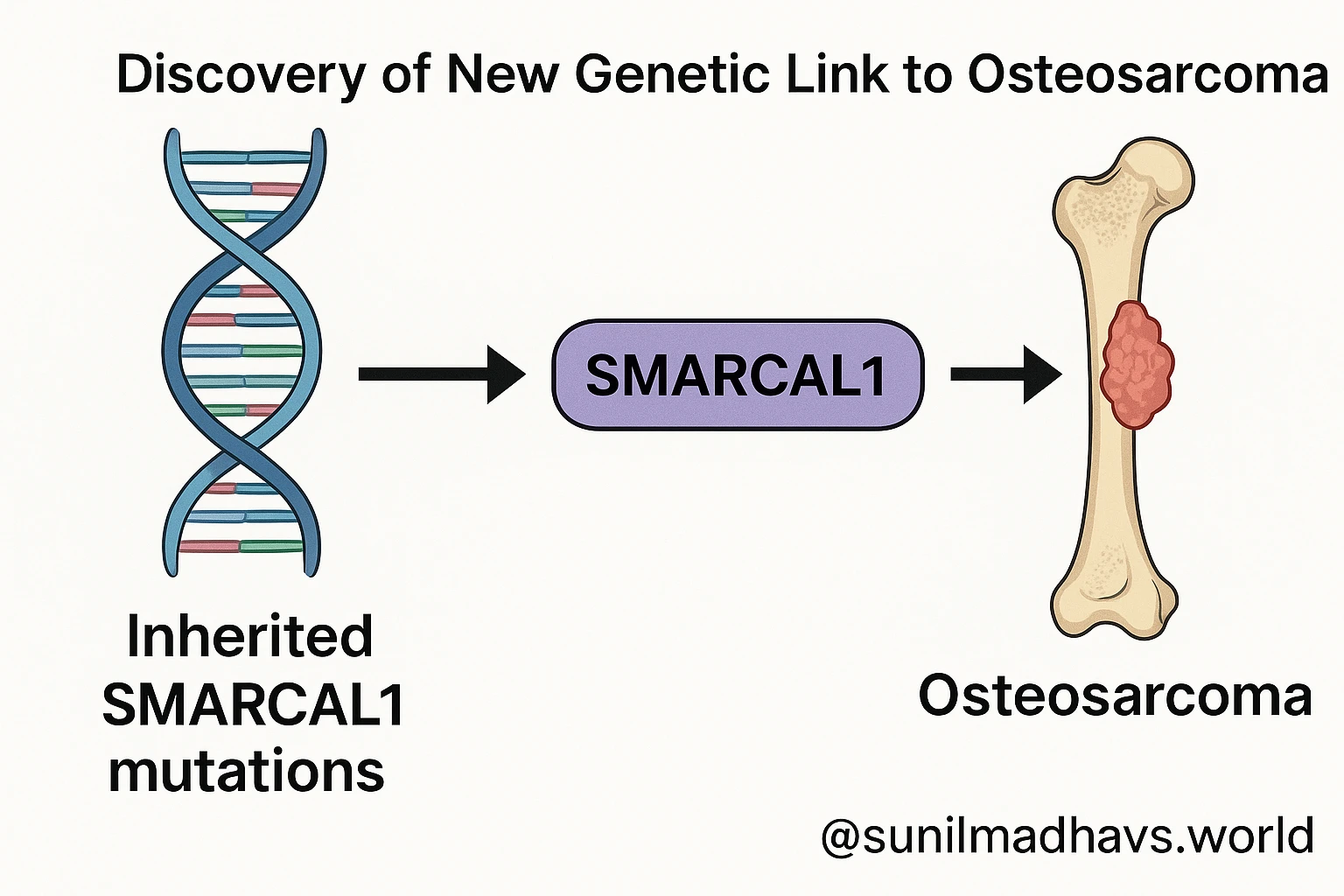
- Researchers have identified that inherited mutations in the SMARCAL1 gene are closely associated with an increased risk of osteosarcoma, the most common type of bone cancer in children and young adults.
- This discovery has the potential to support earlier diagnosis and contribute to the development of targeted treatment approaches.
Researchers have uncovered a new genetic factor linked to pediatric osteosarcoma. The study focused on nearly 200 genes involved in DNA damage repair, and found that germline mutations in the SMARCAL1 gene appear significantly more frequently in children with osteosarcoma than in cancer-free individuals.
According to Richa Sharma, MD, pediatric hematologist and oncologist at Cleveland Clinic Children’s, “Osteosarcoma is a poster child for a highly genomically unstable tumor, which is one reason why outcomes are so poor.” She emphasized that discovering this type of inherited risk factor is rare: “This is one of the few germline associations identified for osteosarcoma, which is a big deal for the patients who suffer from this cancer. This could play a big role in early detection, and diving deep and understanding the biology should lead us down the road of targeting pathways controlled by these genetic changes in cancer.”
Why This Matters
Previous studies suggest that up to 18% of children diagnosed with cancer carry pathogenic variants in genes known to increase cancer risk. However, most genomic research on inherited cancer susceptibility focuses on a relatively small set of 70–110 well-established predisposition genes.
Sharma and her team instead conducted a broad investigation across 189 DNA repair genes, taking an unbiased and more exploratory approach.
Their analysis included:
- 5,993 children with various cancers, compared against
- 14,477 cancer-free adults
From this, they identified multiple associations and then validated the findings in an additional 1,497 childhood cancer cases across three independent patient cohorts.
What the Study Confirmed
They reaffirmed known gene-cancer relationships, including:
- TP53 variants in several cancer types
- MLH1 and PMS2 in high-grade gliomas
- BARD1 in neuroblastoma
- BRCA2 in non-Hodgkin lymphoma
New Significant Genetic Associations Identified
| Gene | Cancer Type |
|---|---|
| SMARCAL1 | Osteosarcoma |
| BRCA1 | Ependymoma |
| SMC5 | Medulloblastoma |
| SPIDR | High-grade glioma |
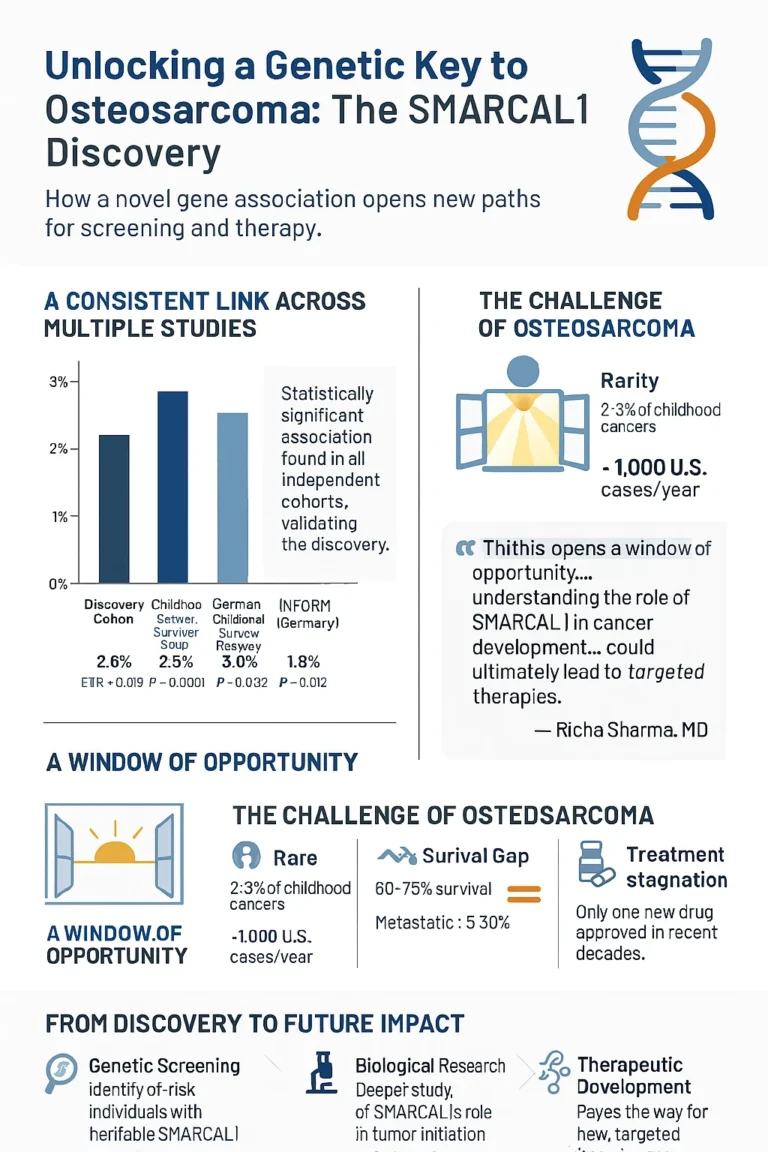
The SMARCAL1-osteosarcoma association was consistently observed across four separate cohorts, with mutation frequencies ranging from 1.8% to 3% — a meaningful level for a rare pediatric cancer.
Sharma explained the importance of understanding how this gene contributes to tumor development:
“If I learn how this specific gene contributes to osteosarcoma development, could I learn something about the overall tumor biology?”
She added:
“This opens a window of opportunity… understanding the role of SMARCAL1 in cancer development also opens a bigger window to better understanding its role in several other types of cancer, which could ultimately lead to targeted therapies.”
Context of Osteosarcoma
- Osteosarcoma represents 2–3% of childhood cancers
- About 1,000 new cases occur each year in the U.S., half in children and teens
- Survival is 60–75% for localized cases, but only 5–30% if metastasized
- Standard therapy includes surgery + chemotherapy; new drug development has been limited in recent decades
Because the disease has high genomic instability and few known inherited risk genes, identifying SMARCAL1 provides an important new direction for research, diagnosis, and screening.
Sharma noted that their work aims to continually look beyond well-known gene lists, stating:
“Looking for novelty requires a novel approach… Thinking bigger — and outside the box — by asking a biologically relevant question in a cancer type-agnostic manner is what led us to discovering novel cancer predisposition genes.”