Exposure to Celebrity and Influencer Alcohol Promotion on Social Media and Its Impact on Youth Drinking Behaviors: A Comprehensive Review
Introduction and Public Health Context
The ubiquitous nature of digital media has fundamentally transformed the landscape of marketing, particularly concerning age-restricted substances such as alcohol. A growing body of empirical evidence indicates that social media platforms serve as highly accessible conduits for alcohol-related content, often bypassing traditional regulatory frameworks designed to shield pediatric and adolescent populations from premature exposure. Platform-specific policies frequently prove insufficient in curtailing the dissemination of such material to minors. This phenomenon is vividly illustrated by two recent landmark studies—published in Pediatrics and JAMA Pediatrics—which collectively illuminate the pervasive reach of celebrity-owned alcohol brands and the profound psychological influence of “everyday” lifestyle influencers on the drinking intentions of young adults.
Unregulated Exposure: Celebrity-Owned Alcohol Brands on Instagram
Traditional advertising regulations mandate explicit disclosures for sponsored content across digital platforms. However, a critical loophole exists: celebrities frequently circumvent these disclosure requirements when promoting brands in which they hold a proprietary interest. To quantify this regulatory blind spot, Gedefaw Diress Alen, MPH, of the Centre for Alcohol Policy Research at La Trobe University, alongside colleagues, conducted a comprehensive longitudinal analysis of Instagram activity.
The investigative team analyzed the digital footprints of 112 celebrities known to possess ownership stakes in alcohol brands. The cohort was predominantly male (72.3%), with a mean age of 50.8 years, and commanded massive digital audiences, with 71.4% boasting follower counts exceeding one million. Analyzing data from January 1, 2020, to December 31, 2023, the researchers scrutinized biography mentions, timeline posts, audience demographics, and the presence or absence of formal advertising disclosures.
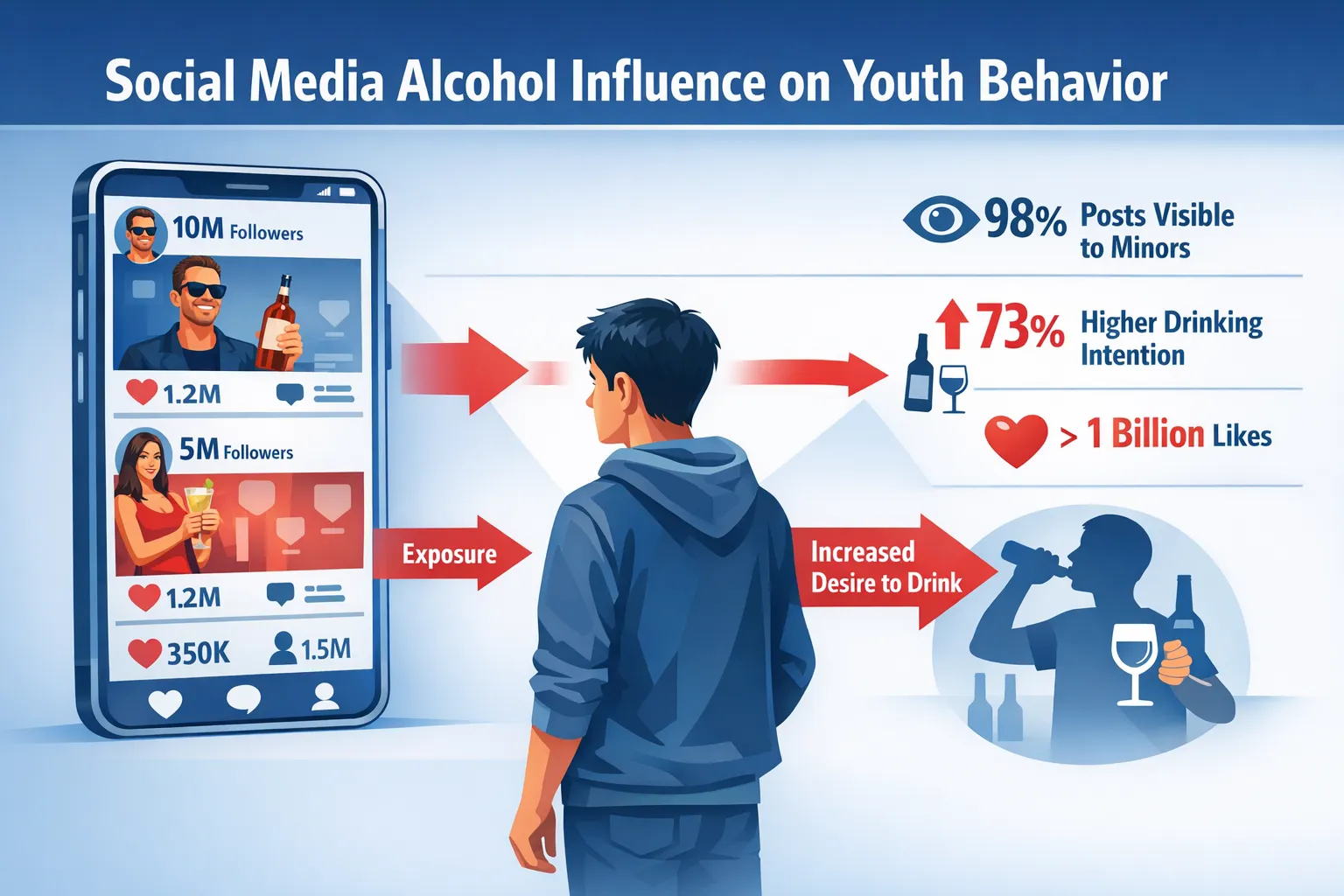
The scale of engagement associated with these posts was unprecedented. Over the four-year study period, the cohort generated 85,673 posts, of which 3.4% (n = 2,933) explicitly mentioned their proprietary alcohol brands. These specific posts catalyzed massive digital interaction, accumulating an aggregate of more than 1 billion likes and 7.5 million comments. Crucially, 98.2% of these promotional posts completely lacked any form of advertising disclosure.
To definitively test the accessibility of this content to underage users, Alen and colleagues engineered a simulated Instagram account registered to a 15-year-old user. When exposed to a curated sample of 660 celebrity alcohol posts, an overwhelming 98% were fully visible to the simulated minor, with a mere 2% (n = 14) successfully blocked by platform age-restriction protocols.
Jon-Patrick Allem, PhD, MA, an associate professor of social and behavioral sciences at the Rutgers School of Public Health, contextualized the gravity of these findings: “This descriptive study adds to a substantial body of research showing that social media often includes content that normalizes, promotes and glorifies alcohol use.”
Table 1. Characteristics and Engagement of Celebrity-Owned Alcohol Brand Posts (2020–2023)
| Variable Assessed | Study Findings |
| Celebrity Cohort Size | 112 individuals (72.3% male; mean age: 50.8 years) |
| Audience Reach | 71.4% possessed >1 million followers |
| Promotional Frequency | 75% (n=84) posted regarding their brand at least once; 37.5% listed the brand in their biography |
| Total Alcohol-Specific Posts | 2,933 posts (3.4% of total total 85,673 posts) |
| Aggregate Engagement | >1 billion likes; 7.5 million comments |
| Lack of Ad Disclosure | 98.2% of alcohol-related posts contained no disclosure |
| Accessibility to Minors | 98% of sampled posts (n=660) were visible to a simulated 15-year-old account |
The Psychological Impact of Parasocial Relationships on Drinking Intentions
While the Pediatrics study mapped the sheer volume of exposure, a parallel study authored by Dr. Allem and published in JAMA Pediatrics investigated the immediate behavioral and psychological sequelae of viewing such content. The study explored the nuanced impact of lifestyle influencers—individuals who cultivate deep, parasocial bonds and high degrees of perceived authenticity with their audiences.
The research team recruited a cohort of 2,000 young adults (mean age, 21.2 years; standard deviation, 2.07 years; 42.7% female). Participants were randomized to view Instagram content generated by lifestyle influencers; one cohort was exposed to content featuring subtle alcohol cues, while the control cohort viewed similar content devoid of alcohol references.
Following rigorous statistical adjustments to account for baseline social media usage, historical alcohol consumption, and prior exposure to formal alcohol advertisements, the data revealed striking behavioral shifts. Participants exposed to the influencer content featuring alcohol demonstrated a 73% higher likelihood of expressing an immediate desire to consume alcohol. The mediating role of perceived influencer authenticity was profound: participants who rated the content creator as highly trustworthy exhibited more than a five-fold increase in their desire to drink.
Dr. Allem highlighted the insidious nature of this digital marketing, noting, “The videos were not ads but everyday influencer content, showing how subtle alcohol cues in social media can influence viewers’ drinking intentions.”
Table 2. Impact of Influencer Alcohol Content on Young Adult Drinking Intentions
| Variable / Condition | Adjusted Odds Ratio (aOR) | 95% Confidence Interval (CI) |
| Exposure to Influencer Content Featuring Alcohol (vs. No Alcohol) | 1.73 | 1.46 – 2.07 |
| High Perceived Trustworthiness of the Content Creator | 5.53 | 3.50 – 8.76 |
Note: Data adjusted for baseline social media use, prior alcohol consumption, and previous ad exposure. Cohort N = 2,000; Mean age = 21.2 years.
Algorithmic Amplification, Legal Precedents, and the Path Forward
The empirical data detailing digital exploitation and the normalization of underage substance exposure arrives against a backdrop of escalating legal scrutiny aimed at major technology conglomerates. Recent judicial rulings have begun holding platforms accountable for the detrimental psychological and developmental impacts of their algorithms.
In a landmark decision in New Mexico, a jury mandated that Meta (the parent corporation of Facebook, Instagram, and WhatsApp) pay $375 million in damages for transgressing state statutes designed to shield minors from online exploitation. Concurrently, a California judge ordered Meta and Google (the parent company of YouTube) to disburse a combined $6 million to a plaintiff who successfully argued that the platforms’ deliberately addictive algorithms directly precipitated severe childhood anxiety and depressive disorders.
Public health advocates argue that resolving this crisis requires a multifaceted approach targeting the foundational architecture of social media platforms. Dr. Allem emphasized that legislative and structural interventions are paramount. “Policies can protect youth in several ways, including, but not limited to eliminating algorithmic recommendations and amplification,” he stated. Expanding on the mechanics of platform design, he explained, “In other words, algorithmic recommendations expose social media users to a broader range of content, rather than only the material surfaced based on the accounts they follow.”
Furthermore, legal frameworks must evolve to compel stricter adherence to age-gating mechanisms. As Allem noted, legislation “can also be developed to force social media companies to better enforce their policies designed to prevent exposure to alcohol and other inappropriate content by young people.”
Looking toward the future of digital marketing and public health, Allem pointed to an emerging market trend driven by shifting consumer habits: the rise of influencer-developed non-alcoholic beverages. As traditional alcohol consumption metrics experience slight demographic declines, the digital promotion of these sober alternatives provides a novel area for behavioral research. “I’d be interested to see the impact of promotions from such brands on young people’s drinking-related attitudes and behaviors,” Allem concluded, signaling a critical next frontier in the ongoing study of digital media’s influence on adolescent health.