
Top Posts
Contact form
Antidepressant discontinuation during pregnancy raises risk for mental...
Vitamin D deficiency, respiratory hospitalization risk linked
Statins may protect against asthma exacerbations
FDA to act against use of GLP-1 active...
Urate treatment reduces cardiovascular risk in patients with...
Good News for Patients Worried About Statin Side...
Benefits and Risks of PFO Closure by Causal...
FDA clears investigational new drug application for ER-100
4-hour dialysis treatments improve outcomes
SunilMadhavs World
  • Home
  • Support Portal
  • My Subscriptions
  • Contact Information
  • About
    • Cardiology
      • Gastroenterology
        • Radiology
          • Pulmonology
            • Gynecology
    • Neurology
  • Urology
    • Hematology
      • Profile
        • Log Out
        • Register
        • Edit Account
        • Change Password
        • GDPR-compliant cookie policy.
          • Terms and conditions
            • Contact Information
  • About
    • Privacy policy
      • BASICS DISCUSS
        • BASICS
          • ANATOMY
            • BASICS PRO
              • ANATOMY PRO
              • BIOCHEMISTRY PRO
              • PHYSIOLOGY
                • BIOCHEMISTRY
                  • PHYSIOLOGY PRO
                    • BASICS RESEARCH
                    • ANATOMY ADVANCEMENTS
                    • BIOCHEMISTRY ADVANCEMENTS
                    • PHYSIOLOGY ADVANCEMENTS
  • Team SunilMadhavs World
  • TOPICS
  • INTERMEDIATE
  • 0
Home » Most patients with advanced cancer do not undergo next-generation sequencing testing
ONCOLOGY

Most patients with advanced cancer do not undergo next-generation sequencing testing

by Team SunilMadhavs World July 8, 2025
A+A-
Reset
188
 

Key Points:

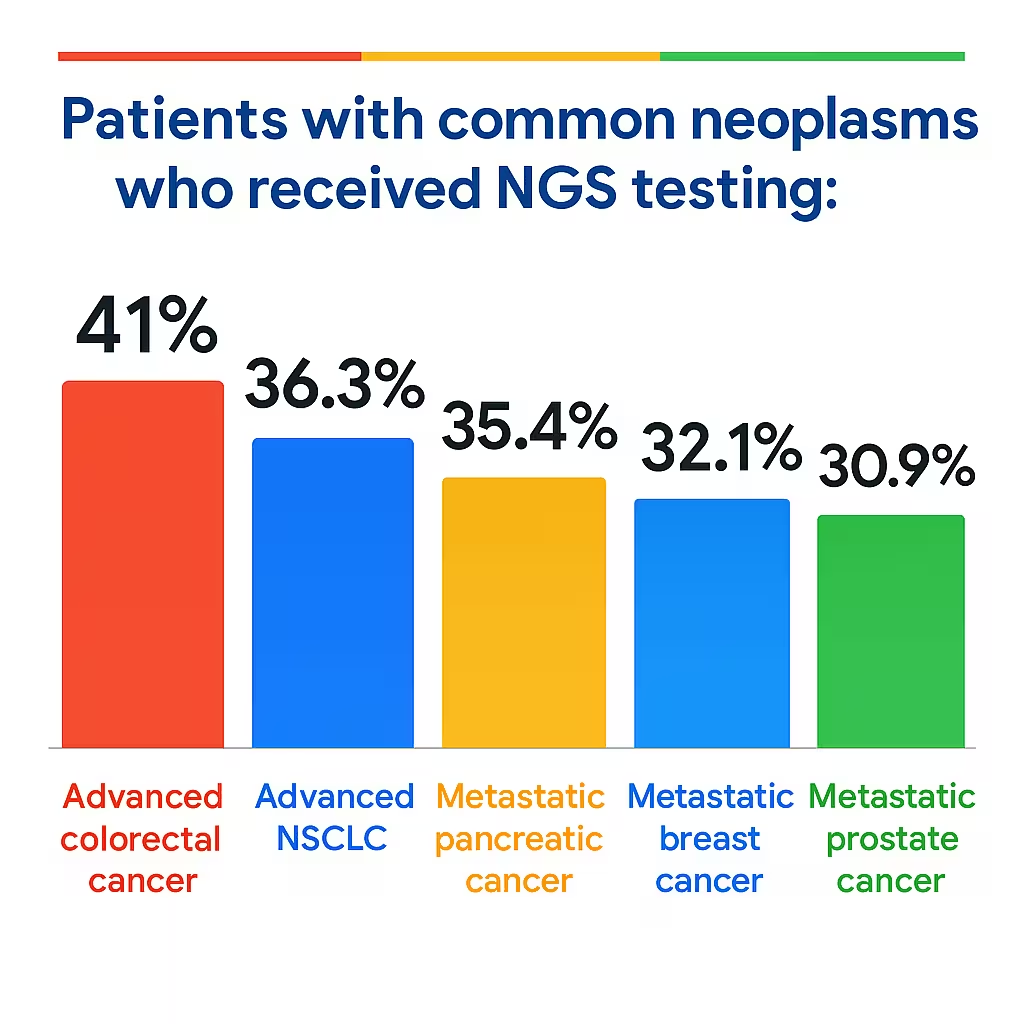
  • Only 30% to 40% of patients with the most common cancers undergo next-generation sequencing (NGS) testing.

  • Of those who are tested, a significant portion receive results within three months of their death.

Overview from ASCO 2025 Annual Meeting:

A recent study presented at the ASCO Annual Meeting revealed that most patients with advanced or metastatic cancers in the U.S. do not receive next-generation sequencing (NGS) testing. Among those who do, many receive the results late in their disease progression—sometimes just months before death.

Study Insights:

Dr. Chadi Hage Chehade, a postdoctoral fellow at Huntsman Cancer Institute, explained that NGS is a powerful tool that helps identify genetic mutations which could inform targeted treatments and improve survival. Previous research had already noted low NGS use among patients with metastatic prostate and urothelial cancers. This study expanded the analysis to include the five most common advanced cancers: non-small cell lung cancer (NSCLC), breast, prostate, colorectal, and pancreatic cancers.

Methodology:

The study used real-world data from the Flatiron Health database, covering 280 cancer clinics since 2011. It included patients with one of the five cancers who had documented NGS results and a known date of death. Patients were categorized based on when they received NGS results: more than 3 months before death, within 3 months, or after death.

Findings:

Out of over 190,000 patients:

  • Only about one-third of patients in each cancer group had undergone NGS testing.

    • NSCLC: 36.3%

    • Breast: 32.1%

    • Colorectal: 41%

    • Prostate: 30.9%

    • Pancreatic: 35.4%

Among those tested and with recorded deaths:

  • Most received results more than 3 months before death (e.g., 85.4% for prostate cancer, 72.3% for NSCLC).

  • However, around 25% of NSCLC and pancreatic cancer patients received results within 3 months of death.

  • A small portion (1.1% to 2.4%) received results posthumously.

Implications:

Dr. Chehade emphasized the concern that many patients may be tested too late to benefit from potentially life-extending targeted therapies. While it’s encouraging that earlier testing has increased over the last decade, further improvements are needed.

Limitations & Next Steps:

Researchers acknowledged limitations like missing data and inherent bias from using electronic health records. Future research aims to identify why delays in NGS testing occur and how to ensure earlier testing so patients can access appropriate therapies while they’re still likely to benefit.

Conclusion:

To fully utilize the benefits of personalized medicine, NGS testing must occur earlier in the treatment journey. Delayed testing limits the chances for patients to receive potentially life-saving therapies in time.



0 0 votes
Article Rating
Next gen sequencingOncology
SourcesHealio
(adsbygoogle = window.adsbygoogle || []).push({});
0 comments 0 FacebookTwitterPinterestEmail
Team SunilMadhavs World

Subscribe
Login
Notify of
Save my name, email, and website in this browser cookies for the next time I comment.

Save my name, email, and website in this browser cookies for the next time I comment.

0 Comments
Oldest
Newest Most Voted
Inline Feedbacks
View all comments
previous post
Suicide of patient on LVAD therapy sparks wider mental health discussion
next post
Astaxanthin may decrease chronic, acute digital eye strain symptoms in children

Login/Register

Google Icon
Login With Google
X Icon
Login With X
Facebook Icon
Login With Facebook

Keep me signed in until I sign out

Forgot your password? Register here

Google Icon
Login With Google
X Icon
Login With X
Facebook Icon
Login With Facebook

Login here

Social Networks

Facebook Twitter Instagram Linkedin Rss

Categories

Popular Posts

  • 1

    Suicide of patient on LVAD therapy sparks wider mental health discussion

    July 4, 2025
  • 2

    WHO in India

    June 18, 2025
  • 3

    Mediterranean diet could improve psoriasis symptoms

    October 13, 2025
  • 4

    TAVR and surgery showed similar results at 7-year follow-up.

    November 27, 2025
  • 5

    Oral drug lowers OSA severity over 6 months

    June 2, 2025

Recent Posts

  • Contact form

    March 20, 2026
  • Antidepressant discontinuation during pregnancy raises risk for mental health emergencies

    February 19, 2026
  • Vitamin D deficiency, respiratory hospitalization risk linked

    February 13, 2026
  • Statins may protect against asthma exacerbations

    February 19, 2026

About SunilMadhavs World

Facebook Twitter Instagram Pinterest Youtube Snapchat
  • Log In
  • About
  • Register
  • Profile
  • My account
  • Edit Account
  • Change Password
  • My Subscriptions
  • chnfo@suni0
  • Support Portal
  • Contact Information
  • Privacy policy
  • GDPR-compliant cookie policy.
  • Terms and conditions
  • Medical Disclaimer

@2019 - All Right Reserved. Designed and Developed by PenciDesign

SunilMadhavs World
  • Home
  • Support Portal
  • My Subscriptions
  • Contact Information
  • About
    • Cardiology
      • Gastroenterology
        • Radiology
          • Pulmonology
            • Gynecology
    • Neurology
  • Urology
    • Hematology
      • Profile
        • Log Out
        • Register
        • Edit Account
        • Change Password
        • GDPR-compliant cookie policy.
          • Terms and conditions
            • Contact Information
  • About
    • Privacy policy
      • BASICS DISCUSS
        • BASICS
          • ANATOMY
            • BASICS PRO
              • ANATOMY PRO
              • BIOCHEMISTRY PRO
              • PHYSIOLOGY
                • BIOCHEMISTRY
                  • PHYSIOLOGY PRO
                    • BASICS RESEARCH
                    • ANATOMY ADVANCEMENTS
                    • BIOCHEMISTRY ADVANCEMENTS
                    • PHYSIOLOGY ADVANCEMENTS
  • Team SunilMadhavs World
  • TOPICS
  • INTERMEDIATE
SunilMadhavs World
  • Home
  • Support Portal
  • My Subscriptions
  • Contact Information
  • About
    • Cardiology
      • Gastroenterology
        • Radiology
          • Pulmonology
            • Gynecology
    • Neurology
  • Urology
    • Hematology
      • Profile
        • Log Out
        • Register
        • Edit Account
        • Change Password
        • GDPR-compliant cookie policy.
          • Terms and conditions
            • Contact Information
  • About
    • Privacy policy
      • BASICS DISCUSS
        • BASICS
          • ANATOMY
            • BASICS PRO
              • ANATOMY PRO
              • BIOCHEMISTRY PRO
              • PHYSIOLOGY
                • BIOCHEMISTRY
                  • PHYSIOLOGY PRO
                    • BASICS RESEARCH
                    • ANATOMY ADVANCEMENTS
                    • BIOCHEMISTRY ADVANCEMENTS
                    • PHYSIOLOGY ADVANCEMENTS
  • Team SunilMadhavs World
  • TOPICS
  • INTERMEDIATE
@2019 - All Right Reserved. Designed and Developed by PenciDesign

Shopping Cart

Close

No products in the cart.

Close
wpDiscuz