
Evaluating the Association Between GLP-1 Receptor Agonists and Nonarteritic Anterior Ischemic Optic Neuropathy (NAION)
Overview
The potential association between the use of glucagon-like peptide-1 (GLP-1) receptor agonists and the development of nonarteritic anterior ischemic optic neuropathy (NAION) remains inconclusive. According to a recent narrative review published in Clinical & Experimental Ophthalmology, current data present a “mixed” picture that warrants “ongoing vigilance” and cautious clinical decision-making for patients experiencing vision loss.
Dr. Helen V. Danesh-Meyer, a professor of ophthalmology at the University of Auckland, New Zealand, and co-author of the review, highlighted the clinical relevance of this issue:
“GLP-1 receptor agonists are now being prescribed extraordinarily widely, so optometrists will inevitably see increasing numbers of patients taking them. There is an emerging signal suggesting an association between GLP-1 receptor agonists and NAION, but how robust the relationship is remains to be established.”
Review Scope and Methodology
To evaluate the existing evidence, Dr. Danesh-Meyer and Dr. Joseph F. Rizzo III, director of the neuro-ophthalmology service at Mass Eye and Ear, conducted a narrative review of available literature. The scope of their research encompassed multiple study designs and evaluated a broad spectrum of GLP-1 medications currently on the market.
Table 1. Scope of the Narrative Review
| Category | Details |
| Included Study Types |
• 5 pharmacovigilance database studies
• 10 cohort or electronic health record (EHR) studies
• 2 systematic reviews and meta-analyses
|
| GLP-1 Medications Examined | Semaglutide, liraglutide, dulaglutide, tirzepatide, exenatide, and lixisenatide |
Summary of Findings
The researchers identified conflicting outcomes depending on the study design and geographic origin of the cohort. While some data indicated an elevated risk, other analyses found no robust association. Dr. Danesh-Meyer noted that these contradictory findings are highly “informative” because “they tell us that the story is not yet settled.”
Table 2. Summary of Evidence on GLP-1 Use and NAION Risk
| Study Type | Key Findings | Notes |
| Meta-Analysis 1 (78 RCTs of semaglutide) | Odds Ratio (OR) of 3.9 for NAION. | Acknowledged a “limited number of NAION events.” |
| Meta-Analysis 2 (69 studies; multiple GLP-1s) | No significant association with ischemic optic neuropathy. | Did not specifically track NAION due to a lack of precise diagnostic codes. |
| European Observational Studies | Increased NAION risk associated with semaglutide. | Based on Danish and Norwegian national registry data and a Danish prospective cohort. |
| U.S. Observational Studies | Generally reported “null or weak associations.” | Findings contrast with those from European registries. |
Reflecting on these data, Dr. Danesh-Meyer stated:
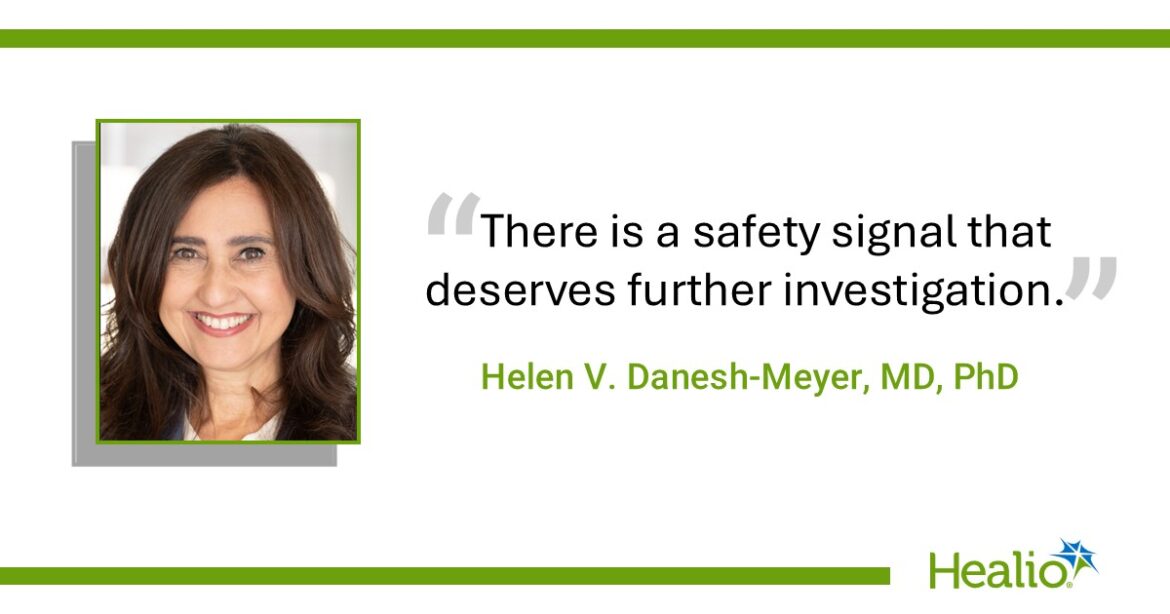
“The sensible interpretation at present is that there is a safety signal that deserves further investigation, but the magnitude, and possibly even the existence, is still being investigated.”
Clinical Implications and Patient Management
For practicing clinicians, Dr. Danesh-Meyer emphasized that “the main takeaway is awareness rather than alarm,” noting that providers “need to balance ocular risk against the substantial overall health benefits of these drugs.”
She provided the following targeted recommendations for patient management:
-
High-Risk Patients: “In someone who has already had NAION, the class of medication should be avoided. Similarly, if a patient is a monocular patient … the class of medication should be considered carefully.”
-
General Patient Population: “But in most people, the decision needs to be individualized.”
Addressing what she called “the most difficult question to answer at present”—whether to proactively screen patients for a small, crowded optic nerve (often referred to as a “disc-at-risk”) and advise against GLP-1 use—she concluded:
“At this stage, I don’t think we have evidence from clinical trials to justify withholding an otherwise beneficial GLP-1 receptor agonist solely because someone has a small cup or crowded optic nerve. But patients should be informed of the evidence and be involved in the decision-making.”
Expert Perspective on Collaborative Care
Supplementing the review, Asantewaa Aboagye-MacCarthy, OD, FAAO (University of Alabama at Birmingham), offered a clinical perspective on behalf of the American Academy of Optometry Communications Committee. She noted that current evidence does not establish a causal link or justify the broad discontinuation of GLP-1s for diabetes and obesity management. However, NAION may represent a rare adverse event, potentially triggered in patients with anatomical susceptibilities like a disc-at-risk.
Aboagye-MacCarthy advises eye care providers to actively inquire about GLP-1 usage, educate patients on NAION symptoms, and encourage immediate reporting of visual changes. Crucially, if NAION is diagnosed, she stresses that eye care providers should not unilaterally discontinue the medication, but rather coordinate with the patient’s primary care provider to carefully weigh the cardiovascular and metabolic benefits against the ocular risks.