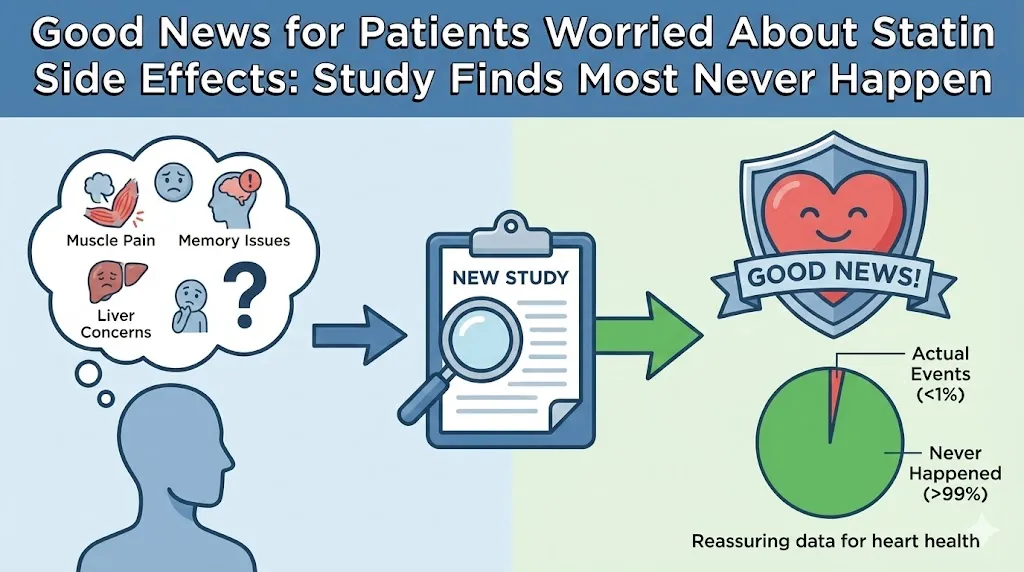
Analysis of Statin Safety and Adverse Event Attribution
A large-scale analysis published in *The Lancet* offers significant reassurance regarding the tolerability of statin therapy, finding that the vast majority of adverse effects commonly listed on medication labels are not causally related to the drug. The study, conducted by the Cholesterol Treatment Trialists’ Collaboration, utilized individual patient data from 23 randomized controlled trials involving 154,000 participants to evaluate 66 reported non-muscle, non-diabetes adverse outcomes.¹
**Adverse Event Findings**
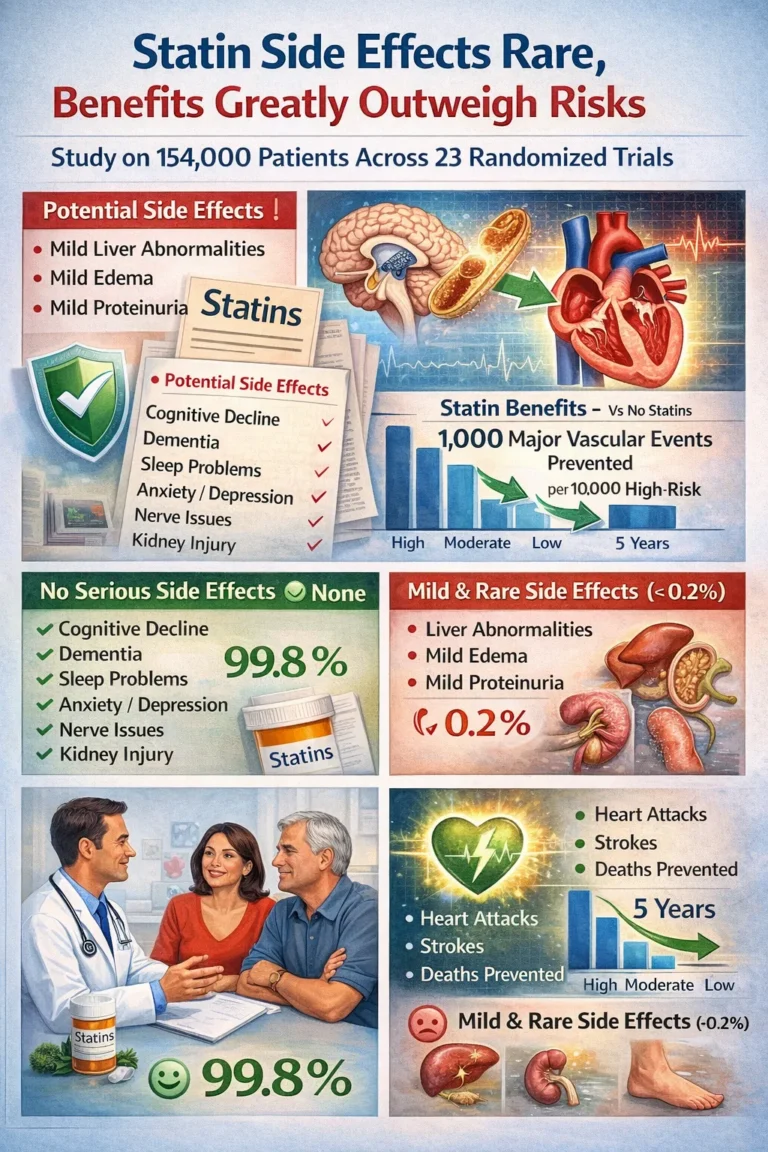
Of the 66 outcomes analyzed—which included conditions such as cognitive impairment, sleep disorders, and renal injury—only four met the significance criteria for the false discovery rate: abnormal liver transaminases, minor urinary composition changes (primarily mild proteinuria), edema, and other liver function test abnormalities. The investigators determined that the absolute annual risk for these confirmed adverse events was less than 0.2%.¹
**Risk-Benefit Ratio**
The study authors contrasted these rare risks with the significant cardiovascular protection provided by the therapy. In a cohort of 10,000 patients treated with moderate-intensity statins for five years, the medication would typically prevent approximately 1,000 major vascular events in patients with established cardiovascular disease and 500 events in high-risk patients without prior events.¹
**Organ-Specific Outcomes**
* **Hepatobiliary:** A dose-response relationship was observed regarding liver enzymes, an effect largely driven by the use of atorvastatin 80 mg. However, the study found no increase in clinical liver disease, including hepatitis, liver failure, or jaundice. The investigators emphasized that the observed signals “reflected biochemical laboratory abnormalities rather than clinically significant liver disease.”¹
* **Renal:** While a signal for mild proteinuria was detected, there was no association with acute kidney injury, hematuria, or a decline in renal function.¹
* **Neurological:** The study found no causal link between statins and cognitive decline, memory loss, dementia, depression, sleep disturbance, or peripheral neuropathy.¹
**Clinical Implications**
The findings highlight a disconnect between clinical evidence and product labeling. Ana C. Iribarren, MD, an instructor at Cedars Sinai, pointed out that current labels rely heavily on observational data prone to the nocebo effect. “The current disconnect between evidence and labeling creates real clinical harm,” she stated.¹
Eugene Yang, MD, MS, of the University of Washington School of Medicine, noted that while prescribing habits may not change, the study provides “powerful reassurance” for patients. “If anything, this kind of evidence should make clinicians more confident in recommending statins and help patients feel more comfortable taking them when indicated,” Yang said.¹
**Conclusion**
Christina Reith, PhD, of the University of Oxford and the study’s lead investigator, expressed hope that the data would mitigate the trend of statin discontinuation caused by exaggerated safety concerns. “We hope this research will help people better understand that the substantial benefits of statins in preventing cardiovascular events — such as heart attacks and strokes caused by blocked blood vessels — far outweigh their risks,” Reith stated.¹
—
**Reference**
1. Levine LA. Good News for Patients Worried About Statin Side Effects: Study Finds Most Never Happen. Medscape Medical News. February 9, 2026.