Top Posts
Acupuncture may improve pain, reduce opioid use after...
Denosumab does not raise atypical femur fracture risk
Asthma exacerbations drop with medium-dose ICS to biologic...
Hypercortisolism common in patients with resistant hypertension
Elegrobart reduces proptosis in active thyroid eye disease
Brepocitinib โ€˜a major move forwardโ€™ as first targeted...
Posts about celeb-owned alcohol brands reach most underage...
Evolocumab cuts heart events in patients with diabetes...
Extended use of AUD medications cut mortality risk...
Zongertinib a โ€˜breakthroughโ€™ for NSCLC with HER2 mutations
SunilMadhavs World
  • Home
  • Support Portal
  • My Subscriptions
  • Contact Information
  • About
    • Cardiology
      • Gastroenterology
        • Radiology
          • Pulmonology
            • Gynecology
    • Neurology
  • Urology
    • Hematology
      • Profile
        • Log Out
        • Register
        • Edit Account
        • Change Password
        • GDPR-compliant cookie policy.
          • Terms and conditions
            • Contact Information
  • About
    • Privacy policy
      • BASICS DISCUSS
        • BASICS
          • ANATOMY
            • BASICS PRO
              • ANATOMY PRO
              • BIOCHEMISTRY PRO
              • PHYSIOLOGY
                • BIOCHEMISTRY
                  • PHYSIOLOGY PRO
                    • BASICS RESEARCH
                    • ANATOMY ADVANCEMENTS
                    • BIOCHEMISTRY ADVANCEMENTS
                    • PHYSIOLOGY ADVANCEMENTS
  • Team SunilMadhavs World
  • TOPICS
  • INTERMEDIATE
  • 0
Home ยป Vitamin D deficiency, respiratory hospitalization risk linked
Cardiology

Vitamin D deficiency, respiratory hospitalization risk linked

by Team SunilMadhavs World February 13, 2026
by Team SunilMadhavs World Published: February 11, 2026Updated: February 13, 2026
A+A-
Reset
245

Serum Vitamin D Status and Risk of Respiratory Tract Infectionโ€“Related Hospitalization

Bournot AR, et al. American Journal of Clinical Nutrition. 2025; doi:10.1016/j.ajcnut.2025.101179.

ย Background

Vitamin D plays a critical role in musculoskeletal health and immune function. Increasing evidence suggests that its antibacterial and antiviral properties may influence susceptibility to respiratory tract infections (RTIs), which remain a major cause of hospitalization worldwide. Despite biologic plausibility, robust population-level data linking vitamin D status to RTI-related hospitalizations have been limited.

Abigail R. Bournot, MSc, ANutr, emphasized the physiologic importance of the nutrient, stating,

โ€œVitamin D is vital to our physical well-being. Not only does it keep our bones and muscles healthy, its antibacterial and antiviral properties are also thought to help reduce the risk of respiratory tract infections that can lead to hospitalization.โ€

She further noted,

> โ€œThis research attaches hard data to support the theory.โ€

โ€”

ย Study Design and Population

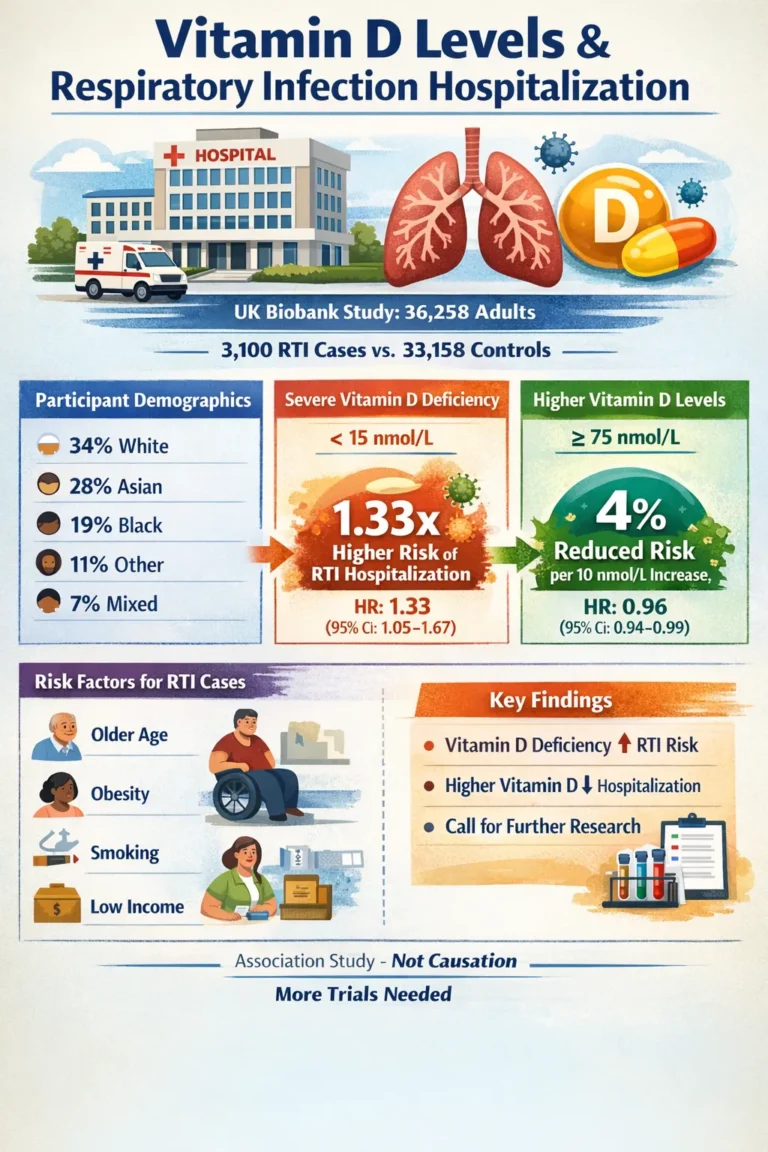
Investigators conducted an unmatched caseโ€“control analysis using data from the UK Biobank to evaluate whether serum 25-hydroxyvitamin D (25[OH]D) concentrations were associated with hospitalization for respiratory tract infections.

The study included 36,258 adults representing diverse racial and ethnic backgrounds:

ย 34% White

ย 28% Asian

ย 19% Black

ย 11% Other

ย 7% Mixed ethnicity

Among these participants, 3,100 adults (8.5%) experienced at least one RTI, whereas 33,158 adults did not.

ย Baseline Characteristics

Participants hospitalized for RTIs differed from those who were not across several clinical and sociodemographic variables:

ย Male sex: 53% vs. 45.7%

ย Age >60 years: 44.9% vs. 25.6%

ย BMI โ‰ฅ30 kg/mยฒ: 41% vs. 28.9%

ย Severe vitamin D deficiency (<15 nmol/L): 13.7% vs. 10.6%

ย Income <ยฃ18,000: 43.2% vs. 27.1%

ย Self-reported fair/poor health: 52.8% vs. 30.9%

ย Current smoking: 15% vs. 11%

ย Statin use: 34.8% vs. 18.1%

These differences highlight the multifactorial risk profile associated with RTI-related hospitalization.

โ€”

Primary Findings

Using a Cox proportional-hazards model, investigators observed a significant inverse relationship between serum vitamin D levels and RTI hospitalization risk.

For every 10 nmol/L increase in serum 25(OH)D, the risk of hospitalization declined by approximately 4%:

ย Hazard ratio (HR): 0.96

ย 95% CI: 0.94โ€“0.99

Consistent with this trend, adults with severe deficiency experienced substantially higher risk compared with those who had sufficient vitamin D levels (โ‰ฅ75 nmol/L):

ย HR: 1.33

ย 95% CI: 1.05โ€“1.67

ย 

You Might Be Interested In
  • Hypercortisolism common in patients with resistant hypertension
    April 7, 2026
  • Evolocumab cuts heart events in patients with diabetes but no CVD
    April 1, 2026

By contrast, no statistically significant differences were identified between individuals with sufficient levels and those whose concentrations ranged from 15 to 74 nmol/L. Binary logistic regression analyses produced similar patterns, reinforcing the robustness of the association.

ย Interpretation and Public Health Implications

ย 

Andrea L. Darling, PhD, highlighted the broader implications of these findings:

ย  โ€œOur findings of a significant association between increased vitamin D levels in our bodies and reduced hospital admission rates warrants further study, and points to the potential for vitamin D supplementation and consumption of vitamin D fortified foods to reduce the risk of hospitalization with respiratory infections in the future, and therefore mitigate pressures on the NHS.โ€

ย 

Collectively, the results suggest that severe vitamin D deficiency may represent a modifiable risk factor for RTI-related hospitalization, with potential implications for preventive strategies and health system burden.

ย 

โ€”

ย 

You Might Be Interested In
  • Hypercortisolism common in patients with resistant hypertension
    April 7, 2026
  • Evolocumab cuts heart events in patients with diabetes but no CVD
    April 1, 2026

ย Perspective

ย 

Kathleen Garcia-Benson, RDN, CSSD, CPT, described the results as largely expected yet clinically meaningful, noting that they may support preventive care initiatives aimed at reducing both illness burden and health care expenditures.

ย 

She observed that the studyโ€™s scale was notable, particularly the linkage of vitamin D measurements with hospitalization records for more than 35,000 participants. However, she cautioned that some deficient individuals may not have been captured if they did not develop infections. Accordingly, the data demonstrate correlation rather than causation but nonetheless underscore an important relationship warranting further investigation.

ย 

Garcia-Benson emphasized vitamin Dโ€™s broad physiologic relevance, explaining that it is commonly recommended for individuals with limited sun exposure or reduced cutaneous synthesis. Beyond bone health, the nutrient contributes to sustained energy, immune competence, brain health, and mental well-being.

ย 

In clinical practice, vitamin D deficiency is frequently encountered. The findings therefore support routine screening during annual wellness and chronic-care visits, followed by supplementation when appropriate and supported by insurance coverage.

You Might Be Interested In
  • Hypercortisolism common in patients with resistant hypertension
    April 7, 2026
  • Evolocumab cuts heart events in patients with diabetes but no CVD
    April 1, 2026

ย 

She also noted persistent uncertainty regarding optimal serum ranges:

ย 

> โ€œAs a health care provider, it would be helpful to have clearer guidance on who would benefit from maintaining a level closer to 30 ng/mol vs. 70 ng/mol, since in health, more is not always better, and the current range is broad.โ€

ย 

Garcia-Benson added that clinicians could enhance care not only through supplementation but also by referring patients to registered dietitians who can promote consistent intake of vitamin Dโ€“rich foods alongside broader preventive health strategies.

ย Limitations

ย Although the large dataset strengthens the analysis, the observational design precludes causal inference. Residual confounding may remain, and the absence of infection among some deficient individuals could influence risk estimates.

Further randomized studies are needed to clarify whether vitamin D supplementation directly reduces RTI hospitalizations and to define optimal therapeutic thresholds.

ย ย Conclusion

You Might Be Interested In
  • Hypercortisolism common in patients with resistant hypertension
    April 7, 2026
  • Evolocumab cuts heart events in patients with diabetes but no CVD
    April 1, 2026

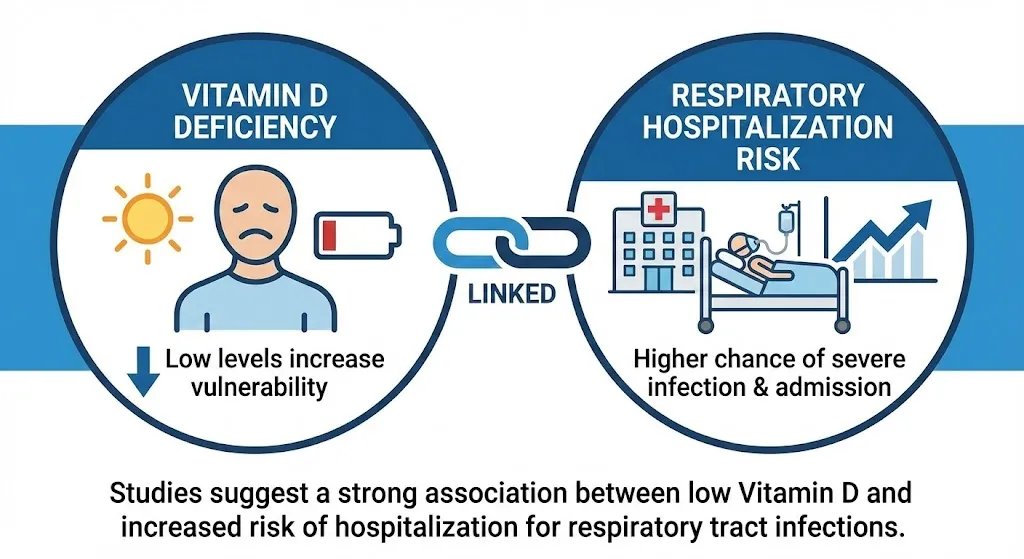
ย In a large UK Biobank cohort, higher serum 25-hydroxyvitamin D concentrations were associated with a significantly lower risk of hospitalization for respiratory tract infections, whereas severe deficiency conferred increased risk. These findings support continued investigation into vitamin D as a potentially modifiable factor in respiratory illness prevention whileunderscoring the need for randomized clinical trials to establish causality and refine target serum levels.

Source linkย 

Related posts:

Hypercortisolism common in patients with resistant hypertension

April 7, 2026

Evolocumab cuts heart events in patients with diabetes but no CVD

April 1, 2026

Extended use of AUD medications cut mortality risk in severe ALD

April 1, 2026
You Might Be Interested In
  • Hypercortisolism common in patients with resistant hypertension
    April 7, 2026
  • Evolocumab cuts heart events in patients with diabetes but no CVD
    April 1, 2026
0 0 votes
Article Rating
(adsbygoogle = window.adsbygoogle || []).push({});
0 comments 0 FacebookTwitterPinterestEmail
Team SunilMadhavs World

Subscribe
Login
Notify of
Save my name, email, and website in this browser cookies for the next time I comment.

Save my name, email, and website in this browser cookies for the next time I comment.

0 Comments
Oldest
Newest Most Voted
Inline Feedbacks
View all comments
previous post
Statins may protect against asthma exacerbations
next post
Antidepressant discontinuation during pregnancy raises risk for mental health emergencies

Related Articles

Hypercortisolism common in patients with resistant hypertension

April 7, 2026

Evolocumab cuts heart events in patients with diabetes...

April 1, 2026

Extended use of AUD medications cut mortality risk...

April 1, 2026

Biomarker panel distinguishes alcohol vs. metabolic liver disease

March 31, 2026

Contact form

March 23, 2026

Statins may protect against asthma exacerbations

February 19, 2026

Login/Register

New: Instant Back/Forward Navigation

When you opt to โ€œRemember Meโ€, WordPress will tell your browser to save the state of pages when you navigate away from them. This allows them to be restored instantly when you use the back and forward buttons in your browser.

Google Icon
Login With Google
X Icon
Login With X
Facebook Icon
Login With Facebook

Keep me signed in until I sign out

Forgot your password? Register here

Google Icon
Login With Google
X Icon
Login With X
Facebook Icon
Login With Facebook

Login here

Social Networks

Facebook Twitter Instagram Linkedin Rss

Categories

Popular Posts

  • 1

    Suicide of patient on LVAD therapy sparks wider mental health discussion

    July 4, 2025
  • 2

    Mediterranean diet could improve psoriasis symptoms

    October 13, 2025
  • 3

    WHO in India

    June 18, 2025
  • 4

    TAVR and surgery showed similar results at 7-year follow-up.

    November 27, 2025
  • 5

    Oral drug lowers OSA severity over 6 months

    June 2, 2025

Recent Posts

  • Acupuncture may improve pain, reduce opioid use after THA

    April 29, 2026
  • Denosumab does not raise atypical femur fracture risk

    April 24, 2026
  • Asthma exacerbations drop with medium-dose ICS to biologic switch

    April 13, 2026
  • Hypercortisolism common in patients with resistant hypertension

    April 7, 2026

About SunilMadhavs World

Facebook Twitter Instagram Pinterest Youtube Snapchat
  • Log In
  • About
  • Register
  • Profile
  • My account
  • Edit Account
  • Change Password
  • My Subscriptions
  • chnfo@suni0
  • Support Portal
  • Contact Information
  • Privacy policy
  • GDPR-compliant cookie policy.
  • Terms and conditions
  • Medical Disclaimer

@2019 - All Right Reserved. Designed and Developed by PenciDesign

SunilMadhavs World
  • Home
  • Support Portal
  • My Subscriptions
  • Contact Information
  • About
    • Cardiology
      • Gastroenterology
        • Radiology
          • Pulmonology
            • Gynecology
    • Neurology
  • Urology
    • Hematology
      • Profile
        • Log Out
        • Register
        • Edit Account
        • Change Password
        • GDPR-compliant cookie policy.
          • Terms and conditions
            • Contact Information
  • About
    • Privacy policy
      • BASICS DISCUSS
        • BASICS
          • ANATOMY
            • BASICS PRO
              • ANATOMY PRO
              • BIOCHEMISTRY PRO
              • PHYSIOLOGY
                • BIOCHEMISTRY
                  • PHYSIOLOGY PRO
                    • BASICS RESEARCH
                    • ANATOMY ADVANCEMENTS
                    • BIOCHEMISTRY ADVANCEMENTS
                    • PHYSIOLOGY ADVANCEMENTS
  • Team SunilMadhavs World
  • TOPICS
  • INTERMEDIATE
SunilMadhavs World
  • Home
  • Support Portal
  • My Subscriptions
  • Contact Information
  • About
    • Cardiology
      • Gastroenterology
        • Radiology
          • Pulmonology
            • Gynecology
    • Neurology
  • Urology
    • Hematology
      • Profile
        • Log Out
        • Register
        • Edit Account
        • Change Password
        • GDPR-compliant cookie policy.
          • Terms and conditions
            • Contact Information
  • About
    • Privacy policy
      • BASICS DISCUSS
        • BASICS
          • ANATOMY
            • BASICS PRO
              • ANATOMY PRO
              • BIOCHEMISTRY PRO
              • PHYSIOLOGY
                • BIOCHEMISTRY
                  • PHYSIOLOGY PRO
                    • BASICS RESEARCH
                    • ANATOMY ADVANCEMENTS
                    • BIOCHEMISTRY ADVANCEMENTS
                    • PHYSIOLOGY ADVANCEMENTS
  • Team SunilMadhavs World
  • TOPICS
  • INTERMEDIATE
@2019 - All Right Reserved. Designed and Developed by PenciDesign

Shopping Cart

Close

No products in the cart.

Close
wpDiscuz