Top Posts
Acupuncture may improve pain, reduce opioid use after...
Denosumab does not raise atypical femur fracture risk
Asthma exacerbations drop with medium-dose ICS to biologic...
Hypercortisolism common in patients with resistant hypertension
Elegrobart reduces proptosis in active thyroid eye disease
Brepocitinib โ€˜a major move forwardโ€™ as first targeted...
Posts about celeb-owned alcohol brands reach most underage...
Evolocumab cuts heart events in patients with diabetes...
Extended use of AUD medications cut mortality risk...
Zongertinib a โ€˜breakthroughโ€™ for NSCLC with HER2 mutations
SunilMadhavs World
  • Home
  • Support Portal
  • My Subscriptions
  • Contact Information
  • About
    • Cardiology
      • Gastroenterology
        • Radiology
          • Pulmonology
            • Gynecology
    • Neurology
  • Urology
    • Hematology
      • Profile
        • Log Out
        • Register
        • Edit Account
        • Change Password
        • GDPR-compliant cookie policy.
          • Terms and conditions
            • Contact Information
  • About
    • Privacy policy
      • BASICS DISCUSS
        • BASICS
          • ANATOMY
            • BASICS PRO
              • ANATOMY PRO
              • BIOCHEMISTRY PRO
              • PHYSIOLOGY
                • BIOCHEMISTRY
                  • PHYSIOLOGY PRO
                    • BASICS RESEARCH
                    • ANATOMY ADVANCEMENTS
                    • BIOCHEMISTRY ADVANCEMENTS
                    • PHYSIOLOGY ADVANCEMENTS
  • Team SunilMadhavs World
  • TOPICS
  • INTERMEDIATE
  • 0
Home ยป Lead exposures linked to cognitive decline
TOXICOLOGY

Lead exposures linked to cognitive decline

by Team SunilMadhavs World July 28, 2025
A+A-
Reset
181

Childhood Lead Exposure Linked to Memory Decline and Dementia Risk in Later Life, Studies Show

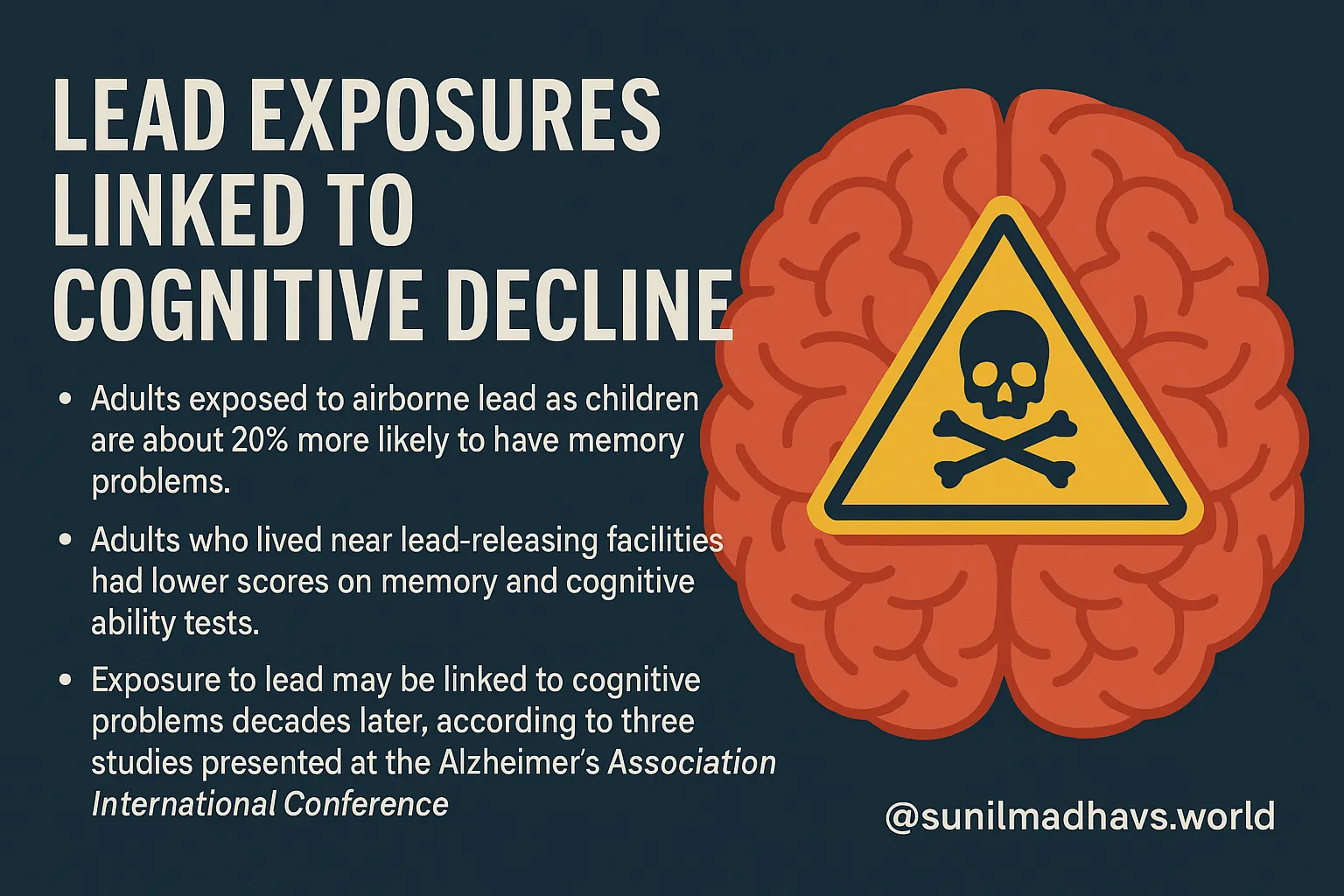
Three new studies presented at the Alzheimerโ€™s Association International Conference (AAIC) 2025 reveal that exposure to lead โ€” particularly during childhood โ€” may significantly increase the risk of memory impairment and cognitive decline decades later. Researchers say this highlights the long-term neurological consequences of environmental toxins, despite improvements in lead regulation over recent decades.


Key Findings

  • Adults who were exposed to airborne lead as children face about a 20% higher risk of memory problems later in life.
  • People who lived near lead-emitting industrial facilities as adults displayed worse memory and cognitive scores.
  • Laboratory studies found that neurons exposed to lead exhibit lasting dysfunctions and biological hallmarks of Alzheimerโ€™s disease, even after the lead is removed.

Maria C. Carrillo, PhD, Chief Science Officer at the Alzheimerโ€™s Association, emphasized that half of the U.S. population โ€” roughly 170 million people โ€” likely experienced dangerous lead exposure during childhood, primarily from leaded gasoline and industrial emissions. โ€œThis underscores how toxic lead remains for brain health well into old age,โ€ Carrillo stated.


1. Leaded Gasoline and Long-Term Memory Problems

One study mapped historic atmospheric lead levels (HALLs) across the U.S. from 1960 to 1974, a period of heavy leaded gasoline use. Based on U.S. Environmental Protection Agency data, researchers classified exposure levels as:

  • Low: <0.4 ยตg/mยณ
  • Moderate: 0.4โ€“0.79 ยตg/mยณ
  • High: 0.8โ€“1.19 ยตg/mยณ
  • Extremely High: โ‰ฅ1.2 ยตg/mยณ

Data from over 640,000 U.S. adults aged 65+, collected between 2012 and 2021, revealed that individuals who had lived in areas with HALLs over 0.4 ยตg/mยณ were 17โ€“22% more likely to report memory impairment than those in low-exposure areas.

Eric Brown, MD, MSc, FRCPC, from Torontoโ€™s Centre for Addiction and Mental Health, said these findings suggest lead may contribute to the development of dementia and Alzheimerโ€™s. Esme Fuller-Thompson, PhD, noted that in the 1970s, childrenโ€™s blood lead levels were 15 times higher than todayโ€™s, with 88% exceeding 10 ยตg/dL โ€” now considered toxic.

The researchers propose that the decline in dementia rates in recent decades may partly reflect the phase-out of leaded gasoline beginning in 1975, which sharply reduced atmospheric lead exposure.


2. Living Near Lead-Releasing Facilities Harms Cognition

Another study assessed 2,409 adults (average age 74; 62% women; 48% Black) from the KHANDLE and STAR cohorts, examining how close they lived to lead-releasing facilities two years before cognitive testing.

Participants lived an average of 6.6 km from a facility, and for each 5-km decrease in distance, researchers observed declines in:

  • Verbal episodic memory: โ€“0.07
  • Semantic memory: โ€“0.09

Those within 6 km of a facility showed even steeper declines:

  • Episodic memory: โ€“0.18
  • Semantic memory: โ€“0.27

Kathryn Conlon, PhD, MPH, of the University of California, Davis, warned that even with improved lead control measures, there is no safe level of exposure. Over 7,500 U.S. facilities released lead in 2023, meaning communities remain at risk. Conlon urged residents near such sites to reduce household lead dust through regular cleaning.


3. How Lead Disrupts Brain Cells

In a laboratory study, neurons derived from human-induced pluripotent stem cells were exposed to lead concentrations (15 and 50 ppb). Researchers observed:

  • Increased electrical hyperactivity โ€” indicating early neuronal dysfunction.
  • Mitochondrial damage โ€” impairing cellsโ€™ ability to produce energy.
  • Lasting vulnerability to stressors, even after lead removal.
  • Elevated levels of phosphorylated Tau, Tau aggregates, and amyloid-beta 42/40 ratios โ€” all key markers of Alzheimerโ€™s disease pathology.

Junkai Xie, PhD, lead researcher from Purdue University, explained that these changes suggest lead exposure may permanently prime the brain for neurodegenerative diseases, making individuals more susceptible to Alzheimerโ€™s later in life.


Overall Implications

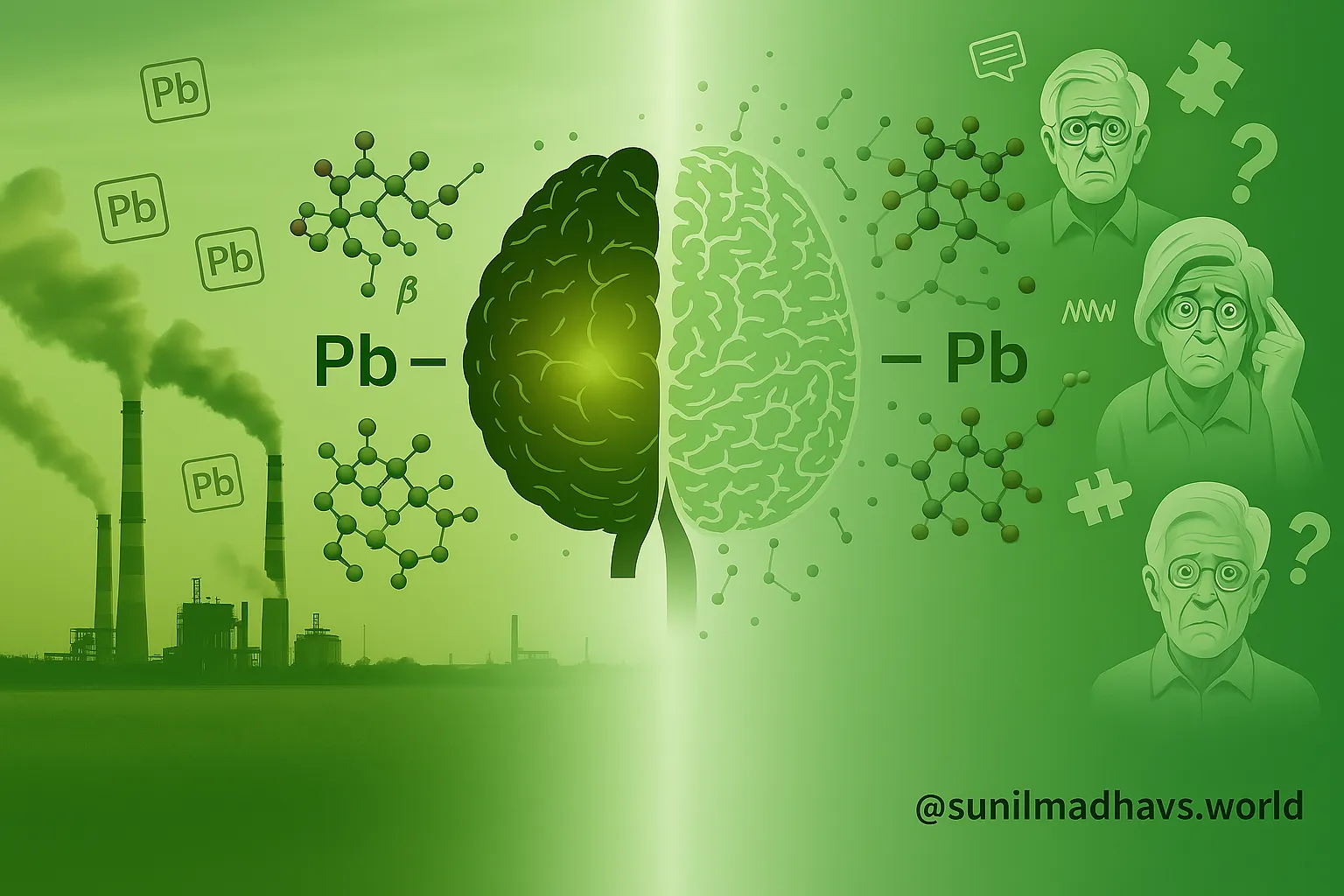
The findings from these three studies collectively suggest that lead exposure โ€” whether from childhood gasoline fumes, industrial pollution, or direct neuronal toxicity โ€” can contribute to cognitive decline and Alzheimerโ€™s disease decades later.

Researchers stress that understanding these mechanisms could lead to targeted interventions for individuals at heightened risk and further public health measures to eliminate residual lead exposure.

0 0 votes
Article Rating
Alzheimer's dementiaLead poisoning
(adsbygoogle = window.adsbygoogle || []).push({});
0 comments 0 FacebookTwitterPinterestEmail
Team SunilMadhavs World

Subscribe
Login
Notify of
Save my name, email, and website in this browser cookies for the next time I comment.

Save my name, email, and website in this browser cookies for the next time I comment.

0 Comments
Oldest
Newest Most Voted
Inline Feedbacks
View all comments
previous post
New framework would reclassify many Americans with overweight as having obesity
next post
FDA Approves Lenz Therapeutics’ Vizzโ„ข for Presbyopia Treatment

Login/Register

New: Instant Back/Forward Navigation

When you opt to โ€œRemember Meโ€, WordPress will tell your browser to save the state of pages when you navigate away from them. This allows them to be restored instantly when you use the back and forward buttons in your browser.

Google Icon
Login With Google
X Icon
Login With X
Facebook Icon
Login With Facebook

Keep me signed in until I sign out

Forgot your password? Register here

Google Icon
Login With Google
X Icon
Login With X
Facebook Icon
Login With Facebook

Login here

Social Networks

Facebook Twitter Instagram Linkedin Rss

Categories

Popular Posts

  • 1

    Suicide of patient on LVAD therapy sparks wider mental health discussion

    July 4, 2025
  • 2

    Mediterranean diet could improve psoriasis symptoms

    October 13, 2025
  • 3

    WHO in India

    June 18, 2025
  • 4

    TAVR and surgery showed similar results at 7-year follow-up.

    November 27, 2025
  • 5

    Oral drug lowers OSA severity over 6 months

    June 2, 2025

Recent Posts

  • Acupuncture may improve pain, reduce opioid use after THA

    April 29, 2026
  • Denosumab does not raise atypical femur fracture risk

    April 24, 2026
  • Asthma exacerbations drop with medium-dose ICS to biologic switch

    April 13, 2026
  • Hypercortisolism common in patients with resistant hypertension

    April 7, 2026

About SunilMadhavs World

Facebook Twitter Instagram Pinterest Youtube Snapchat
  • Log In
  • About
  • Register
  • Profile
  • My account
  • Edit Account
  • Change Password
  • My Subscriptions
  • chnfo@suni0
  • Support Portal
  • Contact Information
  • Privacy policy
  • GDPR-compliant cookie policy.
  • Terms and conditions
  • Medical Disclaimer

@2019 - All Right Reserved. Designed and Developed by PenciDesign

SunilMadhavs World
  • Home
  • Support Portal
  • My Subscriptions
  • Contact Information
  • About
    • Cardiology
      • Gastroenterology
        • Radiology
          • Pulmonology
            • Gynecology
    • Neurology
  • Urology
    • Hematology
      • Profile
        • Log Out
        • Register
        • Edit Account
        • Change Password
        • GDPR-compliant cookie policy.
          • Terms and conditions
            • Contact Information
  • About
    • Privacy policy
      • BASICS DISCUSS
        • BASICS
          • ANATOMY
            • BASICS PRO
              • ANATOMY PRO
              • BIOCHEMISTRY PRO
              • PHYSIOLOGY
                • BIOCHEMISTRY
                  • PHYSIOLOGY PRO
                    • BASICS RESEARCH
                    • ANATOMY ADVANCEMENTS
                    • BIOCHEMISTRY ADVANCEMENTS
                    • PHYSIOLOGY ADVANCEMENTS
  • Team SunilMadhavs World
  • TOPICS
  • INTERMEDIATE
SunilMadhavs World
  • Home
  • Support Portal
  • My Subscriptions
  • Contact Information
  • About
    • Cardiology
      • Gastroenterology
        • Radiology
          • Pulmonology
            • Gynecology
    • Neurology
  • Urology
    • Hematology
      • Profile
        • Log Out
        • Register
        • Edit Account
        • Change Password
        • GDPR-compliant cookie policy.
          • Terms and conditions
            • Contact Information
  • About
    • Privacy policy
      • BASICS DISCUSS
        • BASICS
          • ANATOMY
            • BASICS PRO
              • ANATOMY PRO
              • BIOCHEMISTRY PRO
              • PHYSIOLOGY
                • BIOCHEMISTRY
                  • PHYSIOLOGY PRO
                    • BASICS RESEARCH
                    • ANATOMY ADVANCEMENTS
                    • BIOCHEMISTRY ADVANCEMENTS
                    • PHYSIOLOGY ADVANCEMENTS
  • Team SunilMadhavs World
  • TOPICS
  • INTERMEDIATE
@2019 - All Right Reserved. Designed and Developed by PenciDesign

Shopping Cart

Close

No products in the cart.

Close
wpDiscuz