Top Posts
Contact form
Antidepressant discontinuation during pregnancy raises risk for mental...
Vitamin D deficiency, respiratory hospitalization risk linked
Statins may protect against asthma exacerbations
FDA to act against use of GLP-1 active...
Urate treatment reduces cardiovascular risk in patients with...
Good News for Patients Worried About Statin Side...
Benefits and Risks of PFO Closure by Causal...
FDA clears investigational new drug application for ER-100
4-hour dialysis treatments improve outcomes
SunilMadhavs World
  • Home
  • Support Portal
  • My Subscriptions
  • Contact Information
  • About
    • Cardiology
      • Gastroenterology
        • Radiology
          • Pulmonology
            • Gynecology
    • Neurology
  • Urology
    • Hematology
      • Profile
        • Log Out
        • Register
        • Edit Account
        • Change Password
        • GDPR-compliant cookie policy.
          • Terms and conditions
            • Contact Information
  • About
    • Privacy policy
      • BASICS DISCUSS
        • BASICS
          • ANATOMY
            • BASICS PRO
              • ANATOMY PRO
              • BIOCHEMISTRY PRO
              • PHYSIOLOGY
                • BIOCHEMISTRY
                  • PHYSIOLOGY PRO
                    • BASICS RESEARCH
                    • ANATOMY ADVANCEMENTS
                    • BIOCHEMISTRY ADVANCEMENTS
                    • PHYSIOLOGY ADVANCEMENTS
  • Team SunilMadhavs World
  • TOPICS
  • INTERMEDIATE
  • 0
Home » Standardized protocol for PJI may lead to better outcomes
ORTHOPEDICSTRIALS

Standardized protocol for PJI may lead to better outcomes

by Team SunilMadhavs World August 22, 2025
A+A-
Reset
116


A recent study presented at the Musculoskeletal Infection Society Annual Meeting (Aug. 1–2, 2025, Jersey City, N.J.) highlighted the benefits of implementing a standardized protocol for managing periprosthetic joint infections (PJI) following total joint arthroplasty. Researchers found that using a structured approach to debridement, antibiotics, and implant retention (DAIR) resulted in significantly improved patient outcomes compared with non-standardized methods.


Study Overview

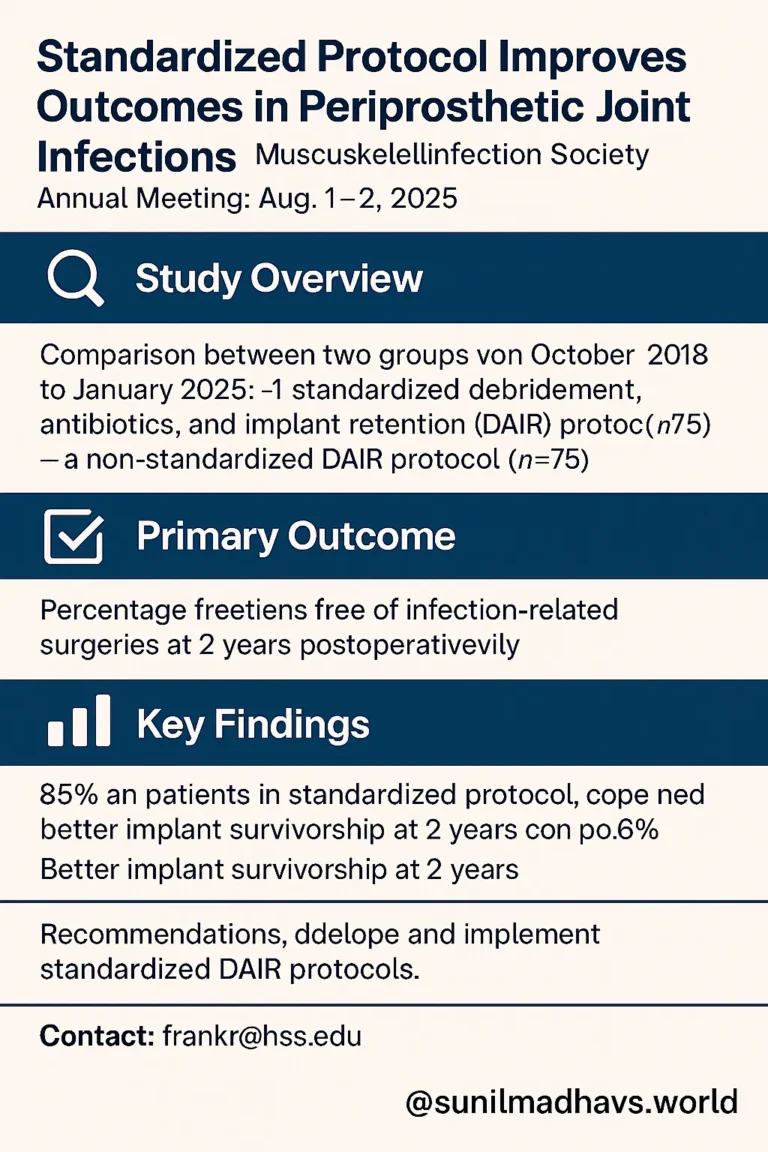
Alberto Carli, MD, a hip and knee replacement surgeon at the Hospital for Special Surgery, and colleagues conducted a retrospective review of patients who underwent DAIR procedures for PJI between October 2018 and January 2025. The study analyzed two patient cohorts:

  • Standardized DAIR group (n = 75): Procedures followed a defined protocol incorporating two antiseptic solutions — 10% povidone-iodine and Bactisure (Zimmer Biomet).
  • Non-standardized DAIR group (n = 75): Procedures performed without a unified protocol, where the choice of antiseptic or steps varied by surgeon preference.

To ensure comparability, patients in both groups were matched by American Society of Anesthesiologists (ASA) scores, chronicity of infection, and whether their surgeries occurred within two years of each other.


Outcomes Measured

The researchers defined primary outcomes as the proportion of patients who avoided any subsequent surgery related to infection within two years of their DAIR procedure.
Secondary outcomes included:

  • Length of hospital stay, measured in admission days.
  • Rate of wound-related complications, broadly defined as wound dehiscence, requirement of postoperative antibiotics, or reoperation due to wound problems.
Results

Carli reported that patients treated under the standardized protocol had superior outcomes:

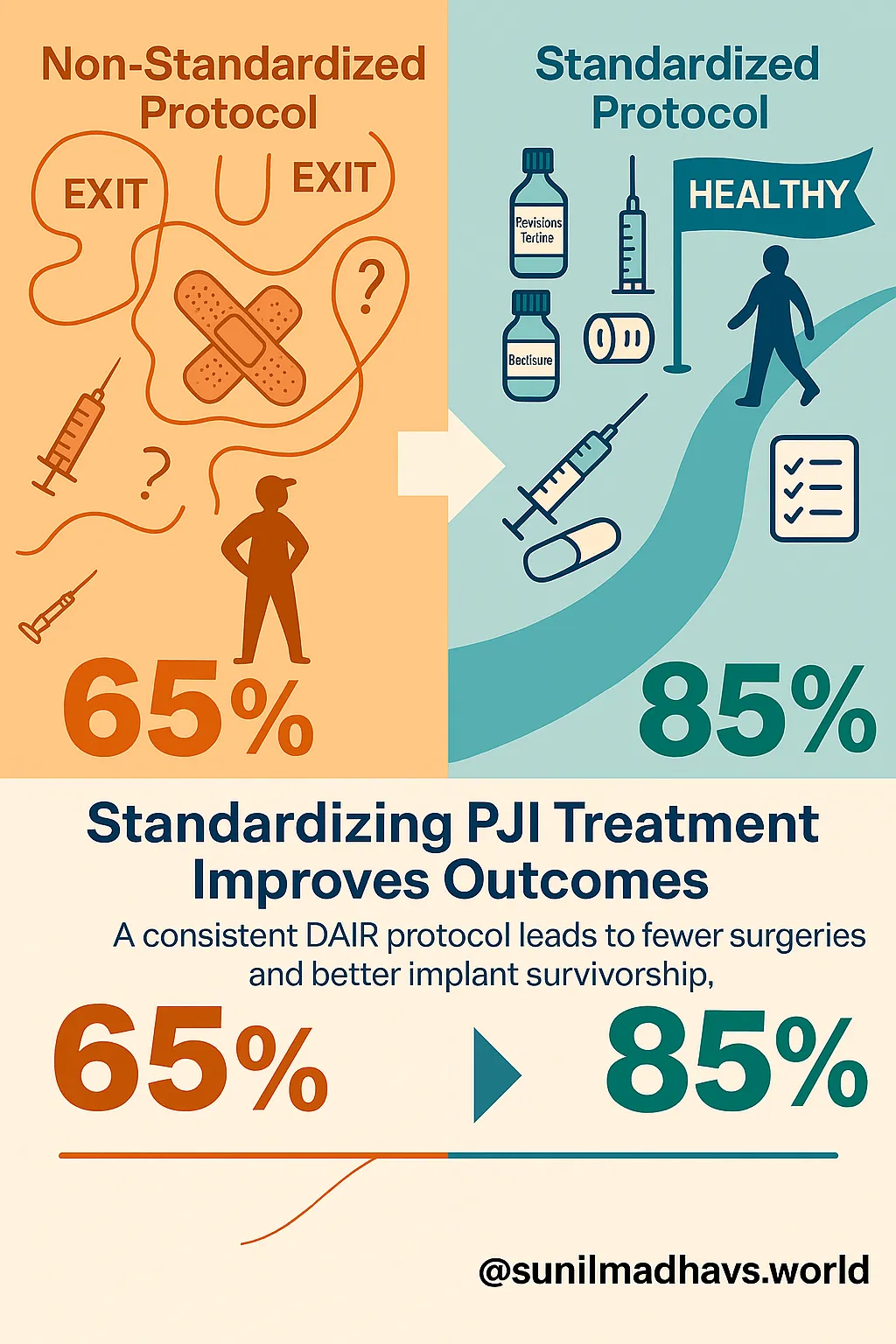
  • 85% of patients did not require additional infection-related surgery at two years post-procedure.
  • In contrast, only 65% of patients in the non-standardized group avoided further surgery.

This difference translated into a significantly higher implant survivorship rate for patients in the standardized DAIR group. The results suggest that the consistent use of antiseptic solutions and a structured, repeatable process can have a meaningful impact on long-term surgical outcomes.


Clinical Implications

Carli emphasized that the findings are less about proving the superiority of one antiseptic solution over another and more about demonstrating the value of systematic standardization. He noted that institutions without a formalized DAIR approach could achieve better patient outcomes by adopting standardized protocols and then tracking outcomes to evaluate effectiveness.

According to Carli, such protocols can help hospitals and surgical teams:

  • Deliver more efficient and cost-effective care, by reducing the need for repeat procedures.
  • Improve patient safety and satisfaction, through better implant survival and fewer complications.
  • Establish benchmarks that allow for continuous quality improvement in the treatment of periprosthetic joint infections.

Expert Recommendation

Dr. Carli concluded that orthopedic surgeons and institutions should actively implement standardized DAIR pathways. By formalizing these processes, healthcare providers may not only improve infection management but also optimize resource utilization and ultimately enhance the quality of patient care.


Source: Sculco P, et al. Paper 1507. Presented at: Musculoskeletal Infection Society Annual Meeting; Aug. 1–2, 2025; Jersey City, N.J.
Disclosure: Dr. Alberto Carli reports consulting for Zimmer Biomet.

For further information, Dr. Carli can be reached via Robin Frank at frankr@hss.edu.

 

Related posts:

Brepocitinib may emerge as the first targeted treatment option for dermatomyositis.

November 27, 2025

Mediterranean diet could improve psoriasis symptoms

October 5, 2025

Exercise, but not liraglutide, linked to decreased atherosclerosis development

October 2, 2025
0 0 votes
Article Rating
ORTHOPEDICSPERIPROSTHETIC JOINT INFECTION
(adsbygoogle = window.adsbygoogle || []).push({});
0 comments 0 FacebookTwitterPinterestEmail
Team SunilMadhavs World

Subscribe
Login
Notify of
Save my name, email, and website in this browser cookies for the next time I comment.

Save my name, email, and website in this browser cookies for the next time I comment.

0 Comments
Oldest
Newest Most Voted
Inline Feedbacks
View all comments
previous post
Higher PFAS exposure may increase weight regain for teens after bariatric surgery
next post
Oral testosterone therapy improves sexual activity for men

Login/Register

Google Icon
Login With Google
X Icon
Login With X
Facebook Icon
Login With Facebook

Keep me signed in until I sign out

Forgot your password? Register here

Google Icon
Login With Google
X Icon
Login With X
Facebook Icon
Login With Facebook

Login here

Social Networks

Facebook Twitter Instagram Linkedin Rss

Categories

Popular Posts

  • 1

    Suicide of patient on LVAD therapy sparks wider mental health discussion

    July 4, 2025
  • 2

    WHO in India

    June 18, 2025
  • 3

    Mediterranean diet could improve psoriasis symptoms

    October 13, 2025
  • 4

    TAVR and surgery showed similar results at 7-year follow-up.

    November 27, 2025
  • 5

    Oral drug lowers OSA severity over 6 months

    June 2, 2025

Recent Posts

  • Contact form

    March 20, 2026
  • Antidepressant discontinuation during pregnancy raises risk for mental health emergencies

    February 19, 2026
  • Vitamin D deficiency, respiratory hospitalization risk linked

    February 13, 2026
  • Statins may protect against asthma exacerbations

    February 19, 2026

About SunilMadhavs World

Facebook Twitter Instagram Pinterest Youtube Snapchat
  • Log In
  • About
  • Register
  • Profile
  • My account
  • Edit Account
  • Change Password
  • My Subscriptions
  • chnfo@suni0
  • Support Portal
  • Contact Information
  • Privacy policy
  • GDPR-compliant cookie policy.
  • Terms and conditions
  • Medical Disclaimer

@2019 - All Right Reserved. Designed and Developed by PenciDesign

SunilMadhavs World
  • Home
  • Support Portal
  • My Subscriptions
  • Contact Information
  • About
    • Cardiology
      • Gastroenterology
        • Radiology
          • Pulmonology
            • Gynecology
    • Neurology
  • Urology
    • Hematology
      • Profile
        • Log Out
        • Register
        • Edit Account
        • Change Password
        • GDPR-compliant cookie policy.
          • Terms and conditions
            • Contact Information
  • About
    • Privacy policy
      • BASICS DISCUSS
        • BASICS
          • ANATOMY
            • BASICS PRO
              • ANATOMY PRO
              • BIOCHEMISTRY PRO
              • PHYSIOLOGY
                • BIOCHEMISTRY
                  • PHYSIOLOGY PRO
                    • BASICS RESEARCH
                    • ANATOMY ADVANCEMENTS
                    • BIOCHEMISTRY ADVANCEMENTS
                    • PHYSIOLOGY ADVANCEMENTS
  • Team SunilMadhavs World
  • TOPICS
  • INTERMEDIATE
SunilMadhavs World
  • Home
  • Support Portal
  • My Subscriptions
  • Contact Information
  • About
    • Cardiology
      • Gastroenterology
        • Radiology
          • Pulmonology
            • Gynecology
    • Neurology
  • Urology
    • Hematology
      • Profile
        • Log Out
        • Register
        • Edit Account
        • Change Password
        • GDPR-compliant cookie policy.
          • Terms and conditions
            • Contact Information
  • About
    • Privacy policy
      • BASICS DISCUSS
        • BASICS
          • ANATOMY
            • BASICS PRO
              • ANATOMY PRO
              • BIOCHEMISTRY PRO
              • PHYSIOLOGY
                • BIOCHEMISTRY
                  • PHYSIOLOGY PRO
                    • BASICS RESEARCH
                    • ANATOMY ADVANCEMENTS
                    • BIOCHEMISTRY ADVANCEMENTS
                    • PHYSIOLOGY ADVANCEMENTS
  • Team SunilMadhavs World
  • TOPICS
  • INTERMEDIATE
@2019 - All Right Reserved. Designed and Developed by PenciDesign

Shopping Cart

Close

No products in the cart.

Close
wpDiscuz