47
Underutilization of SGLT2 Inhibitors and GLP-1 Receptor Agonists in Patients With Type 2 Diabetes and ASCVD
Overview
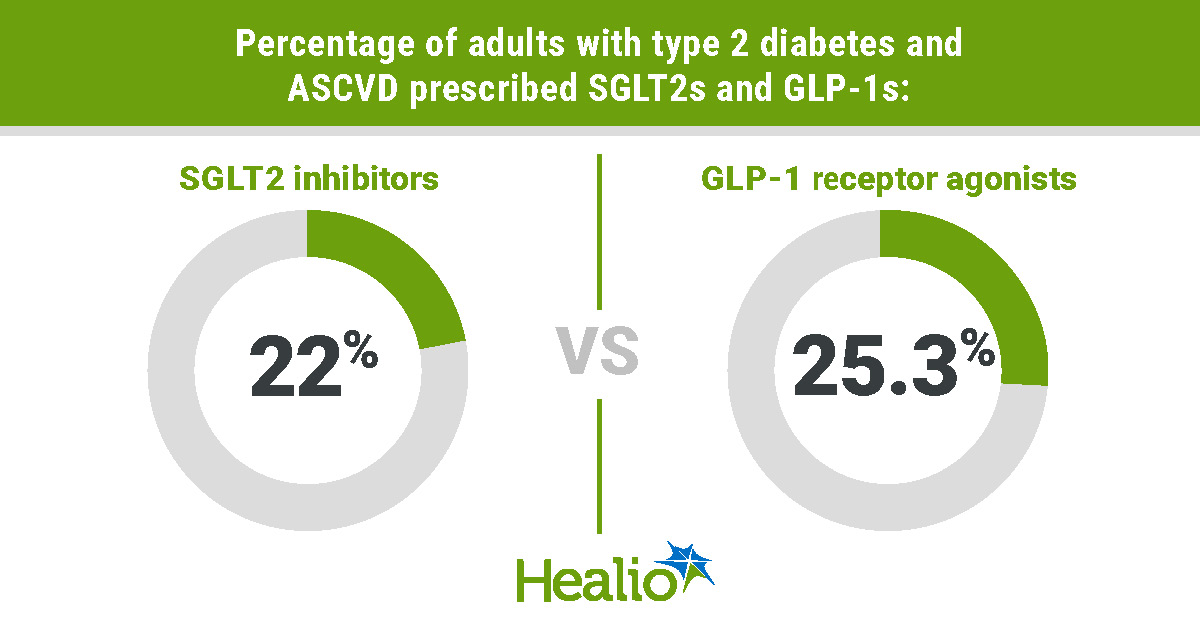
According to recent data published in the American Journal of Preventive Cardiology, a substantial majority of adults with concurrent type 2 diabetes and established atherosclerotic cardiovascular disease (ASCVD) are not receiving prescriptions for sodium-glucose cotransporter 2 (SGLT2) inhibitors or glucagon-like peptide-1 (GLP-1) receptor agonists.
Sangeeta R. Kashyap, MD, assistant chief of clinical affairs in the division of endocrinology, diabetes and metabolism at NewYork-Presbyterian/Weill Cornell Medical Center, noted that the registry data exposed a severe underprescription of both medication classes despite their established cardiovascular benefits.
“I was surprised,” Dr. Kashyap stated regarding the findings. “I was expecting much higher rates, especially at a tertiary care center. It’s hard to know from this analysis if this was related to cost of therapies, access, or if it was patient preference or physician bias. But we know that overall, the drugs are being underused.”
Study Design and Overall Prescribing Rates
Researchers conducted a retrospective cohort analysis utilizing electronic medical records from the Houston Methodist Cardiovascular Learning Health System Registry. The cohort included 8,096 adults (mean age, 69.4 years; 38.8% female) with type 2 diabetes and established ASCVD who attended a minimum of two outpatient visits between June 2016 and August 2023.
Overall baseline medication utilization for the cohort is summarized in Table 1.
Table 1. Overall Medication Prescribing Rates in the Study Cohort (N = 8,096)
| Medication Class | Patients Prescribed, % |
| Statins | 85.6 |
| Glucose-lowering medication (any) | 78.1 |
| GLP-1 receptor agonists | 25.3 |
| SGLT2 inhibitors | 22.0 |
Patient Characteristics Stratified by Prescription Status
Significant demographic and clinical differences emerged between patients who received these cardioprotective therapies and those who did not (P < .005 for all variables). Patients prescribed SGLT2 inhibitors were generally younger, male, privately insured, and presented with higher glycated hemoglobin (HbA1c) levels, chronic kidney disease (CKD), and heart failure (HF).
Conversely, individuals prescribed GLP-1 receptor agonists were more likely to be younger, female, non-Hispanic White, and privately insured. They also presented with a notably higher mean body mass index (BMI) and increased rates of hypertension, dyslipidemia, CKD, and obesity, though they had a lower prevalence of HF compared to non-users.
Table 2. Demographic and Clinical Characteristics by Medication Prescription Status
| Characteristic / Comorbidity | Prescribed SGLT2i | Not Prescribed SGLT2i | Prescribed GLP-1 | Not Prescribed GLP-1 |
| Demographics | ||||
| Mean age, y | 67.7 | 69.9 | 65.4 | 70.9 |
| Male, % | 68.7 | 59.0 | 58.0 | 62.0 |
| Female, % | 31.3 | 41.0 | 42.0 | 38.0 |
| Non-Hispanic White, % | — | — | 58.0 | 56.0 |
| Private health insurance, % | 28.8 | 21.9 | 36.7 | 18.9 |
| Clinical Markers | ||||
| Mean HbA1c, % | 7.1 | 6.9 | — | — |
| Mean BMI, kg/m² | — | — | 37.2 | 29.9 |
| Comorbidities, % | ||||
| Chronic kidney disease | 23.9 | 20.8 | 22.7 | 21.7 |
| Heart failure | 23.1 | 15.0 | 15.0 | 17.4 |
| Hypertension | — | — | 95.3 | 94.4 |
| Dyslipidemia | — | — | 70.2 | 60.7 |
| Obesity | — | — | 61.0 | 42.6 |
| Note: All comparisons between prescribed vs. not prescribed groups within a drug class were statistically significant (P < .005). Em dashes indicate data not specified in the source text. |
Sex-Based Disparities and Phenotypic Bias
Multivariable analysis highlighted notable sex-based disparities regarding the secondary prevention of ASCVD, detailed in Table 3.
Table 3. Multivariable Analysis of Medication Prescription Likelihood for Women vs Men
| Medication Class | Adjusted Odds Ratio (95% CI) |
| SGLT2 inhibitors | 0.80 (0.74-0.87) |
| GLP-1 receptor agonists | 1.18 (1.08-1.29) |
Dr. Kashyap emphasized these sex differences as a critical finding, urging clinicians to remain vigilant against underlying biases that may influence prescribing habits.
“We need to apply these drugs regardless of sex and not look at women differently and say, ‘We’ll treat you for obesity, but not heart disease,’ and look at a man and say, ‘We’ll treat you for heart disease or for HF, but not look at your weight issues,’” Dr. Kashyap advised. “Clinicians are prescribing SGLT2 and GLP-1 therapies by phenotype, rather than by CV risk.”
Clinical Implications and the Role of Pharmacists
To overcome barriers in prescribing and managing optimal therapies, Dr. Kashyap recommended closer collaboration with clinical pharmacists as a highly effective practice strategy.
“There are pharmacists that are involved in our weight management practice,” Kashyap explained. “The pharmacists help to titrate and review medication side effects. That’s important because providers are very limited in their time, and they may not be able to go over all those things. We also use [pharmacists] a lot for insulin titration. … Pharmacists are great in terms of counseling and teaching.”