20
Headline
Digital Executive Functioning Intervention Reduces Stress and Burnout in Adolescents With Type 1 Diabetes: A Multi-Site Randomized Controlled Pilot Trial
1-Minute Summary
A multi-site pilot randomized controlled trial (RCT) published in The Journal of Pediatrics evaluated the feasibility, acceptability, and preliminary efficacy of Diabetes Journey (DJ)—a digital, gamified behavioral intervention targeting executive functioning skills and problem-solving—compared with enhanced standard of care (ESC) among 162 adolescents with type 1 diabetes experiencing elevated distress or organizational barriers. The trial established high intervention feasibility and satisfaction, with adolescents and caregivers in the DJ group demonstrating superior skill acquisition at 3 months post-intervention. Although immediate glycemic changes (HbA1c) were not observed, adolescents in the DJ cohort achieved statistically significant reductions in diabetes-related stress and burnout ($b = -0.36$) and marked improvements in diabetes-specific quality of life ($b = 7.09$) at 6-month follow-up. These findings suggest that addressing executive dysfunction and daily adherence friction fosters meaningful, delayed psychosocial benefits in pediatric type 1 diabetes management.
Why This Matters
Adolescence represents a critical period of vulnerability in type 1 diabetes care, typically marked by deteriorating glycemic control, elevated distress, and frequent treatment non-adherence. While conventional clinical approaches prioritize didactic education, teenagers often possess adequate disease-specific knowledge but struggle with executive functioning—such as prospective memory, planning, emotional regulation, and cognitive flexibility—amid competing social and academic demands. Interventions that directly alleviate the cognitive burden and emotional exhaustion of continuous self-management address the core etiology of adolescent treatment breakdown rather than merely reiterating clinical instructions.
Study at a Glance
| Feature | Details |
| Study type | Multi-site pilot randomized controlled trial (RCT) |
| Participants | 162 adolescents aged 12–17 years with type 1 diabetes (mean age: 14.8 ± 1.6 years; 56.4% girls) with elevated baseline stress, burnout, or planning barriers on the Barriers to Diabetes Adherence (BDA) assessment |
| Intervention | Diabetes Journey (DJ): Digital, amusement-park–themed behavioral program targeting executive function, problem-solving, cognitive flexibility, emotion regulation, and stress management via guided modules with an interventionist |
| Comparator | Enhanced Standard of Care (ESC): Active control condition consisting of 4 didactic educational sessions covering diabetes burnout, organizational strategies, pain control, nutrition, and support networks |
| Primary outcome | Feasibility, acceptability, participant/caregiver satisfaction, and skill attainment |
| Secondary outcomes | Diabetes-specific stress and burnout (BDA subscales), quality of life (Type 1 Diabetes and Life [T1DAL] questionnaire), and glycated hemoglobin (HbA1c) |
| Main finding | High intervention feasibility; DJ led to significantly greater skill attainment at 3 months and durable reductions in stress/burnout ($b = -0.36$) and improved quality of life ($b = 7.09$) at 6 months; no significant effect on HbA1c |
| Follow-up | Immediate post-treatment, 3-month follow-up (Follow-up 1), and 6-month follow-up (Follow-up 2) |
What the Researchers Found
Baseline Cohort Characteristics
Participants were recruited across 3 pediatric academic centers: Cincinnati Children’s Hospital Medical Center, the University of Florida, and the Barbara Davis Center for Diabetes at the University of Colorado.
| Characteristic | Cohort Value (N = 162) |
| Age, mean ± SD (years) | 14.8 ± 1.6 |
| Female sex, n (%) | 91 (56.4%) |
| Race: White, n (%) | 142 (87.7%) |
| Ethnicity: Non-Hispanic, n (%) | 148 (91.4%) |
| Inclusion criterion | Elevated scores on BDA Stress/Burnout and/or Time Pressure/Planning subscales |
Retention and Feasibility Milestones
The trial exceeded the predefined 75% retention benchmark across the immediate and intermediate post-intervention windows, though attrition increased by the 6-month timepoint.
| Evaluation Timepoint | Benchmark Goal | Observed Retention Rate (%) |
| Immediate Post-Treatment | ≥75% | 87% |
| Follow-up 1 (3 Months) | ≥75% | 78% |
| Follow-up 2 (6 Months) | ≥75% | 62% |
Primary and Secondary Outcomes
| Outcome Domain | Measurement Metric | Intervention Effect (b / Estimate) | 95% Confidence Interval | Statistical Significance |
| Adolescent Skill Attainment (3 mo) | Standardized skill measure | $b = 0.28$ | 0.06 to 0.49 | $P < .05$ |
| Adolescent Satisfaction (3 mo) | Program satisfaction scale | DJ: 3.10 vs ESC: 2.99 | — | Not significant |
| Caregiver Satisfaction (3 mo) | Program satisfaction scale | $b = 0.15$ | 0.02 to 0.29 | $P < .05$ |
| Caregiver Skill Attainment (3 mo) | Standardized skill measure | $b = 0.21$ | 0.02 to 0.40 | $P < .05$ |
| Adolescent Stress & Burnout (6 mo) | BDA subscale score | $b = -0.36$ | –0.72 to –0.01 | $P < .05$ |
| Quality of Life (6 mo) | T1DAL total score | $b = 7.09$ | 0.59 to 13.59 | $P < .05$ |
| Glycemic Control (All intervals) | HbA1c (%) | No difference | — | Not significant |
Qualitative feedback highlighted that both adolescents and their caregivers identified “talking to someone”—engaging with a designated interventionist—as the single most impactful therapeutic component.
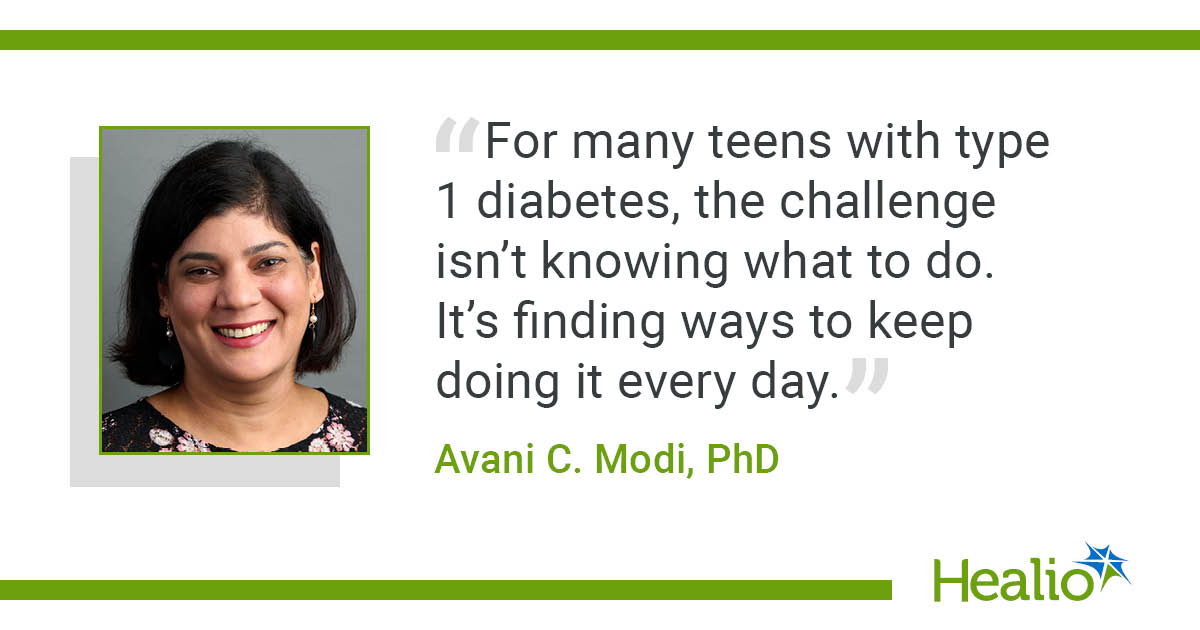
Dr. Avani C. Modi, PhD, pediatric psychologist and division director of behavioral medicine and clinical psychology at Cincinnati Children’s Hospital, summarized the investigative rationale:
“Diabetes Journey was designed to help adolescents address the real-world barriers that interfere with diabetes management, particularly stress, burnout and executive functioning challenges. While we did not expect large effects on HbA1c, we were encouraged to see reductions in stress and burnout and improvements in diabetes-related quality of life.”
Discussing the differentiation between the two study arms, Dr. Modi explained:
“Diabetes Journey was developed through a user-centered design process and adapted from our previous work on Epilepsy Journey, an executive functioning intervention for adolescents with epilepsy. We worked closely with adolescents with type 1 diabetes to ensure the content, format and examples reflected the real-world challenges they face in daily diabetes management. The amusement park theme was chosen to increase engagement while teaching practical skills.The intervention focuses on executive functioning skills and problem-solving. Modules address planning, working memory, emotional control, inhibition, stress and burnout, and adolescents learn how to apply structured problem-solving strategies to barriers they are experiencing in their own lives.ESC was an active comparison condition that provided high-quality diabetes education on topics such as burnout, reminders, organization, support networks and shared responsibility. The key difference is that DJ focuses less on providing information and more on helping adolescents develop and apply skills to overcome barriers through guided problem-solving with an interventionist. In other words, ESC focused on what adolescents should know, whereas DJ focused on helping them practice how to handle barriers when diabetes gets difficult.”
Clinical Significance
The study demonstrates that educational delivery alone is insufficient to resolve diabetes distress in adolescents. By prioritizing the operational mechanisms of daily problem-solving, cognitive flexibility, and executive planning, adolescents acquire functional coping capacity.
Notably, clinical improvements exhibited a delayed consolidation curve:
“The strongest takeaway is that adolescents are willing to engage in a digital behavioral intervention focused on diabetes-related barriers, and that reducing stress and burnout may be an important mechanism for improving quality of life. The intervention demonstrated strong recruitment, retention, acceptability and satisfaction.The most surprising finding was the delayed timing of the benefits. We expected improvements to emerge earlier, but the strongest signals occurred 6 months after treatment ended. This suggests that skills learned through the intervention may take time to develop, consolidate and become part of everyday diabetes management.”
Furthermore, the intervention produced temporary early benefits in peer and family dynamics:
“Although ESC included content related to support networks, the DJ intervention taught adolescents skills such as emotional regulation, stress management, planning and problem-solving that may have improved how they interacted with family members and peers. When teens feel less overwhelmed and better able to manage challenges, it may positively influence relationships, even when relationship skills are not being directly targeted. The structured conversations with interventionists also may have helped adolescents think differently about support from family and friends. At the same time, these improvements were only observed immediately after treatment and did not persist at later follow-ups, so we view this as an important finding that should be explored further in future studies.”
Limitations
- Demographic Homogeneity: The trial cohort was predominantly non-Hispanic White (87.7% White; 91.4% non-Hispanic), circumscribing the generalizability of findings to racially and ethnically diverse populations.
- Late-Stage Attrition: Study retention dropped to 62% at the 6-month evaluation point, falling below the initial 75% trial target and potentially introducing attrition bias.
- COVID-19 Confounding: The trial occurred across the COVID-19 pandemic, creating unmeasured secular effects on family routines, remote schooling, and psychosocial strain. As Dr. Modi observed:“COVID-19 had a significant influence on nearly every aspect of the study. Recruitment, retention, clinic operations, school attendance, social activities and daily routines were all affected. As a result, interpreting findings requires caution. The pandemic may also have altered the very barriers we were studying… We statistically controlled for COVID-related impacts, but there is no way to fully separate the intervention effects from the broader context of the pandemic. Replicating the study outside a pandemic environment is therefore a key next step.”
- Absence of Objective Glycemic Alterations: The pilot intervention did not demonstrate statistically significant reductions in HbA1c or shifts in continuous glucose monitor (CGM) metrics within the study window.
What Doctors Should Know
- Differentiate Knowledge Deficits From Executive Barriers: Adolescent treatment non-adherence rarely stems from lack of clinical comprehension; it is driven by executive dysfunction, cognitive fatigue, and psychological burnout.
- Routinely Screen for Operational Barriers: Incorporating validated instruments such as the BDA into routine clinic visits identifies specific impediments to care:“We selected the BDA questionnaire because Diabetes Journey was specifically designed to address barriers that interfere with self-management. Traditional diabetes outcomes often focus on glycemic metrics such as HbA1c, but those measures do not tell us why adolescents struggle with diabetes management. The BDA allowed us to measure the underlying obstacles we were trying to change, particularly stress, burnout and time pressure/planning difficulties. Because our intervention targeted those barriers directly, it was important to assess whether the barriers themselves improved rather than relying solely on proxy measures of health.”
- Recognize Developmental Constraints: Clinical discussions should normalize the daily cognitive burden carried by adolescents:“One message I’d emphasize is that adolescents with type 1 diabetes already manage an extraordinary amount of responsibility every day. When we see challenges with diabetes management, it is often not because they lack knowledge. More often, they are dealing with stress, competing priorities, burnout or difficulties applying skills consistently in daily life. This study reinforces the value of meeting adolescents where they are and helping them build practical, sustainable strategies that fit into their real lives… For many teens with type 1 diabetes, the challenge isn’t knowing what to do. It’s finding ways to keep doing it every day while balancing school, sports, friendships and everything else adolescence brings.”
- Current Clinical Status:“At this stage, DJ should still be considered a promising intervention rather than a practice-ready standard of care. Additional refinement and testing are needed before broad implementation. However, the study provides encouraging evidence that targeting barriers to adherence is an important direction for future diabetes care.”
Bottom Line
Digital executive functioning interventions that provide guided, problem-solving support significantly reduce diabetes distress and improve quality of life in adolescents with type 1 diabetes, proving that addressing the cognitive and psychological barriers to daily care is a viable pathway toward enhancing pediatric self-management.
Original Research / DOI
Modi AC, et al. A randomized controlled pilot trial of the Diabetes Journey intervention for adolescents with type 1 diabetes. The Journal of Pediatrics. 2026.