33
Headline
Psychiatric Disorders Precede and Persist for a Decade Following Inflammatory Bowel Disease Diagnosis: Nationwide Swedish Cohort Study
1-Minute Summary
A nationwide Swedish registry study spanning 2007 through 2023 demonstrates that patients diagnosed with inflammatory bowel disease (IBD) face an elevated risk of psychiatric disorders that begins up to 3 years prior to clinical diagnosis, peaks immediately following diagnosis, and remains significantly heightened for at least 10 years. In an analysis of tens of thousands of patients with IBD compared with matched general population comparators and unaffected siblings, elevated rates of major depressive disorder, anxiety disorders, and substance misuse were observed across both prediagnostic and postdiagnostic intervals. While familial vulnerability and parental psychiatric history contribute to risk, they do not fully account for this association, suggesting that chronic systemic inflammation, diagnostic delay, and the psychological burden of chronic illness drive substantial long-term psychiatric morbidity.
Why This Matters
Depression and anxiety are recognized comorbidities in IBD, but their precise temporal onset, durability, and breadth beyond mood disorders have remained unclear. Understanding whether psychiatric disease is an early manifestation of subclinical systemic inflammation—or conversely, a reaction to chronic physical suffering—informs clinical workflows. Demonstrating that risk elevations emerge years before somatic diagnosis and persist for a decade underscores the bidirectional nature of the gut-brain axis and establishes that mental health screening must be integrated into standard, long-term gastroenterological care.
Study at a Glance
| Feature | Details |
| Study type | Nationwide, population-based matched cohort and sibling-comparison study (2007–2023) |
| Participants | Prediagnostic cohort: 48,230 individuals with IBD and 210,582 matched reference controls. Postdiagnostic cohort: 43,862 individuals with IBD (mean age 41.6 years; 47.3% female; 11.3% childhood-onset) and 178,821 matched reference controls. |
| Exposure / Factor | Confirmed diagnosis of inflammatory bowel disease (Crohn disease, ulcerative colitis, or unclassified IBD) |
| Comparator | Up to 5 age-, sex-, and county-matched individuals from the general population, as well as IBD-free full siblings |
| Primary outcome | Incident psychiatric disorders (including major depressive disorder, anxiety disorders, and substance misuse) across prediagnostic (5 years prior) and postdiagnostic (up to 10 years) observation windows |
| Main finding | Risk for psychiatric disorders increased 2 to 3 years prior to IBD diagnosis (HR at 2 years = 1.15), reached its maximum at 6 months postdiagnosis (HR = 1.50), and remained elevated through 10 years of follow-up (HR = 1.19). |
| Follow-up | Median 5.0 years prediagnosis; median 7.4 years postdiagnosis (extending up to 10 years) |
What the Researchers Found
The investigators assessed the temporal incidence of psychiatric illness in individuals with IBD compared with matched reference controls over two discrete periods: 5 years prior to diagnosis and up to 10 years postdiagnosis.
Incidence of Psychiatric Disorders Across Cohorts
| Cohort Period | Patients with IBD | Matched Population Controls | Median Follow-Up | Psychiatric Disorder Incidence: IBD | Psychiatric Disorder Incidence: Controls |
| Prediagnostic Analysis | 48,230 | 210,582 | 5.0 years | 8.6% | 6.8% |
| Postdiagnostic Analysis | 43,862 | 178,821 | 7.4 years | 16.5% | 12.8% |
Temporal Risk Trajectory Relative to IBD Diagnosis
| Timepoint Relative to Diagnosis | Hazard Ratio (95% CI) | Clinical Interpretation |
| 2.0 Years Prediagnosis | 1.15 (1.09–1.21) | Statistically significant initial emergence of psychiatric risk elevation |
| 0.5 Years Postdiagnosis | 1.50 (1.41–1.59) | Peak psychiatric vulnerability immediately following formal diagnosis |
| 10.0 Years Postdiagnosis | 1.19 (1.13–1.24) | Sustained long-term psychiatric morbidity exceeding general population rates |
Subgroup & Sibling Findings
- Diagnostic Subtypes: Psychiatric comorbidities were observed across diagnostic classes, with higher frequencies identified among individuals with Crohn disease.
- Childhood-Onset Disease: Patients diagnosed during childhood (11.3% of the cohort) demonstrated heightened vulnerability, consistent with higher disease severity profiles.
- Familial and Hereditary Factors: Although patients with IBD more frequently had a parental history of psychiatric disorders, familial confounding did not account for the observed risks. The elevated incidence remained significant when patients with IBD were compared against their unaffected full siblings.
- Spectrum of Disease: Excess risk was not restricted to depression and anxiety, but extended to substance misuse disorders.
Dr. Jonas F. Ludvigsson, professor of medical epidemiology and biostatistics at Karolinska Institutet, highlighted the research rationale:
“Earlier studies have shown an association between IBD and psychiatric disease, but several pressing issues remained. We wanted to understand when the risk increase for psychiatric disease starts … how long the risk persisted and if it extended beyond the commonly studied anxiety and depression.”
Addressing the familial findings, Dr. Ludvigsson noted:
“Parental history is always important, and I would say it is also for future psychiatric disease — in this case, among IBD patients — but we demonstrate that heredity and familial factors are not the only explanation for psychiatric disease in this patient population. IBD is a severe condition with persistent inflammation associated with pain, diarrhea, repeated surgery and fear of medication side effects, along with the burden of repeated healthcare visits and work absence. All these factors are likely to play a role in the development of psychiatric disease.”
Regarding the increased risk observed in Crohn disease, he advised:
“I want to urge caution when interpreting that finding — one should always be cautious about subgroup results. Crohn’s often has a more unpredictable and complicated disease course, so possibly this pushes the risks upward. Among other groups that seem to be particularly vulnerable are those with childhood-onset IBD. This is not unique to IBD; childhood onset often means having a more severe disease. Individuals for whom the parents had a record of psychiatric disease also appear to be more vulnerable.”
Clinical Significance
These data indicate that psychological vulnerability is not simply an end-stage consequence of long-standing physical debilitation; it manifests during the subclinical, prodromal phase of gastrointestinal disease. Potential pathophysiological drivers include low-grade neuroinflammation triggered by gut dysbiosis, cytokine translocation across a compromised epithelial barrier, and diagnostic delays during which uncharacterized chronic abdominal symptoms provoke psychological distress.
The peak incidence observed within the first six months after diagnosis underscores the acute psychological toll of receiving a lifelong, incurable chronic illness diagnosis requiring immunosuppressive therapy and endoscopic surveillance.
Limitations
- Capture of Mild Conditions: Psychiatric disorders were primarily identified via hospital-based specialist registries, potentially misclassifying or underrepresenting mild anxiety or depression managed exclusively in primary care or left untreated.
- Lack of Endoscopic / Biomarker Granularity: The dataset lacked granular markers of mucosal inflammation, disease severity indices, or endoscopic scores, precluding direct correlation between biochemical flare activity and mental health decompensation.
- Residual Confounding: Despite adjusting for matching criteria and utilizing sibling designs, residual confounding from lifestyle, subclinical disease duration, and unmeasured socioeconomic stressors cannot be entirely ruled out.
What Doctors Should Know
- Mental Health Assessment is Essential: Mental health evaluations must be incorporated into standard gastroenterological practice rather than reserved only for symptomatic psychiatric crises.
Dr. Ludvigsson stated:
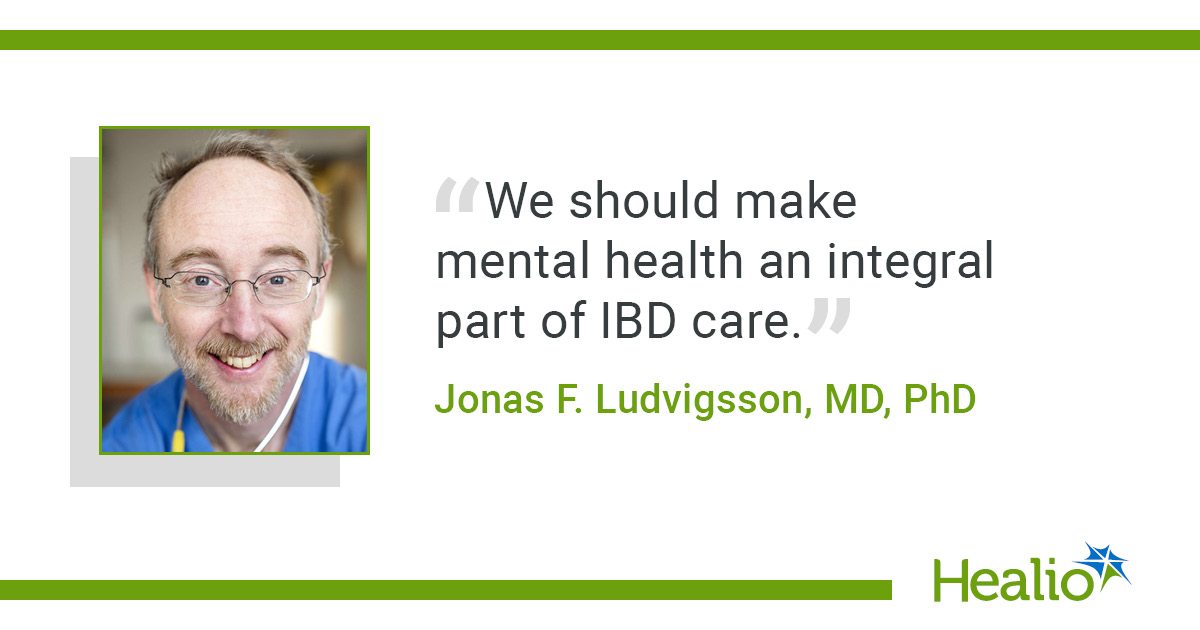
“Mental health awareness is not a one-time stop, but should be part of the long-term follow-up of patients.”“Most importantly, we should make mental health an integral part of IBD care. This is not an optional add-on. Questions about depression, anxiety and potential drug abuse should be part of the core conversation. This is especially so around the IBD diagnosis when risks are high.”
- Assemble a Multidisciplinary Care Team: Recognizing that patients may hesitate to disclose psychiatric symptoms to their primary gastroenterologist, multidisciplinary support is vital:
“From personal experience, I also note that some patients find it easier to open up to nonphysicians, so access to psychologists, IBD nurses and also primary care may help.”
- Adopt a Preventative Paradigm: Clinical attention should focus on preventing mental health deterioration in newly diagnosed patients:
“In pediatrics, we work a lot with prevention, including vaccinations. I think that paradigm can be extended also to IBD care. For patients with IBD but not yet mental health problems, how can we prevent such problems? Is the key only controlling the inflammation and making the patient feel that they have our support, or are there other things we could to do prevent future mental health disorders?”
Bottom Line
Psychiatric morbidity in IBD is a chronic, decade-long challenge that begins up to 3 years prior to formal diagnosis and peaks sharply in the immediate postdiagnostic period. Gastroenterologists must incorporate proactive psychiatric screening, multidisciplinary support, and preventative mental health strategies alongside anti-inflammatory therapy.
Original Research / Reference
Ludvigsson JF, et al. Psychiatric disorders before and after diagnosis of inflammatory bowel disease: nationwide cohort study. Clin Gastroenterol Hepatol. 2026.