71
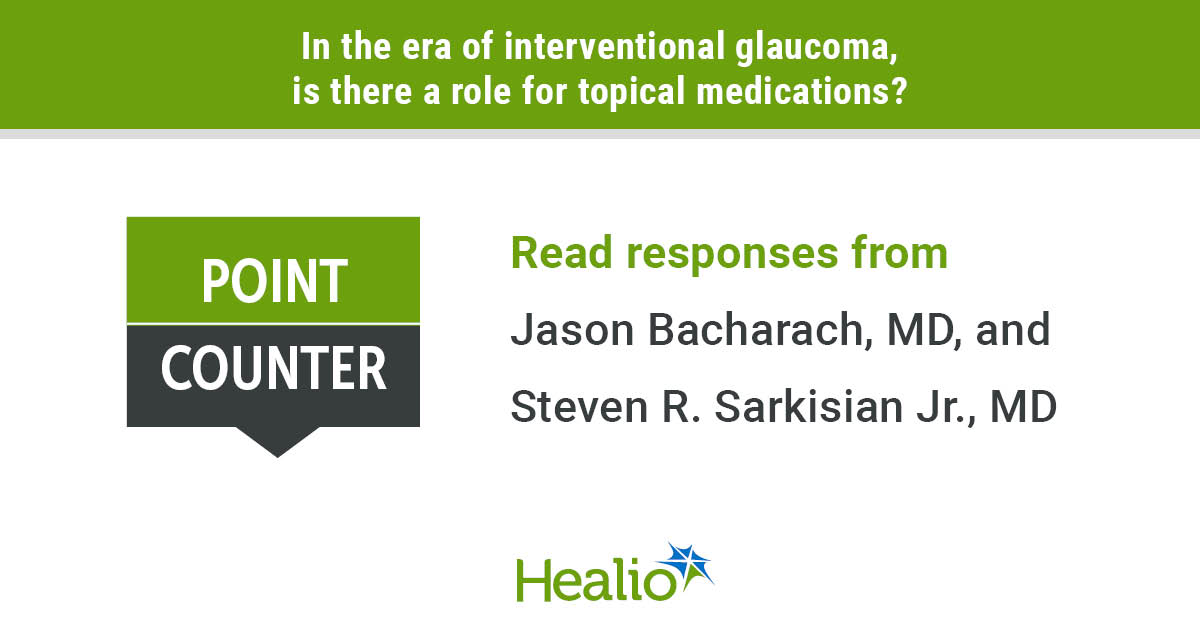
The Evolution of Interventional Glaucoma: Balancing Pharmaceuticals, Laser, and Surgery
The paradigm of glaucoma management is undergoing a significant transition. While topical pharmaceutical agents have long served as the foundational first-line therapy, emerging clinical evidence and procedural advancements—such as selective laser trabecular photocoagulation (SLT), minimally invasive glaucoma surgery (MIGS), and sustained-release drug delivery systems—are accelerating the shift toward interventional glaucoma.
Insights from clinical experts Dr. Jason Bacharach and Dr. Steven R. Sarkisian Jr. highlight how modern clinical practice must evolve to optimize patient lifestyles, minimize ocular surface toxicity, and preserve long-term vision.
Perspectives on Medical Therapy: The MIDS Strategy and BAK Toxicity
Despite compelling evidence from landmark clinical evaluations like the LiGHT trial, surveys published by Douglas Rhee and colleagues for the American Society of Cataract and Refractive Surgery (ASCRS) reveal that approximately three-quarters of U.S. physicians still default to topical medications as primary treatment. According to Dr. Jason Bacharach, director of research at North Bay Eye Associates, this often leads to a “mindless” addition of multiple drops, compounding compliance challenges and ocular toxicity.
To counter this, Dr. Bacharach designed the Minimal Instillation Drop Strategy (MIDS), a targeted approach aimed at streamlining topical therapy. Emphasizing the mindful deployment of pharmaceutical options, Dr. Bacharach stated:
“The buzz around interventional glaucoma should not convey the misleading message that drops are bad and should not be used but rather set us in the direction of employing them mindfully to optimize patients’ lifestyles and control their disease.”
Key Approaches to Reducing Drop Burden
- Synergistic Combinations: Utilizing medications alongside laser or surgical procedures to boost efficacy (e.g., combining Rocklatan [netarsudil/latanoprost] or Vyzulta with SLT, or pairing netarsudil with goniotomy).
- Minimizing Benzalkonium Chloride (BAK) Toxicity: Chronic exposure to BAK damages the trabecular meshwork and ocular surface. Fixed-combination therapies lower overall BAK exposure while enhancing intraocular pressure (IOP) reduction.
- Sustained-Release Delivery Systems: Replacing daily drops with intracameral implants—such as Durysta (bimatoprost) or iDose TR (travoprost)—for patients with physical limitations or poor compliance (e.g., arthritis, Parkinson disease).
Glaucoma as a Surgical Disease: The Case for Early Intervention
Advocating for a more aggressive procedural posture, Dr. Steven R. Sarkisian Jr., founder and CEO of Oklahoma Eye Surgeons, asserts that delaying interventions in favor of chronic drop regimens fails to align with modern evidence-based medicine.
“Over my entire career, every time I have given a talk, I have said that glaucoma is a surgical disease. That sounded ridiculous in 2004, but I was right then and even more so now because we have so many options that postpone the need for filtering surgery.”
Dr. Sarkisian emphasizes that primary SLT offers superior IOP-lowering properties and better long-term vision preservation than topical therapy alone. While drops may serve as a temporary bridge or emergency measure for extreme spikes in IOP (e.g., 40 mm Hg to 50 mm Hg), relying on them as a permanent first-line strategy is considered obsolete.
Summary of Glaucoma Management Options
| Treatment Modality | Primary Mechanism / Indication | Clinical Advantages | Potential Limitations |
| Topical Medications | Lowers IOP via aqueous suppression or outflow enhancement (e.g., prostaglandins, beta-blockers). | Familiar, widely accessible, effective initial bridge therapy. | High rates of non-compliance, BAK toxicity, ocular surface damage. |
| Selective Laser Trabeculoplasty (SLT) | Stimulates biological healing response in trabecular meshwork to improve outflow. | Superior vision preservation, eliminates daily drop burden, supported by LiGHT trial data. | Effect may diminish over time, requiring repeat procedures. |
| Sustained-Release Implants (e.g., Durysta, iDose TR) | Intracameral drug delivery providing continuous therapeutic release. | Solves compliance issues for mobility-impaired patients. | Invasive administration, potential endothelial cell loss considerations. |
| Minimally Invasive Glaucoma Surgery (MIGS) | Enhances conventional outflow pathways (e.g., iStent infinite, Omni). | Minimally disruptive, highly effective when combined with cataract surgery. | Variable long-term efficacy compared to traditional trabeculectomy. |
Zero-CLS Interactive Widget Code (WordPress / Soledad Theme)
To implement an interactive treatment explorer widget on a WordPress site utilizing the Soledad theme without causing Cumulative Layout Shift (CLS), the container must maintain explicit dimension bounds and a fixed viewport height.
HTML
<!-- Zero-CLS Glaucoma Treatment Strategy Widget -->
<div class="glaucoma-widget-wrapper">
  <div class="gw-header">
    <h3>Interventional Glaucoma Strategy Explorer</h3>
    <p>Select a management tier to view clinical rationales.</p>
  </div>
  <div class="gw-nav-tabs">
    <button class="gw-tab-btn active" onclick="switchGlaucomaTab('mids')">MIDS Strategy</button>
    <button class="gw-tab-btn" onclick="switchGlaucomaTab('procedural')">Laser & Implants</button>
    <button class="gw-tab-btn" onclick="switchGlaucomaTab('migs')">MIGS & Surgery</button>
  </div>
  <div class="gw-viewport">
    <div id="gw-tab-mids" class="gw-pane active">
      <h4>Minimal Instillation Drop Strategy (MIDS)</h4>
      <p>Streamlines medical therapy by choosing synergistic drops, utilizing fixed combinations to reduce BAK toxicity, and focusing on patient lifestyle integration.</p>
    </div>
    <div id="gw-tab-procedural" class="gw-pane">
      <h4>Procedural Pharmaceuticals & Laser</h4>
      <p>Employs primary SLT alongside sustained-release delivery systems like Durysta or iDose TR to bypass daily patient compliance hurdles.</p>
    </div>
    <div id="gw-tab-migs" class="gw-pane">
      <h4>Minimally Invasive Options</h4>
      <p>Utilizes standalone MIGS devices or combines procedures with cataract surgery to preserve long-term visual function and reduce trabeculectomy rates.</p>
    </div>
  </div>
</div>

<style>
/* Strict structural bounding to prevent Cumulative Layout Shift (CLS) */
.glaucoma-widget-wrapper {
  width: 100%;
  max-width: 800px;
  background: #fdfdfd;
  border: 1px solid #dcdcdc;
  border-radius: 6px;
  padding: 20px;
  box-sizing: border-box;
  margin: 25px auto;
  font-family: inherit;
}
.gw-header h3 {
  margin: 0 0 4px 0;
  font-size: 1.2rem;
  color: #111;
}
.gw-header p {
  margin: 0 0 14px 0;
  font-size: 0.85rem;
  color: #555;
}
.gw-nav-tabs {
  display: flex;
  gap: 8px;
  margin-bottom: 12px;
}
.gw-tab-btn {
  background: #eef1f5;
  border: none;
  padding: 8px 12px;
  border-radius: 4px;
  cursor: pointer;
  font-weight: 600;
  font-size: 0.8rem;
  color: #333;
  transition: background 0.2s;
}
.gw-tab-btn.active {
  background: #004080;
  color: #fff;
}
/* Fixed viewport height constraint eliminates layout jumps */
.gw-viewport {
  position: relative;
  min-height: 110px;
  background: #ffffff;
  border: 1px solid #e1e1e1;
  border-radius: 4px;
  padding: 15px;
  box-sizing: border-box;
}
.gw-pane {
  display: none;
  position: absolute;
  top: 15px;
  left: 15px;
  right: 15px;
  bottom: 15px;
}
.gw-pane.active {
  display: block;
}
.gw-pane h4 {
  margin: 0 0 6px 0;
  font-size: 1rem;
  color: #004080;
}
.gw-pane p {
  margin: 0;
  font-size: 0.9rem;
  color: #444;
  line-height: 1.4;
}
</style>

<script>
function switchGlaucomaTab(targetID) {
  var panes = document.querySelectorAll('.gw-pane');
  var buttons = document.querySelectorAll('.gw-tab-btn');

  panes.forEach(function(p) {
    p.classList.remove('active');
  });
  buttons.forEach(function(b) {
    b.classList.remove('active');
  });

  document.getElementById('gw-tab-' + targetID).classList.add('active');
  event.currentTarget.classList.add('active');
}
</script>
Zero-CLS Clinical Trials Summary HTML Code
The following structured HTML card provides a high-level summary of the shift toward interventional glaucoma paradigms, engineered with static containment styling to prevent layout shifts.
HTML
<div class="trial-summary-card-glaucoma">
  <div class="tsc-tag">Clinical Practice Paradigm</div>
  <h4 class="tsc-heading">Interventional Glaucoma vs. Medical Management</h4>
  <p class="tsc-subtext"><strong>Key Finding:</strong> Evidence from the LiGHT trial and ASCRS data establishes that primary laser and procedural interventions outperform conventional drop-first therapies in long-term preservation.</p>
  <div class="tsc-metrics-row">
    <div class="tsc-metric-col">
      <span class="tsc-number">75%</span>
      <span class="tsc-desc">U.S. doctors utilizing topical meds first</span>
    </div>
    <div class="tsc-metric-col">
      <span class="tsc-number">SLT</span>
      <span class="tsc-desc">Recommended primary laser intervention</span>
    </div>
    <div class="tsc-metric-col">
      <span class="tsc-number">MIGS</span>
      <span class="tsc-desc">Advanced options minimizing trabeculectomy rates</span>
    </div>
  </div>
</div>

<style>
.trial-summary-card-glaucoma {
  width: 100%;
  max-width: 800px;
  background: #ffffff;
  border-left: 4px solid #004080;
  border-top: 1px solid #e1e1e1;
  border-right: 1px solid #e1e1e1;
  border-bottom: 1px solid #e1e1e1;
  border-radius: 4px;
  padding: 20px;
  box-sizing: border-box;
  margin: 25px auto;
  font-family: inherit;
}
.tsc-tag {
  display: inline-block;
  background: #e6eff7;
  color: #004080;
  font-size: 0.75rem;
  font-weight: 700;
  padding: 3px 7px;
  border-radius: 3px;
  text-transform: uppercase;
  margin-bottom: 6px;
}
.tsc-heading {
  margin: 0 0 6px 0;
  font-size: 1.1rem;
  color: #222;
}
.tsc-subtext {
  margin: 0 0 15px 0;
  font-size: 0.85rem;
  color: #555;
  line-height: 1.4;
}
.tsc-metrics-row {
  display: flex;
  gap: 10px;
  flex-wrap: wrap;
}
.tsc-metric-col {
  flex: 1;
  min-width: 130px;
  background: #f9fbfd;
  border: 1px solid #eaeaea;
  border-radius: 4px;
  padding: 10px;
  box-sizing: border-box;
  text-align: center;
}
.tsc-number {
  display: block;
  font-size: 1.3rem;
  font-weight: 700;
  color: #004080;
  margin-bottom: 3px;
}
.tsc-desc {
  display: block;
  font-size: 0.75rem;
  color: #666;
  line-height: 1.2;
}
</style>