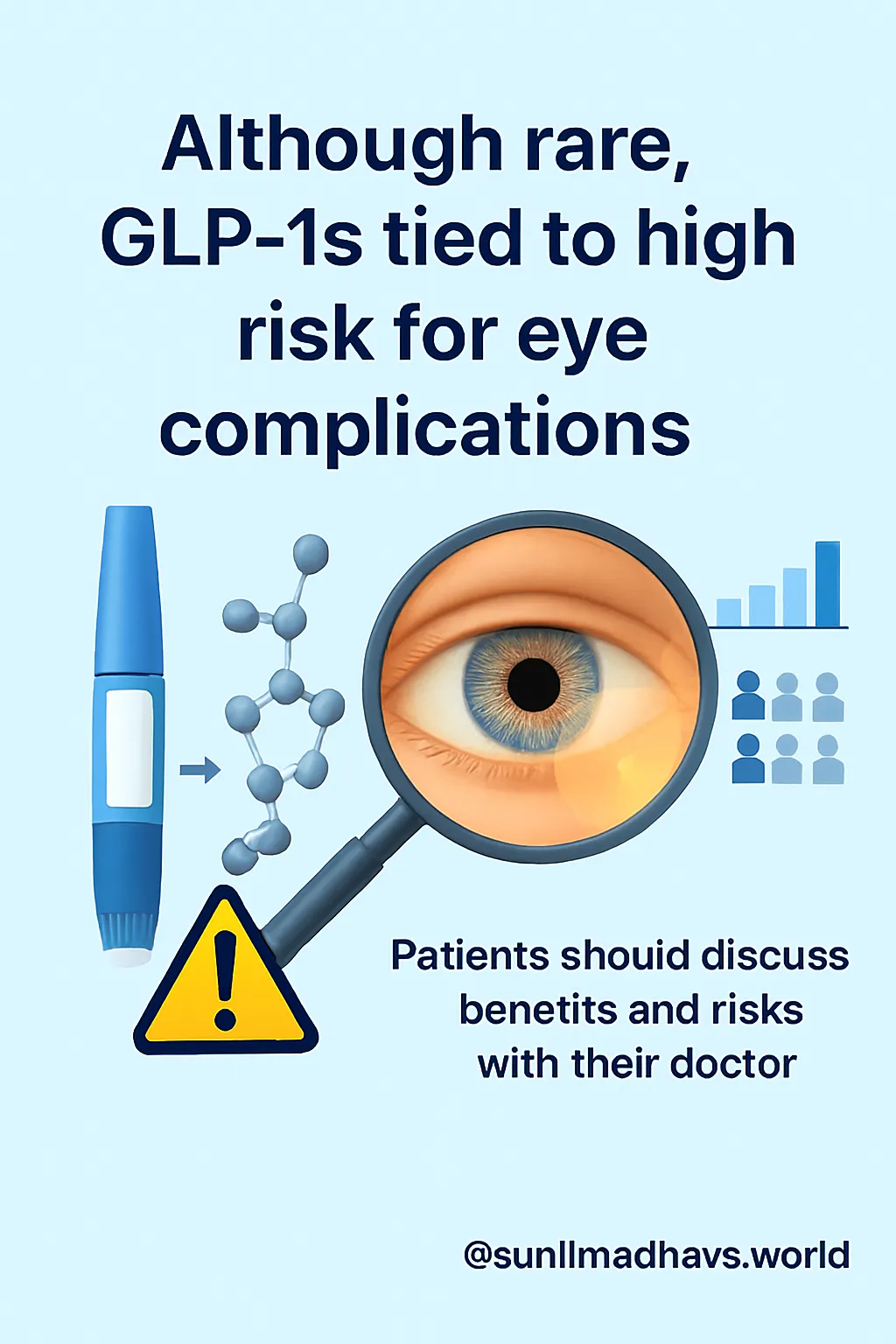
🧠 Key Insights from Two JAMA Network Open Studies (2025)
Two large-scale studies have explored the potential ocular risks associated with GLP-1 receptor agonists—specifically semaglutide and tirzepatide—in people with type 2 diabetes. While these drugs are widely used for glycemic control and weight loss, emerging data suggest they may carry rare but noteworthy risks for eye complications.
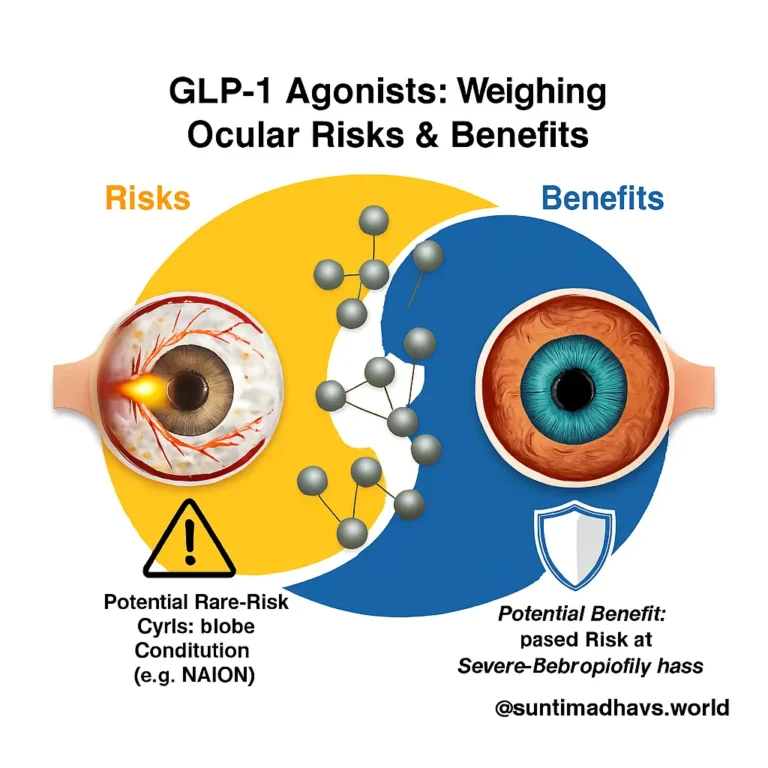
⚠️ Study 1: Risk of NAION and Optic Nerve Disorders
Lead Researcher: Rong Xu, PhD, Case Western Reserve University
Population Studied: 159,398 matched patients with type 2 diabetes
Intervention Group: 79,699 patients prescribed semaglutide or tirzepatide
Comparison Group: Patients on other antidiabetic drugs (e.g., insulin, metformin, liraglutide)
Findings:
- NAION Cases:
- Semaglutide/tirzepatide group: 35 cases
- Comparison group: 19 cases
- Hazard Ratio (HR): 1.76 (95% CI: 1.01–3.07)
- Other Optic Nerve Disorders:
- Semaglutide/tirzepatide group: 93 cases
- Comparison group: 54 cases
- HR: 1.65 (95% CI: 1.18–2.31)
Interpretation:
- The elevated risk appears specific to semaglutide and tirzepatide, not the GLP-1 class as a whole.
- Researchers hypothesize that abrupt metabolic changes may contribute to these effects.
- NAION remains rare, but patients with diabetes or hypertension may warrant closer ophthalmic monitoring.
👁️ Study 2: Diabetic Retinopathy and Vision Outcomes
Lead Researcher: David J. Ramsey, MD, PhD, MPH, Lahey Hospital & Medical Center
Population Studied: 185,066 adults with type 2 diabetes
Focus: Risk of diabetic retinopathy (DR), NAION, and DR-related complications
Findings:
- DR Risk:
- GLP-1 use linked to a modest increase in DR incidence
- HR: 1.07 (95% CI: 1.03–1.11)
- No Increased Risk for NAION in this cohort
- Subgroup Analysis (32,695 patients with preexisting DR):
- No significant progression to proliferative DR or diabetic macular edema
- Protective Associations:
- Blindness: HR = 0.77
- Neovascular glaucoma: HR = 0.78
- Vitreous hemorrhage: HR = 0.74
Conclusion:
- GLP-1s may reduce the risk of severe vision loss in patients with existing DR.
- HbA1c improvement is key to preventing DR progression.
🩺 Expert Commentary: Balancing Benefits and Risks
Authors:
- Sally S. Ong, MD (Wake Forest School of Medicine)
- Francisco J. Pasquel, MD, MPH (Emory School of Medicine)
Recommendations:
- Counsel patients on the rare but serious risk of NAION, especially those with optic-disc crowding.
- For patients with DR, initiate GLP-1s cautiously with slower titration to avoid abrupt glycemic shifts.
- Encourage collaboration between endocrinologists and ophthalmologists to optimize dosing and monitoring.
Editorial Message:
The future lies in balancing the therapeutic benefits of GLP-1 receptor agonists with proactive strategies to mitigate ocular risks.