49
Time From Cancer Diagnosis to Treatment Initiation Rose Significantly in the United States From 2012 to 2023
1-Minute Summary
A nationwide retrospective cohort study of 2.7 million adults with stage I to III solid malignancies revealed that waiting times between cancer diagnosis and first-course treatment increased significantly across all six evaluated cancer types between 2012 and 2023. The proportion of patients initiating treatment within the conventional 30-day window fell from 44% in 2012–2015 to 25% in 2022–2023, while those experiencing extreme delays of 60 days or longer climbed substantially. Delays were greatest among patients referred to academic or high-volume centers, individuals with public or no insurance, Black patients, and those residing in lower-income areas. While health system consolidation and multimodality regimens have advanced clinical care, they have introduced administrative, logistical, and capacity bottlenecks that prolong the interval to curative-intent therapy.
Why This Matters
Timely initiation of therapy is widely recognized by guidelines from the National Comprehensive Cancer Network (NCCN) and the National Academy of Medicine (formerly the Institute of Medicine) as a core pillar of quality oncologic care. Over the past two decades, cancer surgery has centralized into high-volume and consolidated health networks to optimize perioperative safety and complex multimodality delivery. However, this centralization has introduced unintended operational strain, complex navigation requirements, and travel burdens. Prolonged treatment intervals exacerbate psychological distress and anxiety in newly diagnosed patients and risk disease progression, particularly among medically underserved populations.
Study at a Glance
| Feature | Details |
| Study Type | National retrospective cohort study |
| Participants | 2.7 million adults (mean age, 63.5 years; 85% women) diagnosed with stage I to III breast, colon, esophageal, gastric, lung, or pancreatic cancer between 2012 and 2023 who underwent curative-intent resection at American College of Surgeons Commission on Cancer (CoC)–accredited hospitals |
| Intervention | First-course treatment delivery (upfront surgical resection or neoadjuvant therapy) |
| Comparator | Baseline era (2012–2015) vs contemporary era (2022–2023); facility types (academic vs community vs integrated networks) |
| Primary Outcome | Time (in days) from confirmed diagnosis to start of first-course treatment |
| Main Finding | Median time to treatment increased significantly across all six cancers ($P < .001$); the rate of prolonged delays ($\ge$30 days) increased from 56% to 75%, and extreme delays ($\ge$60 days) roughly doubled |
| Follow-up | Surveillance through definitive first-course treatment initiation |
What the Researchers Found
Evaluating the primary endpoint revealed a marked shift away from prompt therapy:
- Standard Wait Times (<30 days): Dropped from 44% in 2012–2015 to 25% in 2022–2023.
- Prolonged Wait Times ($\ge$30 days): Rose from 56% to 75% over the same period.
Senior author Timothy R. Donahue, MD, noted:
“The findings are alarming. The numbers are higher than we expected, and the fact they were consistent across all cancer types we looked at was particularly surprising.”
Table 1. Median Waiting Times From Diagnosis to First-Course Treatment (2012–2015 vs 2022–2023)
| Malignancy | 2012–2015 Median Days (IQR) | 2022–2023 Median Days (IQR) | P Value |
| Breast | 34 (22–50) | 45 (32–64) | < .001 |
| Colon | 20 (7–34) | 31 (15–49) | < .001 |
| Esophageal | 38 (27–54) | 48 (35–66) | < .001 |
| Gastric | 35 (21–51) | 49 (33–70) | < .001 |
| Lung | 41 (27–60) | 53 (35–77) | < .001 |
| Pancreatic | 23 (14–35) | 32 (22–44) | < .001 |
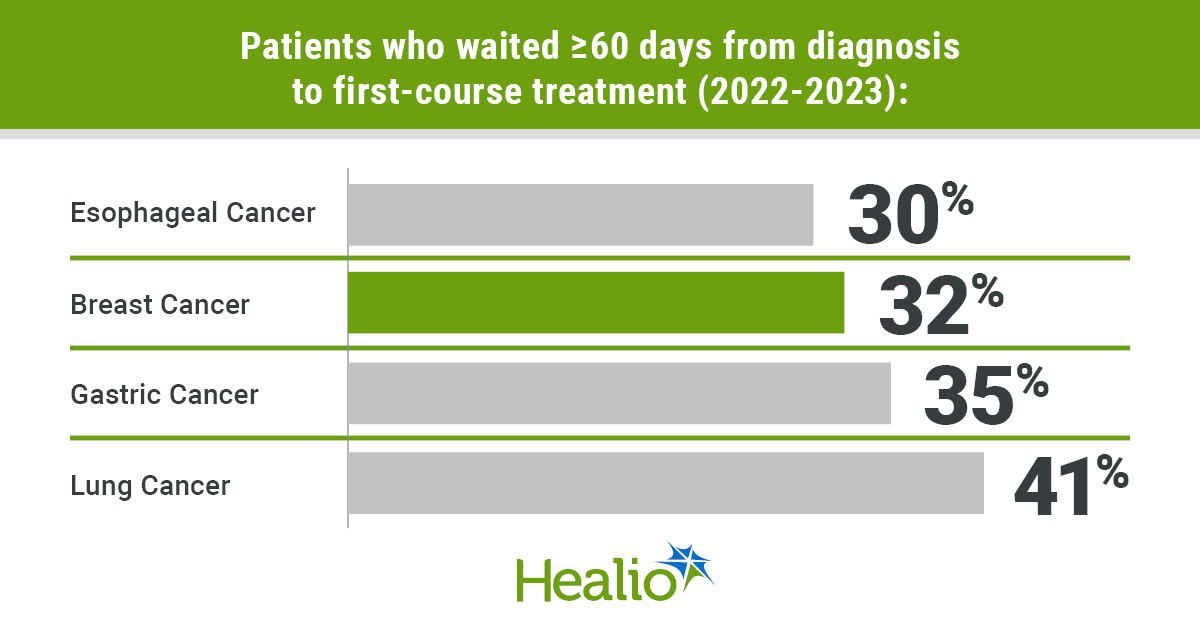
Table 2. Proportion of Patients Experiencing Prolonged ($\ge$30 Days) and Extreme ($\ge$60 Days) Delays
| Malignancy | Prolonged Delay (≥30 d)2012–2015 | Prolonged Delay (≥30 d)2022–2023 | Extreme Delay (≥60 d)2012–2015 | Extreme Delay (≥60 d)2022–2023 |
| Breast | 59% | 78% | 19% | 32% |
| Colon | 31% | 52% | 7% | 16% |
| Esophageal | 68% | 84% | 17% | 30% |
| Gastric | 60% | 79% | 18% | 35% |
| Lung | 69% | 83% | 26% | 41% |
| Pancreatic | 35% | 55% | 7% | 12% |
Dr. Donahue underscored the severity of these intervals:
“For the most common cancer types, the benchmark we aim for is to start treatment — whether it be surgery, radiation therapy or chemotherapy — within 4 weeks of diagnosis. Sixty days is an extremely long time. Whether that is due to the physicians or the healthcare system, I would say that is an unacceptable delay.”
Table 3. Median Wait Times (Days) by Health System Setting (2022–2023 Cohort)
| Malignancy | Community Hospital | Integrated Network | Academic / Research Institution |
| Breast | 43 | 45 | 49 |
| Colon | 28 | 31 | 35 |
| Gastric | 46 | 47 | 51 |
| Lung | 53 | 51 | 54 |
| Esophageal | 47 | 46 | 50 |
| Pancreatic | 32 | 31 | 32 |
Risk-Adjusted Predictors of Extended Treatment Delays
Multivariable risk-adjusted models demonstrated that delays cut across clinical and sociodemographic strata:
- Institutional & Regional Factors: Care delivered at academic centers (vs community hospitals), facilities in the US Northeast or West (vs Midwest), and cases managed via robotic surgery for nonbreast malignancies experienced significantly longer wait times.
- Sociodemographic Disparities: Medicaid coverage (observed in 5 of 6 cancers), Black race vs white race (5 of 6 cancers), uninsured status (3 of 6 cancers), longer travel distance (4 of 6 cancers), and lowest income quartile (all 6 cancers) independently correlated with higher odds of prolonged and extreme delays.
Dr. Donahue observed:
“The potential inefficiencies associated with healthcare consolidation can be particularly impactful for patients from under-resourced communities or disadvantaged backgrounds. It may be more challenging for them to get to larger centers — which may be farther away — or navigate a complex healthcare system to set up appointments, get their medical records, and provide their imaging or biopsy results. A few days or a week here or there adds up to a long delay, which means disparities could be widening even more.”
Clinical Significance
While centralizing complex oncology into tertiary networks reduces perioperative mortality, administrative bottlenecks now compromise timely initiation of care:
- Psychological Morbidity: Prolonged waiting intervals cause profound distress for patients awaiting definitive cancer management.
- Systemic Friction: Diagnostic workups, multidisciplinary tumor board staging, secondary pathology/imaging reviews, and pre-authorization requirements compound referral intervals.
Addressing this paradox, Dr. Donahue stated:
“As a cancer surgeon, I clearly see the benefits of consolidation and greater integration of health systems. However, I also see the potential inefficiencies and areas where there might be room for improvement. We hypothesized that wait times might increase as health systems have consolidated and cancer care has become more complex and multidisciplinary.”
He added:
“We don’t know from this study whether a delay of a couple of weeks affects prognosis, and that is an important distinction. But cancer does not stand still, so unnecessary delays are something we should try to minimize. There is also an important psychological aspect. Delays absolutely contribute to patient anxiety. When I see a patient with a new cancer diagnosis, they tell me they want the thing out yesterday. I can only imagine what it must be like to wait 4 weeks or more, so it is our responsibility to figure out ways to minimize these delays.”
Limitations
- Registry-Based Data Constraints: The National Cancer Database (NCDB) captures observational data without qualitative documentation regarding clinical justifications for delay (e.g., patient preference, elective delays, second opinions, or complicated medical optimization).
- Selection Generalizability: Data reflect care solely at Commission on Cancer (CoC)–accredited centers, which may not capture trends at smaller non-accredited community facilities.
- Absence of Oncologic Endpoint Linkage: The analysis evaluated time-to-treatment intervals but did not directly measure long-term oncologic outcomes, disease-free survival, or overall survival.
What Doctors Should Know
- Streamline Multidisciplinary Access: Rather than scheduling sequential visits across specialties, institutions should move toward parallel multidisciplinary clinics:“Well-designed multidisciplinary clinics or integrated practice units can bring the necessary specialists together at the same time, rather than requiring patients to navigate a series of sequential appointments. The challenge is preserving the benefits of multidisciplinary decision-making without adding unnecessary steps between diagnosis and treatment.”
- Leverage Integrated Regional Networks: Integrated network models demonstrated shorter intervals for several malignancies, suggesting a framework for balanced care distribution:“The integrated network model is interesting because it appears to be associated with shorter delays for some cancers. That gets at the concept of regionalization and suggests that health systems should analyze how they organize care internally, directing the most complex cases to centers with the greatest expertise while providing other cancer care closer to home. That may be one way to reduce delays from diagnosis to treatment.”
- Establish National Timeliness Benchmarks: Health systems track quality metrics, but time-to-treatment benchmarks remain unstandardized:“Another opportunity is to develop meaningful benchmarks for timeliness of cancer care. We measure many aspects of cancer quality, but we have not focused nearly as much on the time from diagnosis to treatment. The appropriate benchmark will differ by cancer type and treatment pathway, so we first need consensus around what constitutes an acceptable interval. But once those standards are established, organizations such as the Commission on Cancer could potentially use national data to help institutions benchmark their timeliness against national performance and identify where delays are occurring.”
- Invest in Navigation Infrastructure: Deploying dedicated nurse navigators helps remove archaic intake hurdles, expediting records transfer and alleviating racial and socioeconomic disparities.“Cancer care is improving. It is much more advanced and, with consolidation to larger centers, more patients are receiving state-of-the-art care. However, as cancer care becomes more advanced, it also becomes more complex. We need to continue to advance the treatments we offer, but we also must be incredibly mindful about how we are going to mitigate the delays from diagnosis to treatment.”
Bottom Line
Between 2012 and 2023, waiting times from cancer diagnosis to initial therapy expanded significantly nationwide across all major solid tumor types. As health systems consolidate and therapies grow increasingly multidisciplinary, hospitals must adopt integrated delivery models, standardized timeliness metrics, and patient navigation to reverse these delays and close widening equity gaps.
Original Research / DOI
Sakowitz S, et al. JAMA Surg. 2026.