Question: What is the expanding therapeutic role of glucagon-like peptide-1 (GLP-1) receptor agonists and dual GLP-1/GIP agonists in managing chronic inflammatory skin diseases such as psoriasis, psoriatic arthritis (PsA), and hidradenitis suppurativa (HS)?
Findings: Emerging clinical data, highlighted by landmark phase 3b trials like TOGETHER-PsO and TOGETHER-PsA, indicate that combining targeted immunomodulatory biologics (e.g., ixekizumab) with metabolic incretin therapies (e.g., tirzepatide) significantly improves skin clearance and joint outcomes compared with monotherapy. Furthermore, evidence demonstrates that GLP-1 therapies confer anti-inflammatory and cardiovascular risk-reduction benefits in conditions like hidradenitis suppurativa, operating through both weight-loss-dependent and direct immunomodulatory pathways.
Meaning: Adipose tissue functions as an active endocrine organ driving systemic inflammation that fuels dermatologic disease. Integrating GLP-1 receptor agonists into clinical dermatology through structured multidisciplinary care models offers a dual strategy to address underlying metabolic comorbidities and optimize inflammatory control.
Introduction & Paradigm Shift
For years, obesity was treated merely as a passive comorbidity coexisting with inflammatory skin diseases. However, recent clinical investigations suggest that metabolic adipose tissue actively fuels the inflammatory pathways underlying dermatologic conditions. As Mona Shahriari, MD, FAAD, associate clinical professor of dermatology at Yale University School of Medicine, stated:
“GLP-1s are the surprise anti-inflammatory that no one saw coming. They do much more than help with weight loss. They also reduce systemic inflammation.”
Dr. Shahriari further noted the historical shift in clinical perspective:
“For years, we have treated obesity as something that happens to coexist with diseases like psoriasis, but now we know that those fat cells are producing cytokines that fuel the very diseases that we are trying to treat. That changes the conversation.”
Clinical Trials and Efficacy in Psoriasis and Psoriatic Arthritis
Interest in the dermatologic utility of incretin therapies accelerated following the TOGETHER-PsO trial. This 52-week, phase 3b, randomized, double-blind, open-label study evaluated the combination of ixekizumab (an interleukin-17a inhibitor) and tirzepatide (a dual GLP-1/GIP receptor agonist) compared with ixekizumab monotherapy.
As principal investigator Mark Lebwohl, MD, dean for clinical therapeutics at the Icahn School of Medicine at Mount Sinai, explained:
“The combination of ixekizumab and tirzepatide is much more effective than ixekizumab alone. If your most effective [psoriasis] treatments are not working well enough, adding obesity medications may increase the efficacy of those treatments.”
Parallel investigations in psoriatic arthritis (TOGETHER-PsA) and hidradenitis suppurativa (HS) underscore these synergistic benefits.
| Clinical Trial / Study | Patient Population | Intervention Groups | Primary Endpoint & Key Findings |
|---|---|---|---|
| TOGETHER-PsO | Adults with Psoriasis & Obesity | Ixekizumab + Tirzepatide vs. Ixekizumab Monotherapy | 27.1% of combination therapy patients achieved PASI 100 + $\ge 10\%$ weight loss by week 36 vs. 5.8% on monotherapy ($P < .05$). 40.6% achieved complete skin clearance regardless of weight loss targets. |
| TOGETHER-PsA | Adults with Psoriatic Arthritis & Obesity | Ixekizumab + Tirzepatide vs. Ixekizumab Monotherapy | 31.7% in the combination group achieved $\ge 50\%$ improvement in PsA activity + $\ge 10\%$ weight loss vs. 0.8% in the monotherapy group. |
| HS Clinical Review (JAAD 2025 / JAMA Dermatol) | Patients with Hidradenitis Suppurativa | GLP-1 Receptor Agonists (Semaglutide, Liraglutide, Tirzepatide) | More than 58% of patients experienced measurable skin improvement; therapy was associated with reduced all-cause mortality and major adverse cardiovascular events (MACE) through 2 years. |
Discussing HS outcomes, Steven Daveluy, MD, FAAD, professor of dermatology at Wayne State University, emphasized:
“What is interesting for HS is that one study has shown that patients saw improvements in their skin even if they didn’t see significant weight loss.”
Mechanisms of Action: Removing the Inflammatory “Fuel”
Obesity exacerbates conditions like psoriasis, where approximately 80% of the 60 million affected individuals worldwide have overweight or obesity. Adipose tissue acts as an active endocrine organ secreting pro-inflammatory cytokines.
Sara Perkins, MD, associate professor of dermatology at Yale School of Medicine, noted:
“It has been known for a long time that there is a connection between obesity and these skin conditions. Most of these patients have overweight or obesity as well as other risk factors such as cardiovascular disease, metabolic syndrome and diabetes.”
Dr. Shahriari expanded on the mechanistic interplay during combination therapy:
“I like to think of obesity as adding fuel to the inflammatory fire. Obesity does not cause diseases like psoriasis or HS, but it can make them more severe and harder to treat. Treating obesity helps remove the fuel while our targeted therapies put out the fire… By adding this therapy, we went from simply suppressing the immune response to also removing one of the major drivers that kept fueling it.”
Clinical Management & FDA-Approved Options
Selecting appropriate candidates requires careful clinical evaluation. According to current medical guidelines, adults with a BMI of at least 30, or a BMI of 27 to 30 with at least one weight-related comorbidity, are eligible for GLP-1 therapy. Dr. Perkins cautioned:
“We are not yet at a place where someone with a normal BMI, despite having a dermatologic disease, should also go on this combination treatment.”
| Generic Drug Name | Brand Name / Example | Administration Route | Approved Indications (Obesity / Metabolic) |
|---|---|---|---|
| Liraglutide | Saxenda / Victoza | Daily Subcutaneous Injection | Obesity & Type 2 Diabetes |
| Semaglutide | Ozempic / Wegovy | Once-Weekly Subcutaneous Injection / Oral | Obesity, Type 2 Diabetes, Cardiovascular Risk Reduction |
| Tirzepatide | Mounjaro / Zepbound | Once-Weekly Subcutaneous Injection | Type 2 Diabetes & Chronic Weight Management |
| Orforglipron | Foundayo | Daily Oral Medication | Adults with Obesity |
Titration Strategy: “Start Low and Go Slow”
Dr. Shahriari outlined clinical management principles for dermatologists initiating therapy:
“My mantra is to start low and go slow. While I generally like to follow the FDA-approved titration schedule, I do let the patient guide me. If they are tolerating the medicine well but are still hungry and losing weight at an appropriate rate, I increase the dose. If they are experiencing significant gastrointestinal side effects or losing weight too quickly, I’ll stay on the current dose longer… This is a marathon, not a sprint. The goal is not to get every patient to that highest dose. It is to find the lowest effective dose that achieves healthy weight loss and improves their inflammatory disease.”
Safety Profile, Long-Term Outcomes, and Collaborative Care
While GLP-1s are generally well-tolerated, adverse events include gastrointestinal distress, alopecia, and facial lipoatrophy (“Ozempic face”). They carry a boxed warning for thyroid C-cell tumors and are contraindicated in patients with a personal or family history of medullary thyroid carcinoma or multiple endocrine neoplasia syndrome type 2 (MEN 2).
Addressing patient apprehensions, Dr. Daveluy stated:
“If patients are nervous about side effects but have severe HS, for example, I will tell them that their disease actually increases their risk for the things they are concerned about, such as heart attacks and strokes. While it is reasonable to be concerned about medication side effects, patients should be more concerned with their disease’s comorbidities. I tell them that it is important we get this inflammation under control.”
Furthermore, because discontinuation typically leads to weight rebound and skin disease flares, Dr. Shahriari emphasized long-term maintenance:
“Just like we wouldn’t expect hypertension or diabetes to stay controlled after we stop the medication, many patients are going to regain the weight when their GLP-1 therapy is discontinued, and with that, their skin disease usually flares. Most patients will need to stay on a low dose long term.”
Multidisciplinary Care Models
Because metabolic management requires longitudinal monitoring, experts recommend structured collaboration between dermatologists, endocrinologists, primary care providers, and obesity medicine specialists.
Fatima Cody Stanford, MD, MPH, MPA, MBA, MACP, FAAP, FAHA, FAMWA, FTOS, obesity medicine physician-scientist at Massachusetts General Hospital, advised:
“While dermatologists are frequently on the front lines of identifying obesity-related comorbidities, including psoriasis, prescribing these medications requires longitudinal management, familiarity with metabolic complications and ongoing monitoring. For that reason, in most cases, I recommend a collaborative, multidisciplinary approach where dermatologists screen, initiate the conversation and partner with clinicians experienced in obesity medicine, endocrinology or primary care to initiate and manage medications… The key is ensuring that patients receive comprehensive, safe and evidence-based care rather than siloed treatment.”
Dr. Shahriari concluded with an affirmative outlook on the future of dermatologic care:
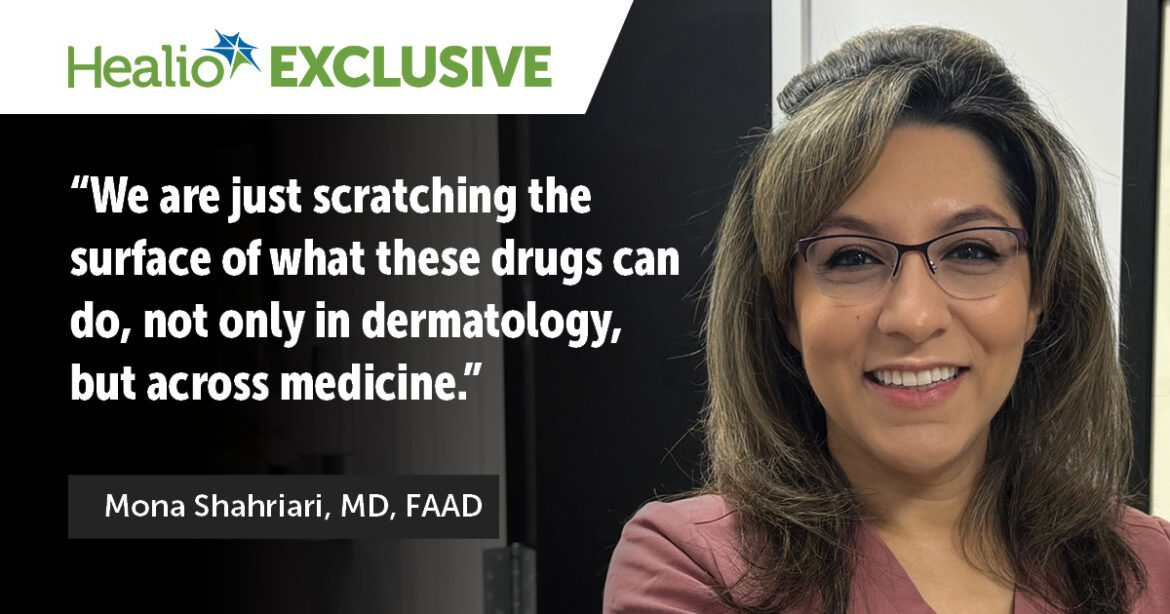
“If you ask me whether GLP-1s belong in the dermatology toolkit, my answer is yes, a hundred times yes. I believe we are just scratching the surface of what these drugs can do, not only in dermatology, but across medicine.”
Zero-CLS Video & Interactive Widgets (WordPress / Soledad Theme Compatible)
To maintain page performance and prevent Cumulative Layout Shift (CLS) in the Soledad WordPress theme, dynamic elements require explicit aspect ratios and containment styling.
Responsive Zero-CLS Video Container
<!-- Soledad Theme Compatible Zero-CLS Video Wrapper -->
<div class="soledad-video-container" style="position: relative; width: 100%; aspect-ratio: 16 / 9; min-height: 315px; background-color: #f3f4f6; border-radius: 8px; overflow: hidden; margin: 20px 0;">
  <iframe
    src="https://www.youtube-nocookie.com/embed/placeholder_dermatology"
    title="GLP-1 Receptor Agonists in Inflammatory Skin Disease"
    style="position: absolute; top: 0; left: 0; width: 100%; height: 100%; border: 0;"
    loading="lazy">
  </iframe>
</div>
Interactive Dermatologic Incretin Selector Widget
<!-- Zero-CLS Interactive Dermatology Widget -->
<div class="derm-glp1-widget" style="min-height: 290px; width: 100%; box-sizing: border-box; padding: 18px; border: 1px solid #d1d5db; border-radius: 8px; background: #ffffff; margin: 24px 0; contain: layout style;">
  <h4 style="margin-top: 0; font-family: system-ui, sans-serif; color: #111827; font-size: 16px;">GLP-1 Impact Explorer by Dermatologic Condition</h4>
  <p style="font-size: 13px; color: #4b5563; margin-bottom: 12px;">Select a condition to view primary clinical trial endpoints and mechanisms:</p>

  <select id="conditionSelect" onchange="updateDermWidget()" style="width: 100%; max-width: 320px; padding: 8px; font-size: 14px; border-radius: 4px; border: 1px solid #9ca3af; background: #f9fafb;">
    <option value="psoriasis">Psoriasis (TOGETHER-PsO)</option>
    <option value="psa">Psoriatic Arthritis (TOGETHER-PsA)</option>
    <option value="hs">Hidradenitis Suppurativa (HS)</option>
  </select>

  <div id="widgetInfoBox" style="margin-top: 16px; padding: 14px; background: #f3f4f6; border-radius: 6px; border-left: 4px solid #2563eb; font-size: 13px; color: #1f2937; line-height: 1.5; min-height: 90px;">
    <strong>TOGETHER-PsO Trial Outcome:</strong> 27.1% of patients receiving combination ixekizumab + tirzepatide achieved PASI 100 and $\ge 10\%$ weight reduction by week 36, compared to 5.8% with ixekizumab monotherapy.
  </div>
</div>

<script>
function updateDermWidget() {
  const val = document.getElementById('conditionSelect').value;
  const box = document.getElementById('widgetInfoBox');
  if (val === 'psoriasis') {
    box.innerHTML = '<strong>TOGETHER-PsO Trial Outcome:</strong> 27.1% of patients receiving combination ixekizumab + tirzepatide achieved PASI 100 and $\ge 10\%$ weight reduction by week 36, compared to 5.8% with ixekizumab monotherapy.';
  } else if (val === 'psa') {
    box.innerHTML = '<strong>TOGETHER-PsA Trial Outcome:</strong> 31.7% of patients receiving combination therapy achieved a $\ge 50\%$ improvement in PsA activity and $\ge 10\%$ weight reduction vs. 0.8% on monotherapy.';
  } else if (val === 'hs') {
    box.innerHTML = '<strong>Hidradenitis Suppurativa Data:</strong> Over 58% of patients experienced clinical improvement following GLP-1 initiation, alongside sustained reductions in major adverse cardiovascular events (MACE) through 2 years.';
  }
}
</script>
Clinical Trials Summary HTML Block (CLS-Optimized)
<!-- Clinical Trials Summary Card - Zero Layout Shift Enforced -->
<div class="clinical-trial-summary-card" style="width: 100%; min-height: 250px; box-sizing: border-box; border-left: 4px solid #1d4ed8; background-color: #f9fafb; padding: 20px; font-family: system-ui, -apple-system, sans-serif; contain: content; margin: 24px 0; border-radius: 0 8px 8px 0; border: 1px solid #e5e7eb; border-left-width: 4px;">
  <div style="display: flex; justify-content: space-between; align-items: center; border-bottom: 1px solid #e5e7eb; padding-bottom: 8px; margin-bottom: 12px;">
    <span style="font-size: 11px; font-weight: 700; text-transform: uppercase; color: #1d4ed8; letter-spacing: 0.8px;">Pivotal Clinical Trials & Evidence Matrix</span>
    <span style="font-size: 11px; color: #4b5563;">Dermatology & Metabolic Medicine</span>
  </div>

  <h3 style="margin: 0 0 10px 0; font-size: 15px; font-weight: 600; color: #111827; line-height: 1.4;">
    Incretin Agonists in Chronic Inflammatory Skin Disorders
  </h3>

  <div style="display: grid; grid-template-columns: repeat(auto-fit, minmax(210px, 1fr)); gap: 12px; font-size: 13px; color: #374151;">
    <div><strong>Core Focus:</strong> Psoriasis, PsA, and HS</div>
    <div><strong>Key Regimens:</strong> Tirzepatide, Semaglutide + Biologics</div>
    <div><strong>Primary Endpoints:</strong> PASI 100, Joint Response, MACE Reduction</div>
    <div><strong>Clinical Consensus:</strong> Dual anti-inflammatory & weight-loss efficacy</div>
  </div>

  <div style="margin-top: 14px; padding-top: 10px; border-top: 1px solid #e5e7eb; font-size: 13px; color: #4b5563;">
    <strong>Key Takeaway:</strong> Combining GLP-1 receptor agonists with targeted biologic therapy disrupts metabolic inflammation sustained by active adipose tissue, yielding superior disease clearance.
  </div>
</div>