37
Office-Based WALANT Hand Surgery With ‘Lean and Green’ Packs Demonstrates High Patient Satisfaction, Safety, and Waste Reduction
1-Minute Summary
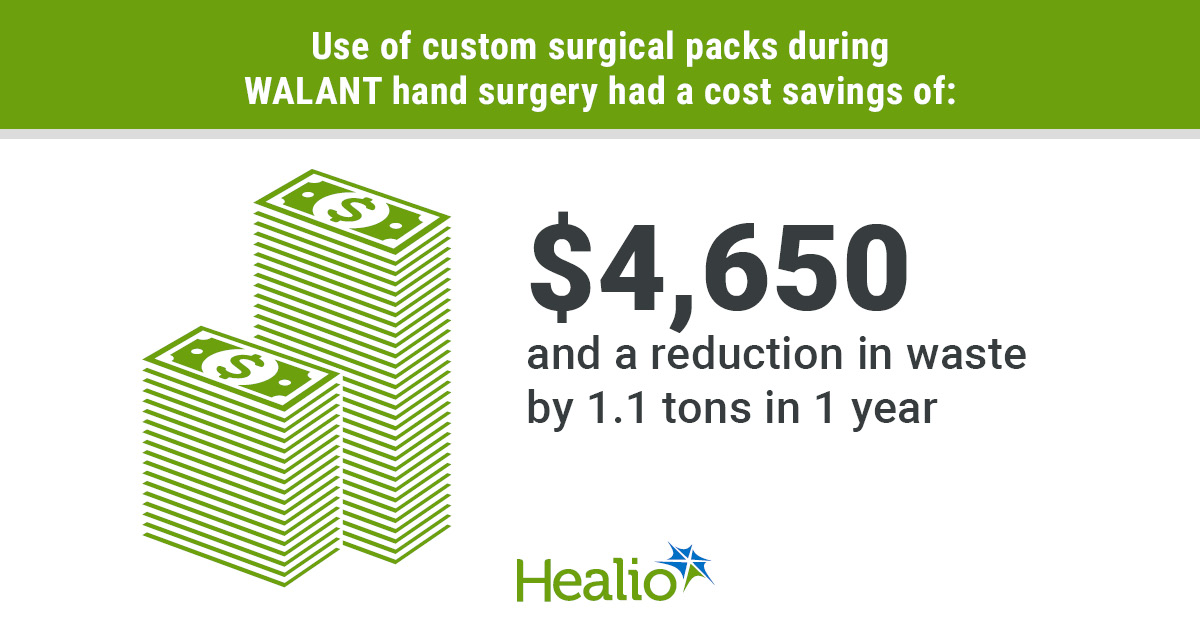
A retrospective analysis of 437 patients undergoing hand surgery demonstrated that transitioning minor procedures to an in-office setting using wide-awake local anesthesia no tourniquet (WALANT) paired with minimalist “Lean and Green” custom surgical packs is safe, cost-effective, and ecologically sustainable. Overall, 99% of patients reported an experience comparable to or better than a routine dental visit, and 99% stated they would recommend the procedure or choose it again. Superficial surgical site infections occurred in 5% of patients and resolved with outpatient oral antibiotics and local wound care. Furthermore, the operational transition eliminated substantial preoperative diagnostic testing, conserved $4,650, and reduced clinical waste by 1.1 metric tons within a single year.
Why This Matters
For decades, traditional hand surgery has been anchored in hospital ambulatory surgical suites under sedation or general anesthesia, requiring tourniquet application, preoperative fasting (NPO), routine laboratory work, electrocardiograms, and extensive surgical draping. This pathway generates substantial medical waste and escalates healthcare expenditures. Adopting office-based WALANT dispels historical misconceptions regarding epinephrine use in the digit while addressing two mounting priorities in contemporary healthcare: improving the patient care experience and reducing the carbon footprint of operating room waste.
Study at a Glance
| Feature | Details |
| Study Type | Retrospective cohort study / chart review and survey analysis |
| Participants | 437 patients who underwent hand surgery in an office-based procedure room |
| Intervention | Office-based WALANT hand surgery utilizing “Lean and Green” custom surgical packs |
| Comparator | Traditional hospital/ambulatory operating room procedures (historical/practice baseline) |
| Primary Outcome | Post-procedure infection rates, secondary intervention rates, patient satisfaction, operational cost savings, and medical waste prevention |
| Main Finding | 99% patient satisfaction rate; 5% superficial infection rate managed non-operatively; $4,650 financial savings and 1.1 tons of waste diverted in 1 year |
| Follow-up | Postoperative clinical surveillance and patient experience survey |
What the Researchers Found
Clinical Safety and Patient-Reported Outcomes
The clinical safety profile of office-based WALANT remained favorable throughout the cohort. Postoperative complications were limited:
- Infection Profile: 5% of patients experienced superficial infections. None required intravenous antimicrobial therapy or formal surgical debridement; all cases resolved uneventfully with standard oral antibiotics and outpatient local wound care.
- Patient Experience: Overall survey metrics demonstrated exceptional acceptance:
- 99% of patients characterized the surgical experience as “the same or better than a dental visit.”
- 99% confirmed they would recommend in-office surgery to friends or family and would elect to undergo the procedure again.
-
Economic and Environmental Metrics
Utilizing tailored, minimalist surgical packaging delivered significant environmental and fiscal advantages within a 12-month period:
| Metric | Measured Impact (1-Year Period) |
| Direct Cost Savings | $4,650 saved through streamlined pack supplies and office-based resource utilization |
| Waste Elimination | 1.1 tons of biomedical packaging and single-use material diverted from waste streams |
| Preoperative Workup | Complete elimination of pre-op physicals, screening labs, chest radiographs, and EKGs |
Clinical Significance
The study reinforces the viability of migrating clean, minor-to-moderate extremity surgery from resource-heavy main operating theatres to outpatient procedure suites. Eliminating sedation removes the risks and burdens associated with general anesthesia:
- Preoperative Convenience: Patients do not require escorts for transportation, can take their routine daily medications, and do not need to observe midnight fasting protocols.
- Resource Optimization: Bypassing pre-admission testing (EKGs, laboratory workups, chest imaging) removes bottlenecks and reduces institutional expenditure.
- Intraoperative Communication: The wide-awake technique permits real-time active functional assessments (such as active tendon excursion) and direct patient education.
As senior investigator Robert E. Van Demark Jr., MD, FACS, FAAOS, FAOA, noted:
“Nobody wants to go to the hospital. Hand surgery is much easier to do in the office for both the patients and surgeons. Since there is no need for preoperative physicals, there are no preoperative labs, chest radiographs or EKGs. Patients can drive in for their surgery and drive home. They can have breakfast and continue their regular medications. They do not have to be starved after midnight.”
Limitations
- Study Design: Retrospective analyses inherently carry risks of documentation bias, unmeasured confounding, and loss to follow-up.
- Absence of a Concurrent Control Group: The study evaluates an observational single-center series without a randomized, parallel control cohort treated in a traditional hospital operating suite.
- Survey Methodology: Patient satisfaction surveys administered postoperatively may be subject to selection or response bias.
- Procedural Breadth: Findings may not apply universally to complex, reconstructive, or prolonged hand and wrist procedures requiring deep regional blocks or bone grafting.
What Doctors Should Know
- Dispelling the Epinephrine Myth: Historically, clinicians were taught to avoid epinephrine in end-arterial fields due to theoretical risks of digital necrosis. Extensive contemporary evidence has disproven this dogma, demonstrating that local anesthesia mixed with epinephrine achieves excellent hemostasis without a pneumatic tourniquet.“Wide-awake surgery with epinephrine has been slow to be adopted by surgeons because we have been told for the past 70 years that we should not use epinephrine in the hand, and that has been disproven. It is safe to use,” explained Dr. Van Demark.
- Utilizing the Intraoperative Window for Education: Wide-awake hand surgery provides a unique educational environment:“The nice thing about doing the wide-awake surgeries is you get a chance to talk to the patient during surgery, and you can even show them what you are doing. Some patients want to see what is going on. It is very educational. You get to talk to the patient about their postoperative treatment plan. It is a wonderful teaching moment.”
- Embracing ‘Lean and Green’ Surgical Principles: Evaluating drape configurations and instrument tray contents can eliminate redundant single-use items, delivering dual benefits in departmental budget relief and environmental stewardship.
Bottom Line
Performing hand surgery in an office-based procedure room using WALANT alongside minimalist “Lean and Green” custom packs provides a safe, highly satisfactory patient experience while cutting costs and drastically lowering clinical waste generation.
Original Research / DOI
Wilde E, et al. J Hand Surg Glob Online. 2026.