29
Federal Policy Shift: Overview of the “Treatment First” Homelessness Toolkit and Clinical Perspectives
Executive Summary
Federal health officials have introduced a new framework entitled “Treatment First,” signaling a strategic policy pivot away from long-standing “Housing First” models. Under this initiative, individuals experiencing homelessness are required to participate in behavioral health and substance use disorder treatment as a prerequisite for accessing temporary housing. The shift has sparked debate among public health officials and addiction medicine researchers regarding clinical efficacy, ethical implications, and system capacity.
Policy Framework and Administrative Objectives
At an official press conference, Department of Health and Human Services (HHS) Secretary Robert F. Kennedy, Jr., JD, LLM, presented the toolkit as an administrative mechanism to reform the distribution of federal funding to state, municipal, and private contractors.
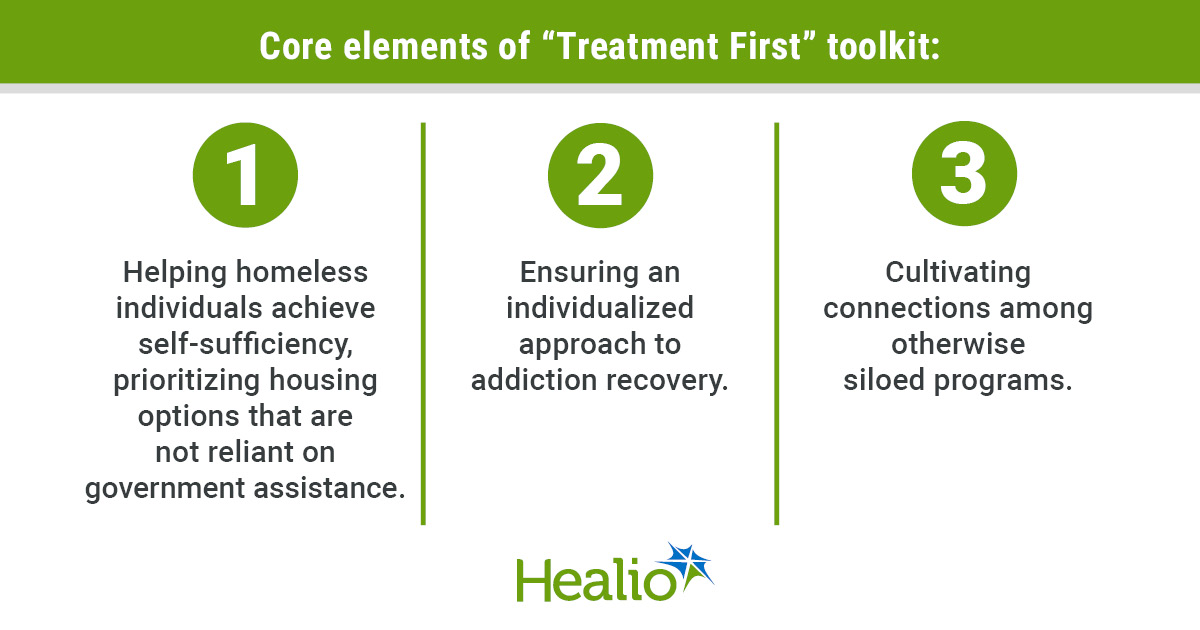
Kennedy stated that the initiative aims to bridge systemic silos:
“Treatment First brings behavioral health, housing, public safety, employment, faith-based organizations, families and communities together around a common goal.”
He further added:
“It prioritizes evidence-based treatment and recovery support while aligning housing and other services from the outset, and it gives state and local leaders practical strategies to close the gaps between the systems and move people towards stability.”
The initiative originated from a national summit held from April 12 to April 14, 2026, hosted by the White House Office of National Drug Control Policy (ONDCP). The meeting convened clinicians, legal authorities, municipal administrators, and research personnel to formulate operational guidelines.
Beyond clinical intervention, the toolkit incorporates:
- Personalized life management and occupational skills training to encourage financial self-sufficiency.
- A goal of transitioning individuals into housing alternatives “that are not reliant on government assistance.”
- Integration of faith-based support with conventional medical care.
- Standardized intake assessments and longitudinal tracking.
Characterizing the preexisting landscape as “fragmented,” Kennedy observed:
“The entities that are in charge of each of those segments of the journey are not talking to each other, and nobody is in charge of the addict all the way through.”
Emphasizing metric-driven funding, Kennedy noted that grants would reward sustained recovery, mental health improvements, employment, and housing stability:
“The principle is simple: treatment comes first, results must follow. We reward lasting results instead of repeated cycles of detox, relapse, and re-entry into care.”
Epidemiological and Programmatic Data
The toolkit and accompanying White House reports cite substantial comorbidity rates among unhoused populations, contrasting these against national estimates of sheltered and unsheltered individuals.
Table 1. Federal Estimates of Comorbidity and Homelessness Populations (2026)
| Parameter | Estimate / Prevalence Rate | Source / Scope |
| Substance Use Disorder (Addiction) | 75% | Estimated prevalence among homeless individuals |
| Mental Illness | 78% | Estimated prevalence among homeless individuals |
| Total Homeless & Subsidized Housing Population | 1,456,923 persons | Individuals unhoused or in targeted subsidized housing |
| Unsheltered Population | 266,320 persons | Individuals residing in places unfit for habitation (e.g., parks, vehicles, sidewalks) |
Data derived from the White House Office of National Drug Control Policy / US Department of Health and Human Services.
Legal Context and Funding Realignment
The release of the toolkit follows a 2025 executive directive aimed at diverting billions of dollars in federal grant awards away from unconditional Housing First programs and restructuring grant qualification criteria around mandatory treatment enrollment. This policy remains subject to ongoing federal litigation after a district judge issued an injunction that is currently pending appeal.
Scientific Evidence and Expert Commentary
Independent addiction medicine researchers have expressed skepticism regarding the clinical rationale of conditioning shelter on mandatory clinical treatment.
Vicky Stergiopoulos, MSc, MD, MHSc, FRCPC, senior scientist at the Centre for Addiction & Mental Health (CAMH) in Toronto, noted that the empirical evidence continues to favor low-barrier housing models:
“Housing first can be adapted to serve people with addiction.”
Stergiopoulos highlighted several critical considerations:
- Comparative Evidence Base:
- A 2020 meta-analysis of 72 studies published in The Lancet Public Health (co-authored by Stergiopoulos) demonstrated that permanent supportive housing significantly improved long-term residential stability for individuals with moderate-to-high support needs compared to standard care.
- A 2025 mathematical modeling study in JAMA Network Open led by University of Toronto investigators concluded that unconditional stable housing was associated with cost savings, reduced mortality, and improved health metrics.
-
- Feasibility and Uptake:Stergiopoulos acknowledged that positive aspects of the toolkit—such as “no wrong door” approaches, peer support specialists, and objective outcome tracking—can be seamlessly integrated into Housing First frameworks without imposing treatment prerequisites:“I like that the new policy includes ‘no wrong door,’ peer recovery specialists and learning and skill building for clients and standardized assessment and treatment and measurement of outcomes, but these can also be done through housing first.”
- Risk of Exclusion:Addressing the reality of frontline outreach, Stergiopoulos cautioned that requiring treatment upfront will exclude a substantial portion of the target population:“Do we need more treatment services? Absolutely. Would I keep somebody unhoused because they’re not ready to enter treatment? Absolutely not.”
- Systemic Capacity Constraints:Regardless of programmatic philosophy, Stergiopoulos emphasized that the broader system faces severe resource and structural deficits:“There needs to be a lot of capacity building. Whether it’s treatment first or housing first, it makes no difference. The capacity to deliver evidence-based interventions is not there.”
Table 2. Comparative Overview: “Treatment First” Framework vs “Housing First” Evidence Base
| Dimension | “Treatment First” Toolkit (2026) | “Housing First” Model (Empirical Consensus) |
| Access Requirement | Mandatory enrollment in behavioral health/addiction treatment | Immediate, low-barrier housing without treatment prerequisites |
| Primary Mechanism | Clinical recovery and job readiness as stepping stones to housing | Rapid stabilization in permanent housing as a foundation for clinical recovery |
| Key Objectives | Self-sufficiency; independence from government assistance; metric-based recovery | Harm reduction; mortality reduction; long-term residential stability |
| Identified Challenges | Risk of attrition/exclusion for individuals not ready for treatment; capacity deficits | High upfront capital expenditure; necessity of integrated multi-disciplinary supports |
References
- Executive Office of the President, Office of National Drug Control Policy. Best Practices Toolkit: Addressing Homelessness and Addiction Through “Treatment First.” The White House; August 12, 2026.
- Stergiopoulos V, et al. Effectiveness of permanent supportive housing and income assistance interventions for homeless individuals: a systematic review and meta-analysis. Lancet Public Health. 2020;5(11):e615-e626.
- University of Toronto Modeling Group. Cost-effectiveness and health outcomes of unconditional supportive housing interventions. JAMA Netw Open. 2025.