Sugar, Red Meat, and MASLD: Reframing Dietary Risk Beyond Fat
Key Points
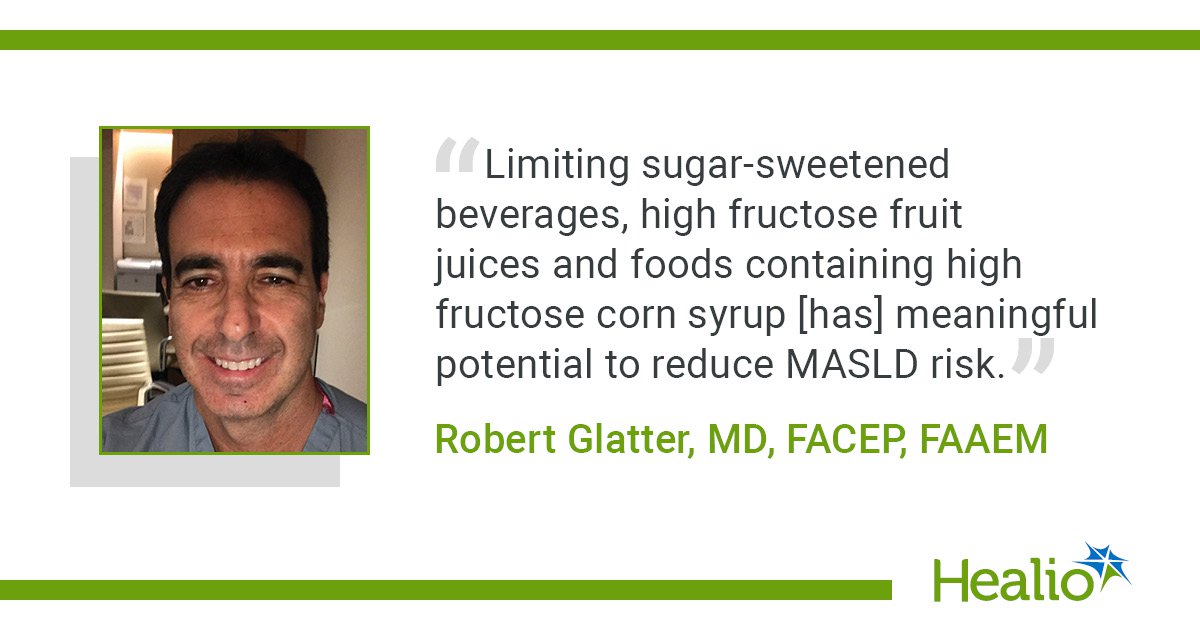
- Excess fructose—particularly from sugar-sweetened beverages, high-fructose fruit juices, and foods containing high-fructose corn syrup—can promote hepatic de novo lipogenesis and contribute to metabolic dysfunction-associated steatotic liver disease (MASLD).
- Red and processed meat consumption has also been associated with metabolic and liver-related risks, although the strength of the association may vary according to sex, quantity consumed, processing, and preparation.
- Whole fruits should not be equated with fructose-containing beverages because their fiber-rich matrix alters fructose absorption and metabolic handling.
- A Mediterranean-style dietary pattern emphasizing vegetables, whole fruits, legumes, nuts, fish, fiber and minimally processed foods has demonstrated benefits in hepatic fat reduction and insulin sensitivity.
- Dietary prevention of MASLD should focus less on eliminating dietary fat indiscriminately and more on reducing liquid sources of fructose, limiting red and processed meat, and improving overall dietary quality.
Reframing the Dietary Risk of Fatty Liver Disease
When fatty liver disease is discussed, dietary fat is often assumed to be the primary nutritional culprit. However, the evidence summarized in the source article points toward a more nuanced interpretation.
For metabolic dysfunction-associated steatotic liver disease, excessive intake of fructose—particularly from sugar-sweetened beverages—and high consumption of red and processed meat represent important modifiable dietary exposures.
This distinction has substantial clinical relevance because MASLD is estimated to affect approximately 30% of adults worldwide. The disease can progress silently for years, making prevention and modification of metabolic risk factors particularly important.
Major dietary factors associated with MASLD
| Dietary factor | Potential relevance to MASLD |
|---|---|
| Sugar-sweetened beverages | Major source of rapidly available fructose and associated with hepatic lipogenesis |
| High-fructose fruit juices | Provides fructose without the fiber matrix of whole fruit |
| High-fructose corn syrup | Common ingredient in many ultra-processed foods and beverages |
| Red meat | Associated in some studies with NAFLD and insulin resistance |
| Processed meat | Adds saturated fat, sodium, nitrates/nitrites and other metabolic risk factors |
| Whole fruits | Generally not associated with increased hepatic steatosis in the cited evidence |
| Fiber-rich foods | May support metabolic health and a favorable gut microbiome |
| Mediterranean-style diet | Associated with reduced hepatic fat and improved insulin sensitivity |
Fructose and Hepatic Fat Production
The concern surrounding fructose extends beyond its caloric content. Fructose has metabolic characteristics that can directly influence hepatic fat production.
After absorption, dietary fructose is transported through the hepatic portal circulation to the liver, where it can stimulate de novo lipogenesis, the biochemical process through which the liver converts carbohydrate substrates into fatty acids.
The article explains that this process involves activation of carbohydrate-responsive element-binding protein (ChREBP) and occurs through pathways that are less dependent on insulin signaling than those governing glucose metabolism. Consequently, fructose can exert a relatively strong stimulatory effect on hepatic fat synthesis.
Fructose metabolism may also increase uric acid production and mitochondrial oxidative stress. These effects can interfere with fatty-acid oxidation. When fatty-acid synthesis and delivery exceed the liver’s capacity to oxidize or export fat, triglycerides can accumulate within hepatocytes.
The resulting metabolic environment may include:
Fructose excess → increased hepatic lipogenesis → triglyceride accumulation → insulin resistance/hyperinsulinemia → hepatic inflammation → progression of MASLD.
Evidence from a controlled feeding study
The article cites a controlled feeding study involving adolescents with nonalcoholic fatty liver disease. Reduction in dietary sugar was associated with a substantial decline in hepatic de novo lipogenesis.
| Measure | Before dietary sugar reduction | After reduction |
|---|---|---|
| Hepatic de novo lipogenesis | 25% | 17% |
| Alanine aminotransferase | Elevated | Decreased |
| Hepatic steatosis | Present | Reduced |
Thus, reducing added sugar may influence not only dietary calorie intake but also the biochemical pathways responsible for hepatic fat production.
Sugar-Sweetened Beverages Deserve Particular Attention
Among the modifiable dietary exposures, sugar-sweetened beverages deserve particular consideration.
This category includes conventional soft drinks as well as some fruit juices containing substantial quantities of fructose. The concern also extends to products sweetened with high-fructose corn syrup (HFCS), an ingredient used extensively in numerous ultra-processed foods and beverages, particularly in the United States.
For patients attempting to reduce fructose exposure, simply avoiding soda may therefore be insufficient. Ingredient-label awareness can help identify HFCS and other added sugars in products that may not immediately appear to be high-sugar foods.
Examples include:
- Sweetened snacks
- Desserts
- Breakfast cereals
- Sauces
- Packaged foods
- Sweetened beverages
- Certain processed fruit products
The practical message is therefore to examine both beverages and packaged foods rather than focusing exclusively on table sugar or soft drinks.
Whole Fruit Is Different From Fruit Juice
An important nutritional distinction is that whole fruit should not automatically be grouped together with fructose-containing beverages.
Whole fruits such as apples, mangoes and grapes naturally contain fructose, but they also contain fiber and a complex food matrix that slows digestion and absorption.
According to the source article, these fruits have not been associated with hepatic steatosis or incident MASLD in the cited evidence.
Whole fruit versus fructose-containing beverages
| Feature | Whole fruit | Fruit juice / sugary beverage |
|---|---|---|
| Fructose | Present naturally | Often present in concentrated form |
| Fiber | High | Greatly reduced or absent |
| Food matrix | Intact | Disrupted/removed |
| Absorption | Slower | Generally more rapid |
| Satiety | Greater | Lower |
| MASLD concern | Not identified as a major dietary risk in cited evidence | Greater concern, particularly with high fructose intake |
Therefore, dietary recommendations should emphasize whole fruit rather than fruit juice, rather than advising patients to avoid fruit altogether.
The Gut–Liver Axis
The relationship between diet and MASLD also involves the gut–liver axis.
Changes in the intestinal microbiome, or gut dysbiosis, may impair intestinal barrier function and increase intestinal permeability. This can facilitate movement of bacterial products, including lipopolysaccharide, from the gut into the portal circulation.
Once these signals reach the liver, they can activate inflammatory pathways involving Toll-like receptors and nuclear factor-kappa B (NF-κB).
These pathways may contribute to:
- Hepatic insulin resistance
- Steatosis
- Inflammation
- Oxidative stress
- Progression toward metabolic dysfunction-associated steatohepatitis
Gut dysbiosis can also influence several metabolically relevant compounds and pathways, including short-chain fatty acids, bile acids, endogenous ethanol, choline metabolism and trimethylamine-N-oxide (TMAO). These metabolites may affect lipid metabolism, oxidative stress and inflammatory signaling.
This provides another rationale for dietary patterns rich in fiber, prebiotic substrates and minimally processed plant foods.
Red and Processed Meat as Additional Dietary Risk Factors
The article identifies red and processed meat as another important dietary consideration in MASLD.
A 2018 cross-sectional analysis published in the Journal of Hepatology reported that high total meat consumption was independently associated with NAFLD and insulin resistance.
Findings reported from the 2018 analysis
| Outcome/exposure | Reported finding |
|---|---|
| High total meat consumption | Independently associated with NAFLD |
| Odds ratio for NAFLD | OR 1.49 |
| 95% confidence interval | 1.05–2.13 |
| Red and/or processed meat | Similar associations reported |
| Insulin resistance | Also associated with higher meat consumption |
However, red meat is nutritionally complex. It can provide important nutrients including:
- Protein
- Iron
- Zinc
- Vitamin B12
At the same time, it can contribute substantial quantities of saturated fatty acids, cholesterol, heme iron and advanced glycation end products. These compounds and dietary components may contribute to oxidative stress, insulin resistance and metabolic dysfunction.
Processed meats may introduce additional concerns because of their sodium, nitrate and nitrite content, potentially extending their adverse metabolic implications beyond liver disease to conditions such as type 2 diabetes and cardiovascular disease.
The Association Is Not Necessarily Linear
Importantly, the evidence does not demonstrate an identical relationship between red-meat intake and MASLD across all populations.
A 2026 analysis from southern Italy, published in Nutrients, reportedly found no significant overall association between red-meat consumption and the outcome examined. An increased risk was observed specifically among men consuming approximately 75–90 g of red meat per day.
This finding suggests that factors such as:
- Sex
- Quantity consumed
- Food processing
- Cooking or preparation methods
- Overall dietary pattern
may modify the relationship between red meat and metabolic liver disease.
Consequently, the practical dietary recommendation presented in the article is not that all red meat must be eliminated, but that red meat—particularly processed meat—should be consumed in moderation.
The Mediterranean Diet
Against this background, the Mediterranean diet emerges as a dietary pattern with substantial evidence supporting its use in MASLD.
Rather than focusing on the elimination of a single macronutrient, this dietary pattern emphasizes overall food quality.
Core components of the Mediterranean dietary pattern
| Emphasize | Limit |
|---|---|
| Vegetables | Red meat |
| Whole fruits | Processed meat |
| Fish | Refined sugars |
| Legumes | Sugar-sweetened beverages |
| Nuts | Highly processed foods |
| High-fiber foods | Excess added sugars |
| Monounsaturated fats | — |
| Minimally processed foods | — |
The pattern combines plant-based foods, fish, legumes, nuts and healthy unsaturated fats while reducing refined sugars and red and processed meat.
Evidence for Reduction in Hepatic Fat
The source article cites a randomized crossover trial published in the Journal of Hepatology in 2013.
In that study, adherence to a Mediterranean diet was associated with a substantially greater reduction in intrahepatic lipid content than a low-fat diet, and the effect occurred independently of weight loss.
Randomized crossover trial
| Dietary intervention | Reduction in intrahepatic lipid content |
|---|---|
| Mediterranean diet | Approximately 39% |
| Low-fat diet | Approximately 7% |
The article also cites meta-analyses reporting improvements in the fatty liver index and HOMA-IR, while longitudinal data from the PREDIMED study suggest that stronger adherence to the Mediterranean dietary pattern may be associated with delayed progression of MASLD over five years.
Why Might the Mediterranean Diet Help?
Several components of the Mediterranean diet may act synergistically.
Monounsaturated fatty acids and omega-3 fatty acids may improve lipid metabolism and insulin sensitivity.
Polyphenols provide antioxidant and potentially anti-inflammatory effects.
Dietary fiber supports intestinal microbial diversity and may improve the gut–liver axis.
Together, these dietary components may:
- Reduce hepatic oxidative stress.
- Improve insulin sensitivity.
- Influence lipid metabolism.
- Reduce excessive hepatic fat accumulation.
- Support a healthier gut microbiome.
- Reduce inflammatory signaling.
The source article states that the Mediterranean dietary pattern is supported as an important component of MASLD care by several major professional organizations, including the American Gastroenterological Association (AGA), American Association for the Study of Liver Diseases (AASLD), American College of Gastroenterology (ACG), American Heart Association (AHA), American Diabetes Association (ADA), and the joint EASL-EASD-EASO guideline.
A Shift From Fat Avoidance to Dietary Quality
The central message is not that dietary fat is irrelevant, but that an exclusive focus on fat may obscure other important nutritional drivers of MASLD.
Instead, dietary prevention can be framed around three practical priorities:
1. Reduce liquid sources of fructose
Patients should minimize:
- Sugar-sweetened soft drinks
- High-fructose fruit juices
- Other beverages containing substantial added sugars
2. Limit red and processed meat
Particular attention should be paid to processed meat products, while overall red-meat intake should be moderated.
3. Adopt a Mediterranean-style dietary pattern
The dietary foundation should consist primarily of:
- Whole fruits
- Vegetables
- Legumes
- Nuts
- Fish
- Fiber-rich foods
- Minimally processed foods
- Healthier unsaturated fats
Clinical Takeaway
MASLD is common and frequently asymptomatic, making lifestyle-based prevention particularly important.
The evidence presented in the source article suggests that dietary counseling should move beyond the traditional message of simply avoiding fatty foods. A more comprehensive strategy would focus on reducing excessive fructose exposure, particularly from beverages; moderating red and processed meat; and increasing consumption of whole, fiber-rich and minimally processed foods.
Whole fruit should not be unnecessarily restricted merely because it contains naturally occurring fructose. The distinction between whole fruit and fiber-free fructose-containing beverages is particularly important when providing practical dietary advice.
A Mediterranean-style eating pattern provides a broader framework that incorporates these principles while emphasizing foods associated with improved metabolic health.
Three practical dietary priorities for MASLD
| Priority | Practical recommendation |
|---|---|
| Fructose reduction | Minimize sugar-sweetened beverages and high-fructose juices |
| Meat moderation | Limit red meat and especially processed meat |
| Dietary pattern | Favor a Mediterranean-style diet rich in vegetables, whole fruits, legumes, nuts, fish and fiber |
For a disease that is both increasingly prevalent and frequently silent, these dietary interventions represent relatively accessible measures that can potentially be incorporated into routine preventive care.
Expert Information
Robert Glatter, MD, FACEP, FAAEM, is identified in the source as an attending physician in the Department of Emergency Medicine at Lenox Hill Hospital and an assistant professor of emergency medicine at the Donald and Barbara Zucker School of Medicine at Hofstra/Northwell.
The source reports no relevant financial disclosures for Dr. Glatter.