Retatrutide Reduces Obstructive Sleep Apnea Severity and Body Weight in Phase 3 Trials
Once-weekly retatrutide significantly reduced apnea-hypopnea index (AHI), body weight and cardiometabolic risk markers in adults with obesity and obstructive sleep apnea, including patients with type 2 diabetes, according to two phase 3 randomized clinical trials published in The New England Journal of Medicine.
SunilMadhavs World | Medical News
1-Minute Summary
- Retatrutide, a triple GIP, GLP-1 and glucagon receptor agonist, significantly reduced OSA severity compared with placebo in two phase 3 trials.
- The TRIUMPH-OSA trials included 691 adults with moderate-to-severe OSA and overweight or obesity, with and without type 2 diabetes.
- At week 80, AHI reductions were greater with retatrutide than placebo across the studied doses.
- The greatest reductions were generally observed with 9-mg and 12-mg doses.
- Retatrutide-treated participants experienced substantial weight loss, with reductions reaching 22.2% among participants without diabetes and 18.5% among those with diabetes.
- Improvements were also observed in blood pressure, lipid parameters, inflammatory markers and glycemic measures.
- Gastrointestinal adverse effects were common, particularly during dose escalation.
- Although retatrutide may represent an important therapeutic development for OSA associated with obesity, direct comparative trials against CPAP are still needed.
Why This Matters
Obstructive sleep apnea is a common sleep-related breathing disorder characterized by recurrent upper-airway obstruction during sleep, resulting in intermittent hypoxemia, sleep fragmentation and impaired sleep quality.
Obesity is an important risk factor for OSA, and weight reduction can improve disease severity.
Continuous positive airway pressure (CPAP) remains a well-established treatment for OSA. However, treatment adherence can be challenging because patients must use a device during sleep.
Pharmacological treatments that address obesity and OSA simultaneously could provide additional therapeutic opportunities, particularly among patients with obesity-related metabolic complications.
The TRIUMPH-OSA trials investigated whether retatrutide could improve OSA severity while simultaneously producing weight loss and cardiometabolic benefits.
Study at a Glance
| Feature | Details |
|---|---|
| Study name | TRIUMPH-1-OSA and TRIUMPH-2-OSA |
| Study type | Two double-blind, randomized, placebo-controlled phase 3 clinical trials |
| Publication | The New England Journal of Medicine |
| Participants | 691 adults with moderate-to-severe OSA and overweight or obesity |
| BMI eligibility | ≥27 kg/m² |
| Population 1 | Adults without type 2 diabetes |
| Population 2 | Adults with type 2 diabetes |
| Intervention | Once-weekly retatrutide |
| Doses studied | 4 mg, 9 mg and 12 mg |
| Comparator | Placebo |
| Primary outcome | Change in apnea-hypopnea index from baseline to week 80 |
| Follow-up | 80 weeks |
| Main finding | Greater reductions in OSA severity and body weight with retatrutide than placebo |
| Additional outcomes | Body weight, hypoxic burden, blood pressure, lipid parameters, glycemic measures and patient-reported sleep-related impairment |
| Funding | Eli Lilly |
| DOI | 10.1056/NEJMoa2611477 |
Participant Characteristics
| Characteristic | TRIUMPH-1-OSA | TRIUMPH-2-OSA |
|---|---|---|
| Type 2 diabetes | No | Yes |
| Participants | 243 | 448 |
| Baseline mean AHI | 58.6 events/h | 55.9 events/h |
| Baseline mean body weight | 119.6 kg | 115.9 kg |
| Retatrutide allocation | 181 | 335 |
| Placebo allocation | 62 | 113 |
| Completed trial | 88% | 89% |
| Completed assigned treatment | 85% | 87% |
The study population had substantial obesity and severe sleep apnea at baseline, according to the investigators.
What the Researchers Found
1. Retatrutide Reduced OSA Severity in Participants Without Diabetes
In TRIUMPH-1-OSA, involving 243 adults without type 2 diabetes, retatrutide produced greater reductions in AHI than placebo at week 80.
The hybrid-treatment estimand analysis demonstrated the following changes:
| Treatment | Mean AHI change at week 80 | Difference vs placebo |
|---|---|---|
| Placebo | −9.9 events/h | Reference |
| Retatrutide 4 mg | −22.9 events/h | −13.0 events/h |
| Retatrutide 9 mg | −34.3 events/h | −24.4 events/h |
| Retatrutide 12 mg | −31.7 events/h | −21.9 events/h |
The 9-mg dose produced the greatest numerical reduction in AHI in this analysis.
Clinically Meaningful OSA Improvement
Investigators also assessed the proportion of participants achieving either an AHI below 5 events/h or an AHI between 5 and 14 events/h accompanied by an Epworth Sleepiness Scale (ESS) score of 10 or less.
| Treatment | Participants achieving endpoint at week 80 |
|---|---|
| Placebo | 12.5% |
| Retatrutide 9 mg | 51.6% |
| Retatrutide 12 mg | 42.3% |
These findings suggest that a greater proportion of retatrutide-treated participants achieved substantially reduced sleep apnea severity accompanied by acceptable daytime sleepiness.
The intention-to-treat analysis showed similar findings.
| Treatment | Mean AHI change | Difference vs placebo |
|---|---|---|
| Placebo | Not separately specified in the reported ITT comparison | Reference |
| Retatrutide 4 mg | −22.8 events/h | −13.2 events/h |
| Retatrutide 9 mg | −34.3 events/h | −24.7 events/h |
| Retatrutide 12 mg | −32.1 events/h | −22.5 events/h |
2. Retatrutide Also Improved OSA in Participants With Type 2 Diabetes
TRIUMPH-2-OSA included 448 adults with type 2 diabetes, addressing an important population in which previous incretin-based OSA research had shown less consistent results.
The hybrid-treatment estimand analysis demonstrated greater reductions in AHI with retatrutide than placebo.
| Treatment | Mean AHI change at week 80 | Difference vs placebo |
|---|---|---|
| Placebo | −10.3 events/h | Reference |
| Retatrutide 4 mg | −19.2 events/h | −8.9 events/h |
| Retatrutide 9 mg | −24.7 events/h | −14.4 events/h |
| Retatrutide 12 mg | −25.4 events/h | −15.1 events/h |
The 12-mg dose produced the greatest numerical AHI reduction in this population.
Improvement in OSA Severity and Daytime Sleepiness
A clinically meaningful OSA improvement endpoint was achieved by:
| Treatment | Participants achieving endpoint |
|---|---|
| Placebo | 12.6% |
| Retatrutide 9 mg | 39.5% |
| Retatrutide 12 mg | 38.9% |
Similar findings were observed in the intention-to-treat analysis.
The study also reported improvements in percentage change in AHI, the proportion achieving at least a 50% reduction in AHI and sleep apnea-specific hypoxic burden among participants receiving 9-mg or 12-mg retatrutide.
3. Retatrutide Produced Substantial Weight Loss
Weight reduction was an important accompanying outcome.
| Population | Retatrutide-associated weight loss | Placebo weight loss |
|---|---|---|
| Without type 2 diabetes | 12.5%–22.2% | 4.8% |
| With type 2 diabetes | 12.1%–18.5% | 5.6% |
These findings support the importance of weight reduction in improving OSA severity among individuals with obesity.
4. Cardiometabolic Measures Also Improved
Beyond sleep apnea outcomes, retatrutide improved several cardiometabolic parameters compared with placebo.
| Parameter | Reported improvement |
|---|---|
| Systolic blood pressure | Greater reduction with retatrutide |
| Diastolic blood pressure | Greater reduction with retatrutide |
| High-sensitivity C-reactive protein | Greater reduction |
| Fasting insulin | Greater reduction |
| Total cholesterol | Greater reduction |
| Triglycerides | Greater reduction |
| Non-HDL cholesterol | Greater reduction |
| LDL cholesterol | Greater reduction |
| HbA1c | Greater reduction in participants with diabetes |
| Fasting glucose | Greater reduction in participants with diabetes |
The improvements in glycemic measures were particularly relevant among participants with type 2 diabetes.
Ronald R. Grunstein, MD, PhD, commented:
“There were slightly better responses in the [patients without diabetes] with retatrutide but still fairly impressive results in the [diabetes] population, with major reductions in hemoglobin A1c, blood pressure, all the metabolic variables, as well as improvement in sleep apnea with the weight loss.”
5. Sleep-Related Impairment Improved in Selected Groups
The study assessed patient-reported sleep-related impairment using the PROMIS Short Form Sleep-Related Impairment 8a T-score.
Among participants with type 2 diabetes, the 9-mg and 12-mg retatrutide groups demonstrated significantly greater favorable changes than placebo.
| Treatment | Change in sleep-related impairment score |
|---|---|
| Placebo | −6.9 |
| Retatrutide 9 mg | −10.9 |
| Retatrutide 12 mg | −12.6 |
The report did not identify comparable statistically significant differences for all treatment groups and populations.
Safety and Adverse Events
Gastrointestinal adverse effects were the principal tolerability concern.
The majority of adverse events were mild-to-moderate gastrointestinal symptoms, commonly occurring during dose escalation.
Grunstein explained:
“Most of these adverse effects were gastrointestinal, mild to moderate and usually [occurred] in the early phase of increasing the dosage.”
He further noted that clinical practice may permit individualized dose adjustments:
“These trials often operate on a very fixed schedule that you have to adhere to, but in the real world, you can adjust medications accordingly.”
Adverse Events and Treatment Discontinuation
| Safety outcome | Without diabetes | With diabetes |
|---|---|---|
| Adverse events with retatrutide | 88%–93% | 73%–84% |
| Adverse events with placebo | 76% | 71% |
| Serious adverse events with retatrutide | 8% | 8% |
| Serious adverse events with placebo | 10% | 10% |
Discontinuation Due to Adverse Events
| Population | Retatrutide | Placebo |
|---|---|---|
| Without diabetes | 9 patients | 4 patients |
| With diabetes | 15 patients | 4 patients |
Gastrointestinal disorders specifically led to treatment discontinuation in:
- Five retatrutide-treated participants and one placebo participant without diabetes.
- Two retatrutide-treated participants with diabetes.
Deaths and Major Cardiovascular Events
The study reported:
| Outcome | Without diabetes | With diabetes |
|---|---|---|
| Deaths with retatrutide | None | 1 patient receiving 9 mg |
| Deaths with placebo | 2 patients | 1 patient |
| Major adverse cardiac events with retatrutide | None | 3 patients |
| Major adverse cardiac events with placebo | 1 patient | 2 patients |
The investigators reported that the death in the 9-mg retatrutide group among participants with diabetes was gastrointestinal in cause.
These individual event counts should not be interpreted as evidence of comparative mortality or cardiovascular benefit or harm.
Clinical Significance
The TRIUMPH-OSA trials demonstrate that retatrutide can improve OSA severity while simultaneously addressing obesity and associated cardiometabolic abnormalities.
The findings are particularly important for patients with:
- Moderate-to-severe OSA and obesity.
- OSA associated with type 2 diabetes.
- Obesity-related hypertension and dyslipidemia.
- Persistent metabolic risk despite lifestyle interventions.
- Difficulties achieving substantial weight reduction.
The results suggest that pharmacological treatment targeting obesity may have implications beyond weight management, potentially influencing sleep-related breathing disorders.
However, the trials do not establish that retatrutide can replace CPAP, and the relative roles of pharmacotherapy and established OSA treatment require further investigation.
Limitations
Several limitations should be considered when interpreting these findings.
- No direct CPAP comparison: Retatrutide was compared with placebo, not CPAP. The study therefore cannot establish superiority or equivalence to CPAP.
- Selected population: Participants had overweight or obesity, with BMI eligibility of at least 27 kg/m². Findings may not directly apply to patients with OSA without obesity.
- Duration: Although the 80-week follow-up provides substantial treatment-duration data, longer-term studies are needed to evaluate durability of OSA improvement and weight reduction.
- Dose-related interpretation: The 4-mg dose did not reach statistical significance under the testing hierarchy in either trial.
- Treatment discontinuation: Adverse events, particularly gastrointestinal symptoms, resulted in some participants discontinuing treatment.
- Generalizability: The results may not fully apply to all ethnic populations, particularly individuals with OSA associated with visceral adiposity despite a relatively normal BMI.
- Long-term management remains uncertain: Further research is required to determine optimal maintenance dosing, treatment withdrawal strategies and the persistence of improvements after discontinuation.
- Potentially different mechanisms: Although weight loss likely contributed substantially to OSA improvement, the relative contribution of direct pharmacological effects and weight reduction requires further study.
What Doctors Should Know
- Retatrutide demonstrated significant reductions in OSA severity in adults with overweight or obesity, including those with type 2 diabetes.
- The 9-mg and 12-mg doses generally produced greater improvements than the 4-mg dose.
- Weight reduction was substantial and accompanied improvements in blood pressure, lipids, inflammatory markers and glycemic parameters.
- Gastrointestinal adverse effects should be discussed before treatment initiation, particularly during dose escalation.
- Retatrutide should not currently be regarded as a proven replacement for CPAP based on these trials.
- CPAP remains an established treatment, and decisions about modifying OSA therapy should involve appropriate clinical assessment.
- Patients with OSA but without obesity require additional investigation because retatrutide was studied in an overweight or obese population.
- Clinicians should consider the broader metabolic profile of patients when discussing obesity-related OSA management.
Expert Perspective: Could Retatrutide Replace CPAP?
Ronald R. Grunstein suggested that incretin-based medications may substantially change the management of OSA associated with obesity.
He stated:
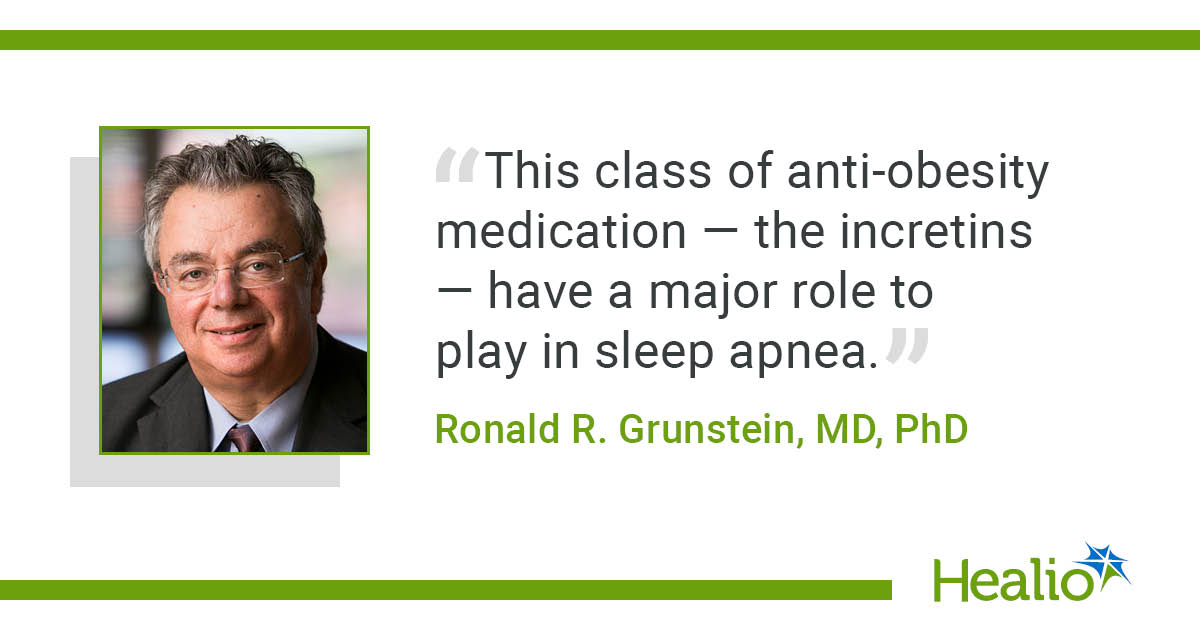
“We feel the findings of the paper expand the evidence that this class of anti-obesity medication — the incretins — have a major role to play in sleep apnea, and potentially will replace CPAP use in most patients.”
However, this represents an expert perspective rather than an established clinical recommendation.
Grunstein also emphasized the advantages of addressing metabolic abnormalities alongside OSA:
“Our patients have other problems that need to be treated, and if you can give them a treatment that improves their metabolic status, as well as their sleep apnea, I think you’re on a winner.”
Regarding CPAP, he noted:
“CPAP is a very good treatment if you use it regularly, but it doesn’t really reduce blood pressure as much as it seems these incretin medications [do], nor does it really improve diabetes or cause weight loss.”
A direct comparative study between retatrutide and CPAP is planned, according to Grunstein.
He also emphasized that changes in OSA management may require additional clinical training:
“We have to train a workforce that can use these medications effectively, and that means changing a lot of the CPAP-centric training that our registrars and residents are getting at the moment, and make their mentors realize that there’s a new world out there.”
Bottom Line
Retatrutide significantly reduced obstructive sleep apnea severity and body weight in adults with obesity or overweight, including patients with type 2 diabetes, in two phase 3 randomized trials.
The treatment also improved several cardiometabolic parameters, suggesting that obesity-directed pharmacotherapy may provide broader benefits for patients with OSA and metabolic disease.
Nevertheless, retatrutide has not been demonstrated to replace CPAP, and direct comparative trials, longer-term follow-up and additional clinical research are needed before its role in OSA management can be fully established.
Original Research / DOI
Original research article:
Grunstein RR, et al. Retatrutide for Obstructive Sleep Apnea and Obesity. The New England Journal of Medicine. 2026.
DOI: 10.1056/NEJMoa2611477
Study funding: Eli Lilly.
Disclosures: Grunstein reported receiving grants from Alkermes Inc. and Amgen; consulting for Alkermes Inc. and Eli Lilly and Company; and receiving lecture fees from Eisai Inc. Additional author disclosures are available in the original publication.
Expert Perspective
Andrew M. Namen, MD, FCCP, FAASM, D’ABSM
Wake Forest University School of Medicine
American Academy of Sleep Medicine spokesperson
Namen reported no relevant financial disclosures.
Source: Retatrutide reduces sleep apnea severity, weight in phase 3 trials. November 11, 2026.