Semaglutide Produces Substantial BMI Reduction in Children Aged 6 to 11 Years With Obesity: STEP Young Trial
1-Minute Summary
Once-weekly subcutaneous semaglutide produced substantial and sustained reductions in body mass index (BMI) among children aged 6 to 11 years with obesity in the phase 3 STEP Young randomized clinical trial.
The study enrolled 167 children and randomly assigned them in a 2:1 ratio to semaglutide or placebo. Both groups also received lifestyle intervention. Semaglutide was administered for 2 years, with the maximum dose determined by body weight.
At week 68, BMI decreased by 13.5% with semaglutide, whereas BMI increased by 2.7% with placebo, corresponding to an estimated treatment difference of −16.2 percentage points (P < .001) under the treatment-regimen estimand.
The efficacy estimand suggested an even larger treatment difference of 19.7 percentage points.
Nearly 79% of children receiving semaglutide achieved a BMI reduction of at least 10% under the efficacy estimand, compared with none in the placebo group. Semaglutide was also associated with improvements in BMI category, waist circumference, systolic blood pressure, HbA1c, triglycerides, inflammatory markers, and body composition.
Gastrointestinal adverse events were frequent, particularly vomiting, diarrhea, and nausea, but no new safety signal was identified.
Importantly, BMI began to rise during the short off-treatment washout period, suggesting that the durability of benefit after withdrawal remains an important clinical question.
Why This Matters
Childhood obesity is a chronic disease that can be accompanied by metabolic complications well before adulthood. Children with obesity may face increased lifetime risks of type 2 diabetes, cardiovascular disease, and other obesity-associated disorders.
Lifestyle and behavioral interventions remain foundational components of pediatric obesity management, but their effectiveness can be limited and access to intensive programs is inconsistent.
Martin Wabitsch, MD, PhD, emphasized this problem during presentation of the STEP Young findings:
“Childhood obesity is a chronic relapsing disease, and we have a steady increase in fat mass during childhood.”
He further noted that complications may already be present during childhood and that pharmacological therapy could supplement behavioral intervention when lifestyle treatment alone is insufficient.
The STEP Young results therefore extend an important clinical question into a substantially younger population: whether pharmacologic obesity treatment can produce meaningful improvements in weight-related and metabolic outcomes before adolescence.
Study at a Glance
| Feature | Details |
|---|---|
| Study | STEP Young |
| Study type | Phase 3 randomized controlled trial |
| Population | Children aged 6-11 years with obesity |
| Participants | 167 |
| Mean age | 10 years |
| Female participants | 59% |
| Obesity definition | BMI ≥95th percentile for age and sex according to CDC growth charts |
| Randomization | 2:1 |
| Intervention | Once-weekly subcutaneous semaglutide plus lifestyle intervention |
| Comparator | Placebo plus lifestyle intervention |
| Maximum semaglutide dose | 1.7 mg or 2.4 mg according to body weight |
| Treatment duration | 2 years |
| Primary outcome | Percentage change in BMI from baseline to week 68 |
| Primary finding | −13.5% BMI change with semaglutide vs +2.7% with placebo |
| Estimated treatment difference | −16.2 percentage points |
| Statistical significance | P < .001 |
| Follow-up after treatment | 7-week safety washout described in the source |
| Funding | Novo Nordisk |
What the Researchers Found
Semaglutide Produced a Large Reduction in BMI
The primary analysis demonstrated a substantial separation between semaglutide and placebo.
At week 68, using the treatment-regimen estimand:
| Week 68 BMI outcome | Semaglutide | Placebo |
|---|---|---|
| Mean percentage change in BMI | −13.5% | +2.7% |
| Estimated treatment difference | −16.2 percentage points | — |
| P value | <.001 | — |
Thus, while BMI increased in children receiving placebo, children assigned to semaglutide experienced a clinically substantial reduction.
Under the efficacy estimand—which estimates the effect under continued adherence without certain intercurrent events—the difference between semaglutide and placebo reached 19.7 percentage points at week 68.
BMI Benefits Persisted at 2 Years
The difference between groups remained evident at 104 weeks.
| BMI outcome at 2 years | Semaglutide | Placebo |
|---|---|---|
| BMI change | −9.4% | +8.4% |
| Direction of change | Reduction | Increase |
The persistence of a large between-group difference at 2 years suggests that treatment benefit can extend beyond the shorter treatment periods commonly evaluated in pediatric obesity trials.
However, the magnitude of BMI reduction with semaglutide was smaller at 104 weeks than at week 68, and longer-term outcomes remain important.
Clinically Meaningful BMI Reductions
The magnitude of response was also apparent when outcomes were examined according to BMI-reduction thresholds.
At week 68:
- 78.7% of children receiving semaglutide achieved at least a 10% reduction in BMI under the reported efficacy analysis.
- 66% achieved at least a 15% reduction in BMI.
- No placebo participant achieved a BMI decrease of 10% or greater in that analysis.
These findings indicate that the average treatment effect was not solely driven by a small number of unusually strong responders.
Improvement in BMI Category
Semaglutide also shifted many children into lower BMI categories.
| Outcome at week 68 | Semaglutide | Placebo |
|---|---|---|
| Reduction in BMI category | 79% | 23% |
| BMI reduced to <95th percentile for age and sex | 38% | 2% |
The difference in BMI-category improvement was statistically significant (P < .001).
Moving below the age- and sex-specific obesity threshold may be particularly clinically meaningful because it represents more than a numerical change in BMI—it indicates movement into a lower weight-status classification.
What Happened When Treatment Stopped?
An important observation emerged during the washout period.
BMI began increasing among children previously receiving semaglutide after treatment was withdrawn.
Ania Jastreboff, MD, PhD, explained:
“The BMI began to increase.”
This early rebound raises a central question for pediatric obesity pharmacotherapy: whether treatment will need to continue for prolonged periods to maintain its benefits.
Because obesity is a chronic disease, discontinuation studies and longer follow-up will be particularly important before the long-term treatment strategy for younger children can be defined.
Body Composition
Dual-energy x-ray absorptiometry (DXA) was performed in a subgroup of 50 children.
The findings suggested that BMI reduction was accompanied by favorable changes in body composition.
| DXA outcome at week 68 | Semaglutide | Placebo |
|---|---|---|
| Change in fat mass relative to total body mass | −4.7 percentage points | −1.1 percentage points |
| Change in lean soft tissue relative to total body mass | +4.4 percentage points | +0.9 percentage points |
The relative proportion of fat mass therefore decreased more substantially with semaglutide, while lean soft tissue represented a greater proportion of total body mass.
Cardiometabolic Outcomes
BMI reduction was accompanied by improvements across several cardiometabolic measures.
| Measure at week 68 | Semaglutide | Placebo |
|---|---|---|
| Waist circumference | −8.5 cm | +2.7 cm |
| Systolic blood pressure | −4.4 mm Hg | −0.9 mm Hg |
| HbA1c | −0.2 percentage points | No change |
| Triglycerides | −26.3% | +0.4% |
| High-sensitivity CRP | −68.3% | −14.4% |
These findings suggest that the treatment effect extended beyond BMI alone.
Among children who had prediabetes at baseline, a prespecified exploratory analysis found that 93% of those receiving semaglutide had an HbA1c below 5.7% at week 68, compared with 56% receiving placebo.
These metabolic findings are clinically promising, although exploratory outcomes should not be interpreted as establishing long-term prevention of diabetes or cardiovascular disease.
Jastreboff summarized the overall findings by stating:
“Once-weekly injectable semaglutide resulted in substantial and clinically meaningful reductions in BMI.”
Safety
Adverse events were common in both groups.
| Safety outcome | Semaglutide | Placebo |
|---|---|---|
| Any adverse event | 96% | 93% |
| Discontinued because of adverse events | 4% | 2% |
| Serious adverse events | 9% | 9% |
| Psychiatric adverse events | 21% | 24% |
Gastrointestinal Adverse Events
Gastrointestinal symptoms were the predominant adverse events and occurred more frequently with semaglutide.
| Gastrointestinal event | Semaglutide | Placebo |
|---|---|---|
| Vomiting | 70% | 29% |
| Diarrhea | 62% | 35% |
| Nausea | 58% | 24% |
Most gastrointestinal adverse events were described as mild to moderate and occurred more frequently during dose escalation.
No new safety signal was identified during the trial.
Investigators also reported no apparent adverse effect on pubertal progression or bone mineral density during the study period.
Antje Körner, MD, PhD, stated:
“We did not see any effects on puberty progression, puberty development or bone mineral density.”
Nevertheless, the absence of a signal over approximately 2 years does not establish lifetime safety in children beginning pharmacotherapy at such a young age.
Clinical Significance
STEP Young potentially represents an important expansion of evidence for GLP-1 receptor agonist therapy in pediatric obesity.
Semaglutide has already demonstrated efficacy in adolescents and adults, but treatment of children younger than 12 years raises distinct clinical considerations.
The magnitude of BMI reduction observed in STEP Young is noteworthy for several reasons.
First, placebo-treated children experienced increasing BMI while semaglutide-treated children experienced substantial reductions.
Second, improvements extended beyond BMI to include waist circumference, blood pressure, glycemic measures, triglycerides, inflammation, and body composition.
Third, treatment effects persisted through 104 weeks, although BMI began to rise after treatment withdrawal.
The results therefore support investigating obesity as a chronic disease requiring active treatment rather than relying exclusively on prolonged observation before escalating therapy.
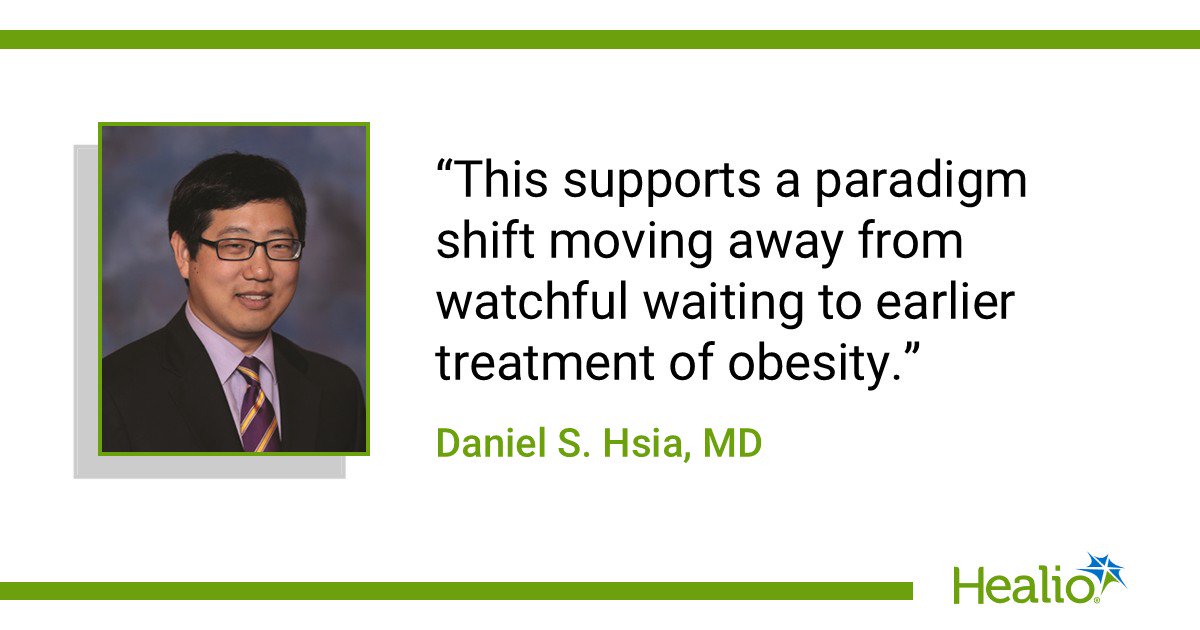
Daniel S. Hsia, MD, described the findings as potentially supporting:
“a paradigm shift moving away from watchful waiting to earlier treatment of obesity.”
However, a paradigm shift should not be interpreted as justification for indiscriminate prescribing. Patient selection, developmental considerations, family preferences, adverse effects, access, cost, and the unknown consequences of decades-long therapy all remain relevant.
Limitations
Several limitations should temper interpretation of STEP Young.
1. Relatively Small Population
Only 167 children underwent randomization. Although sufficient to demonstrate the primary BMI effect, this population is too small to reliably identify uncommon or very rare adverse events.
2. Limited Long-Term Safety Information
Two years is relatively long for a pediatric obesity pharmacotherapy trial but short compared with the potential duration of treatment when therapy begins at age 6 to 11 years.
Effects extending through adolescence and adulthood remain unknown.
3. Weight Regain After Treatment Withdrawal
BMI began increasing after semaglutide was stopped.
This finding raises questions about treatment durability and whether long-term or potentially chronic therapy would be necessary.
4. Gastrointestinal Adverse Effects
Vomiting, diarrhea, and nausea were substantially more common with semaglutide.
These events could affect treatment adherence and quality of life in routine clinical practice.
5. DXA Analysis Was Limited to a Subgroup
Body composition measurements were available for only 50 children, limiting the precision and generalizability of these findings.
6. Long-Term Development Requires Continued Surveillance
The study did not identify new concerns involving puberty or bone mineral density, but longer follow-up will be necessary to establish safety across critical periods of growth and development.
7. Industry Funding
The trial was funded by Novo Nordisk, the manufacturer of semaglutide. Several investigators reported relationships with Novo Nordisk and other pharmaceutical companies.
Industry funding does not invalidate trial findings, but funding and investigator disclosures should be considered when evaluating the evidence.
What Doctors Should Know
STEP Young provides strong randomized evidence that once-weekly semaglutide can produce substantial BMI reductions in children aged 6 to younger than 12 years with obesity when used alongside lifestyle intervention.
The key clinical points are:
- The primary treatment-regimen analysis showed a 16.2-percentage-point advantage over placebo in BMI change at 68 weeks.
- A substantial proportion of children achieved clinically meaningful BMI reductions.
- Benefits extended to several cardiometabolic risk markers.
- Gastrointestinal adverse effects were very common.
- No new safety signal was detected during the reported study period.
- BMI began increasing after treatment withdrawal.
- Long-term effects on growth, development, treatment persistence, and outcomes extending into adulthood remain uncertain.
- These findings should not be interpreted as meaning that semaglutide is appropriate for every child with obesity.
- Regulatory approval and prescribing recommendations for children younger than 12 years should be distinguished from positive clinical-trial findings.
At present, the trial provides evidence of efficacy; decisions about treatment in younger children require consideration of regulatory status, clinical guidelines, individual disease severity, comorbidities, and specialist assessment.
Bottom Line
In the phase 3 STEP Young randomized clinical trial, once-weekly subcutaneous semaglutide plus lifestyle intervention produced a substantially greater reduction in BMI than placebo plus lifestyle intervention among children aged 6 to younger than 12 years with obesity.
At 68 weeks, BMI decreased 13.5% with semaglutide and increased 2.7% with placebo, producing an estimated treatment difference of −16.2 percentage points (P < .001).
The treatment was also associated with improvements in BMI category, waist circumference, blood pressure, glycemic measures, triglycerides, inflammatory markers, and body composition.
Gastrointestinal adverse events were frequent, but investigators reported no new safety signals during the trial.
The emergence of BMI regain after treatment discontinuation and the limited duration of developmental follow-up underscore the major unanswered question: how long should pharmacologic obesity treatment continue when therapy begins during childhood?
STEP Young substantially strengthens the evidence that pediatric obesity can respond to pharmacologic treatment, while also highlighting the need for longer-term data on durability, growth, development, safety, and treatment selection.
Original Research / DOI
Study: STEP Young
Article: Semaglutide for the Treatment of Obesity in Children 6 to <12 Years of Age
Journal: The New England Journal of Medicine
ClinicalTrials.gov: NCT05726227
DOI: 10.1056/NEJMoa2604058
Trial sponsor/funder: Novo Nordisk
The findings were also presented at ObesityWeek 2026, November 14-17, 2026, National Harbor, Maryland.