89
Clinical Trial Halts for Rapid-Manufactured CAR T-Cell Therapies in Autoimmune Diseases Following Patient Fatalities
Overview and Clinical Background
Novartis has instituted a clinical hold on 8 clinical trials evaluating rapcabtagene autoleucel (rap-cel) across several rheumatic and neurological autoimmune conditions. The regulatory pause, enacted on August 24, was triggered by reports of 3 patient fatalities within the program. Diseases studied in the suspended trials include systemic lupus erythematosus, rheumatoid arthritis, vasculitis, multiple sclerosis, and myasthenia gravis. Notably, 2 oncology-focused trials evaluating rap-cel in lymphoma and leukemia remain active and unaffected by the hold.
Novartis confirmed that an in-depth investigation into the fatalities is ongoing in collaboration with independent data safety monitoring boards to elucidate root causes and underlying risk factors.
Following these events and observations of transient, reversible inflammatory episodes among trial participants, Bristol Myers Squibb proactively placed a cautionary hold on clinical studies evaluating its related chimeric antigen receptor (CAR) T-cell candidate, zolacabtagene autoleucel (zola-cel). Neither company responded to direct requests for comment prior to publication.
Comparison of Impacted Investigational Cellular Therapies
| Characteristic / Variable | Rapcabtagene Autoleucel (rap-cel) | Zolacabtagene Autoleucel (zola-cel) |
| Sponsor / Developer | Novartis | Bristol Myers Squibb |
| Therapy Classification | Autologous CAR T-cell therapy | Autologous CAR T-cell therapy |
| Manufacturing Platform | Rapid-manufacturing platform | Rapid-manufacturing platform |
| Target Indications Subject to Pause | Rheumatic and neurological disorders (lupus, rheumatoid arthritis, vasculitis, multiple sclerosis, myasthenia gravis) | Autoimmune / cellular therapy indications |
| Number of Paused Trials | 8 trials (paused August 24) | Trial program paused proactively |
| Trials Remaining Active | 2 trials (lymphoma, leukemia) | Not specified |
| Reported Safety Signals | 3 patient fatalities | Transient and reversible inflammatory episodes |
Expert Commentary and Mechanistic Considerations
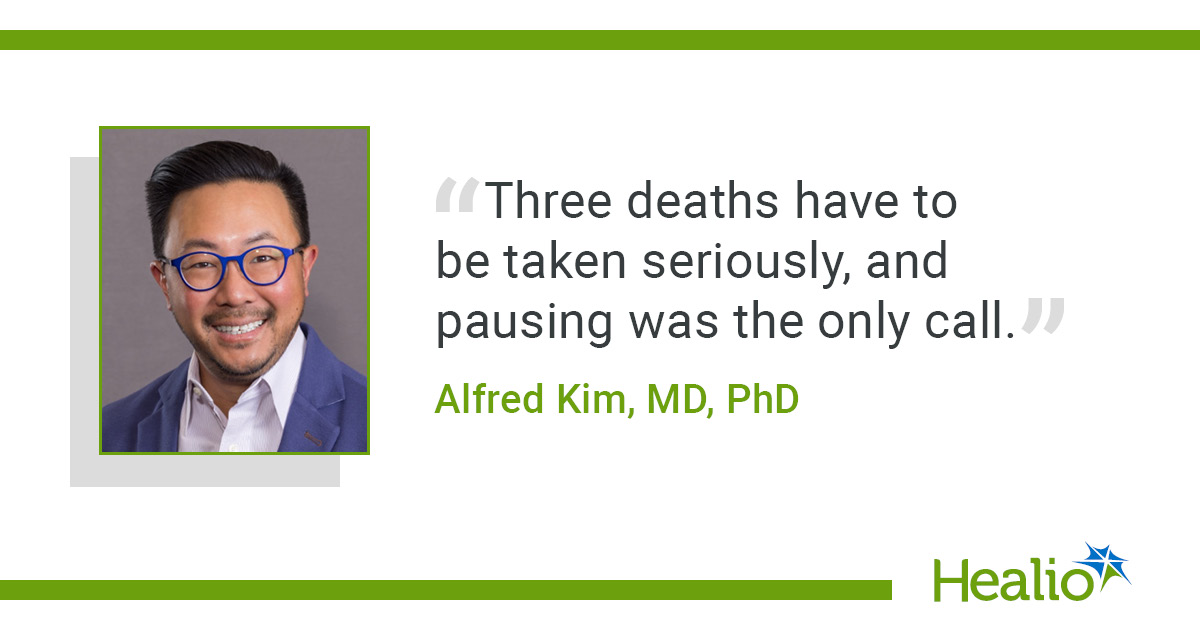
Alfred Kim, MD, PhD, director of the Washington University Lupus Center, addressed the safety pauses, characterizing the action as an appropriate safety standard rather than a definitive termination of the drug class:
“Three deaths have to be taken seriously, and pausing was the only call. This is not a verdict, though. It is the system doing exactly what it should in a young field that is still learning its own risk profile.”
Dr Kim highlighted that both rap-cel and zola-cel rely on rapid-turnaround manufacturing methods, which may influence in vivo cellular dynamics and heighten hyperinflammatory complications:
“What deserves the field’s attention is what the two products share. Rap-cel and zola-cel are both made on rapid manufacturing platforms, and the working hypothesis is that faster production yields fitter T cells that expand greater in the patient, with immune effector cell-associated hemophagocytic lymphohistiocytosis-like syndrome (IEC-HS) sitting at the severe end of that inflammation.”
Risk-Benefit Profile: Autoimmune vs Oncology Populations
| Domain | Autoimmune Indications (e.g., Lupus, Vasculitis, MS) | Hematologic Malignancy Indications (e.g., Leukemia, Lymphoma) |
| Patient Demographics | Typically younger patient cohorts | Broader age spectrum; often heavily pretreated |
| Prognosis / Disease Acuity | Chronic, non-immediately fatal course | Imminently life-threatening, aggressive malignancy |
| Alternative Therapies | Multiple emerging and approved alternative options | Often refractory to standard lines of therapy |
| Risk Tolerance Threshold | Lower tolerance for severe, potentially fatal adverse effects | Higher acceptance of acute toxicities given high mortality of disease |
Dr Kim noted that clinical trial frameworks should reflect these distinctions:
“The autoimmune setting also changes the risk calculus. Unlike our oncology patients, people with lupus, myositis, scleroderma or other autoimmune diseases are often younger, are not facing imminent death and increasingly have other options.”
Despite these challenges, Dr Kim reaffirmed the therapeutic promise of CAR T-cell therapies in achieving long-term outcomes in autoimmune disorders:
“I would not read this as the end of cellular therapy in autoimmunity. The durable, drug-free remissions we have seen in people who had run out of options are real, and the work now is to learn who actually needs autologous CAR T and build the tools to intercept or better yet predict these events before they turn catastrophic.”
Disclosures and Contact Information
- Contact: Alfred Kim, MD, PhD (akim@wustl.edu).
- Financial Disclosures: Dr Kim reported receiving research funding from AstraZeneca, Bristol Myers Squibb, CRISPR Therapeutics, and Novartis, as well as consulting fees from AstraZeneca, Hinge Bio, Kymera Therapeutics, and Miltenyi Biomedicine.